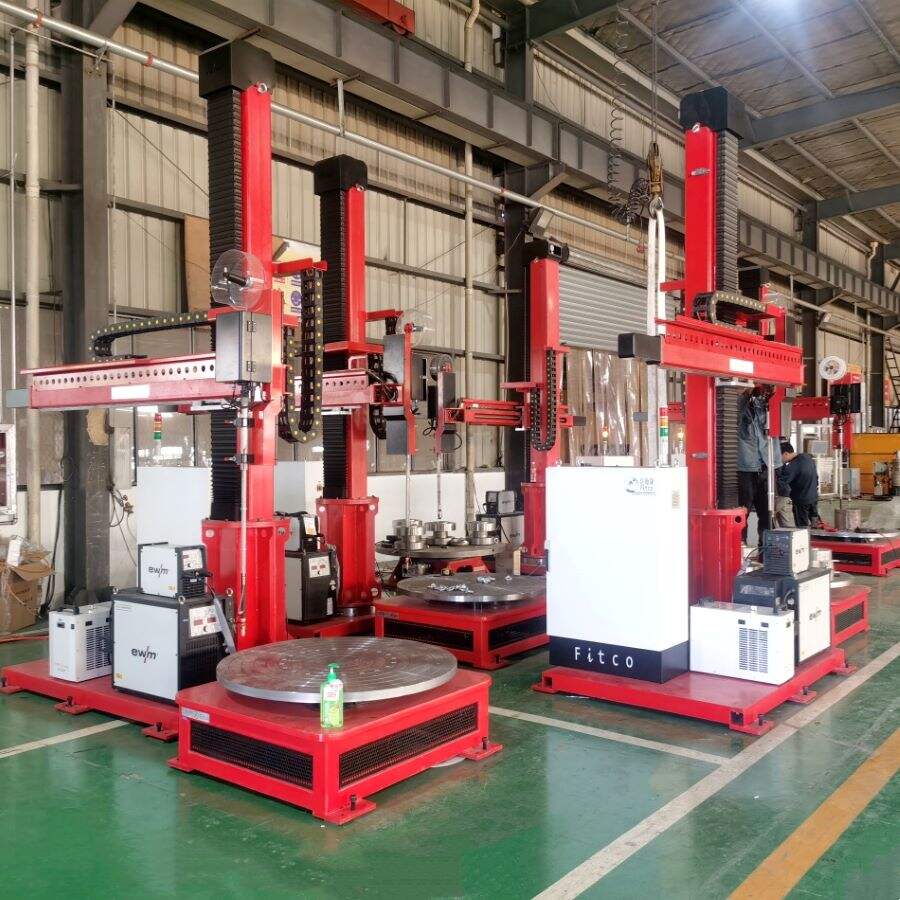
Professional TIG and Stick Welding Machine - Dual Process Inverter Welder for Superior Results

Contact me immediately if you encounter problems!

All Categories

Get a Free Quote

Our representative will contact you soon.
Email
Mobile/WhatsApp
Name
Company Name
Message
0/1000

Get a Free Quote

Our representative will contact you soon.
Email
Mobile/WhatsApp
Name
Company Name
Message
0/1000

tig and stick welding machine

The tig and stick welding machine represents a revolutionary advancement in modern welding technology, combining two essential welding processes into one comprehensive unit. This dual-function welding equipment integrates Tungsten Inert Gas welding capabilities with Shielded Metal Arc Welding functionality, providing welders with unprecedented flexibility and efficiency. The machine operates by utilizing sophisticated inverter technology that converts standard AC power into high-frequency DC output, enabling precise control over welding parameters. The TIG welding function employs a non-consumable tungsten electrode to create the arc, while an inert gas shield protects the weld area from atmospheric contamination. Meanwhile, the stick welding function uses consumable electrodes coated with flux materials that create their own protective atmosphere during the welding process. Modern tig and stick welding machine units feature digital displays that allow operators to monitor and adjust amperage, voltage, and other critical parameters with remarkable precision. The inverter-based design significantly reduces the overall weight and size compared to traditional transformer-based welders, making these machines highly portable and suitable for both workshop and field applications. Advanced models incorporate pulse welding capabilities, slope control functions, and hot start features that enhance welding performance across various materials and thicknesses. The versatility of the tig and stick welding machine makes it indispensable for applications ranging from delicate precision work on thin stainless steel components to heavy-duty structural welding projects. Industries such as automotive manufacturing, aerospace engineering, construction, and artistic metalworking rely heavily on these versatile welding systems. The technological sophistication of modern units includes thermal protection circuits, overvoltage protection, and phase loss protection, ensuring safe and reliable operation under demanding conditions.

Popular Products

The tig and stick welding machine offers substantial advantages that make it an intelligent investment for professional welders and hobbyists alike. This versatile equipment eliminates the need to purchase separate welding machines for different applications, resulting in significant cost savings and workspace efficiency. Users can seamlessly switch between TIG and stick welding modes without requiring additional equipment or complex setup procedures, maximizing productivity and minimizing downtime. The advanced inverter technology delivers superior arc stability and consistent welding performance across various materials including steel, stainless steel, aluminum, and exotic alloys. The precise control capabilities enable welders to produce high-quality welds with excellent penetration and minimal distortion, particularly crucial for critical applications in aerospace and automotive industries. The compact and lightweight design of the tig and stick welding machine enhances portability, allowing professionals to transport the equipment easily between job sites without compromising welding capability. Energy efficiency represents another compelling advantage, as inverter-based machines consume significantly less electricity compared to traditional welding equipment while delivering superior performance. The digital control interface simplifies operation and reduces the learning curve for new users, while experienced welders appreciate the fine-tuned control over welding parameters. Maintenance requirements are minimal due to the solid-state construction and absence of moving parts in the power source, resulting in lower long-term operating costs and increased reliability. The ability to weld both thick and thin materials with equal proficiency makes the tig and stick welding machine suitable for diverse applications, from delicate sheet metal work to heavy structural fabrication. Safety features including overcurrent protection, thermal shutdown, and voltage fluctuation compensation ensure operator protection and equipment longevity. The consistent arc characteristics and stable welding performance reduce material waste and rework, contributing to improved project economics and timeline adherence. Professional welders particularly value the ability to achieve precise heat input control, which proves essential when working with heat-sensitive materials or when welding in challenging positions.

Practical Tips

The Role of overlay cladding in Refurbishing Heavy Machinery

16

Mar

The Role of overlay cladding in Refurbishing Heavy Machinery

Heavy machinery operates under extreme conditions, facing constant wear from abrasion, corrosion, and mechanical stress that gradually degrades critical components. When expensive equipment begins showing signs of deterioration, manufacturers and ope...
View More
Understanding the Duty Cycle of Your Heavy-Duty arc welding machine

16

Mar

Understanding the Duty Cycle of Your Heavy-Duty arc welding machine

The duty cycle of an arc welding machine represents one of the most critical specifications that determines its operational capabilities and longevity in heavy-duty industrial applications. This measurement defines how long your arc welding machine c...
View More
Why igbt inverter welder Technology is the Industry Standard in 2026

16

Mar

Why igbt inverter welder Technology is the Industry Standard in 2026

The welding industry has undergone a transformative evolution, with igbt inverter welder technology emerging as the definitive standard for professional and industrial applications in 2026. This revolutionary advancement represents a fundamental shif...
View More
Which Materials Weld Best with Longitudinal TIG Equipment?

13

Jan

Which Materials Weld Best with Longitudinal TIG Equipment?

Manufacturing industries increasingly rely on advanced welding technologies to achieve superior joint quality and production efficiency. Among the various welding methods available, longitudinal TIG equipment has emerged as a critical solution for ap...
View More

Get a Free Quote

Our representative will contact you soon.
Email
Mobile/WhatsApp
Name
Company Name
Message
0/1000

tig and stick welding machine

Dual-Process Versatility Maximizes Equipment Investment

Dual-Process Versatility Maximizes Equipment Investment

The tig and stick welding machine delivers exceptional value through its innovative dual-process design that combines two distinct welding technologies in a single, comprehensive unit. This remarkable versatility allows operators to tackle virtually any welding challenge without investing in multiple specialized machines. The TIG welding capability excels at producing precise, high-quality welds on thin materials and exotic alloys, making it ideal for applications requiring superior aesthetics and structural integrity. The tungsten electrode system provides excellent arc control and stability, enabling welders to create smooth, consistent beads with minimal spatter and distortion. Simultaneously, the stick welding function handles heavy-duty applications where portability and simplicity are paramount, utilizing consumable electrodes that work effectively in outdoor conditions and on contaminated surfaces. The seamless transition between welding modes eliminates equipment changeover time and reduces workflow interruptions, significantly enhancing productivity in busy fabrication environments. This dual functionality proves particularly valuable for small to medium-sized shops that cannot justify the expense of maintaining separate welding systems for different applications. The tig and stick welding machine accommodates various electrode types and sizes, from delicate precision work requiring low amperage settings to heavy structural welding demanding maximum power output. Advanced models feature memory settings that store preferred parameters for different welding processes, enabling quick setup and consistent results across multiple projects. The comprehensive nature of this equipment makes it an ideal choice for educational institutions, allowing students to learn both welding processes using a single machine. Professional contractors appreciate the reduced inventory requirements and simplified equipment management that comes with owning a versatile tig and stick welding machine that handles diverse project requirements effectively.
Advanced Inverter Technology Ensures Superior Performance

Advanced Inverter Technology Ensures Superior Performance

The cutting-edge inverter technology incorporated in modern tig and stick welding machine units represents a significant leap forward in welding equipment design and performance. This sophisticated electronic system converts incoming AC power to high-frequency DC output with exceptional efficiency and precision, delivering stable welding characteristics that surpass traditional transformer-based machines. The inverter design enables precise control over welding parameters, allowing operators to fine-tune amperage, voltage, and pulse frequency to match specific material requirements and welding conditions. This level of control translates directly into improved weld quality, reduced defect rates, and enhanced repeatability across multiple welding sessions. The high-frequency switching capability of inverter technology produces a more concentrated and stable arc, resulting in deeper penetration and better fusion characteristics, particularly beneficial when welding thick sections or challenging materials. The tig and stick welding machine benefits from improved arc starting capabilities, reducing the likelihood of tungsten contamination in TIG welding and minimizing electrode sticking in stick welding applications. The inverter technology also enables advanced features such as pulse welding, which alternates between high and low current levels to control heat input and reduce distortion in sensitive materials. Slope control functions allow gradual current ramping at the beginning and end of welds, preventing crater formation and improving overall weld appearance. The electronic control system provides real-time monitoring and adjustment capabilities, ensuring optimal performance under varying input voltage conditions and load fluctuations. This technology also contributes to the compact size and lightweight design of the tig and stick welding machine, making it significantly more portable than conventional welding equipment while maintaining or exceeding performance standards.
Energy Efficiency and Cost-Effective Operation

Energy Efficiency and Cost-Effective Operation

The exceptional energy efficiency of the tig and stick welding machine represents a compelling advantage that significantly reduces operating costs while maintaining superior welding performance. The advanced inverter technology operates at efficiency levels typically exceeding 85 percent, compared to traditional transformer-based welders that rarely achieve 50 percent efficiency, resulting in substantial electricity savings over the equipment's operational lifetime. This improved efficiency translates into reduced heat generation, which decreases cooling requirements and extends component life, contributing to lower maintenance costs and increased reliability. The power factor correction built into modern inverter designs minimizes reactive power consumption, potentially qualifying businesses for utility rebates and reducing demand charges on commercial electrical bills. The tig and stick welding machine maintains consistent performance across varying input voltage conditions, automatically compensating for voltage fluctuations that would typically affect weld quality in conventional equipment. This adaptive capability ensures optimal energy utilization regardless of electrical supply conditions, particularly valuable in field applications where generator power or extended cord runs are necessary. The reduced electrical demand allows multiple welding stations to operate simultaneously without overloading electrical infrastructure, increasing facility productivity without requiring expensive electrical upgrades. Environmental benefits accompany the energy efficiency improvements, as reduced power consumption directly correlates to lower carbon emissions and decreased environmental impact. The solid-state construction eliminates mechanical contactors and transformers that typically require regular replacement, further reducing long-term operational expenses. Productivity gains from consistent arc performance and reduced setup time contribute to improved project economics, as welders can complete jobs faster with better quality results. The tig and stick welding machine typically qualifies for energy efficiency tax credits and incentives available to businesses investing in high-efficiency equipment, providing additional financial benefits beyond operational savings.

Get a Free Quote

Our representative will contact you soon.
Email
Mobile/WhatsApp
Name
Company Name
Message
0/1000