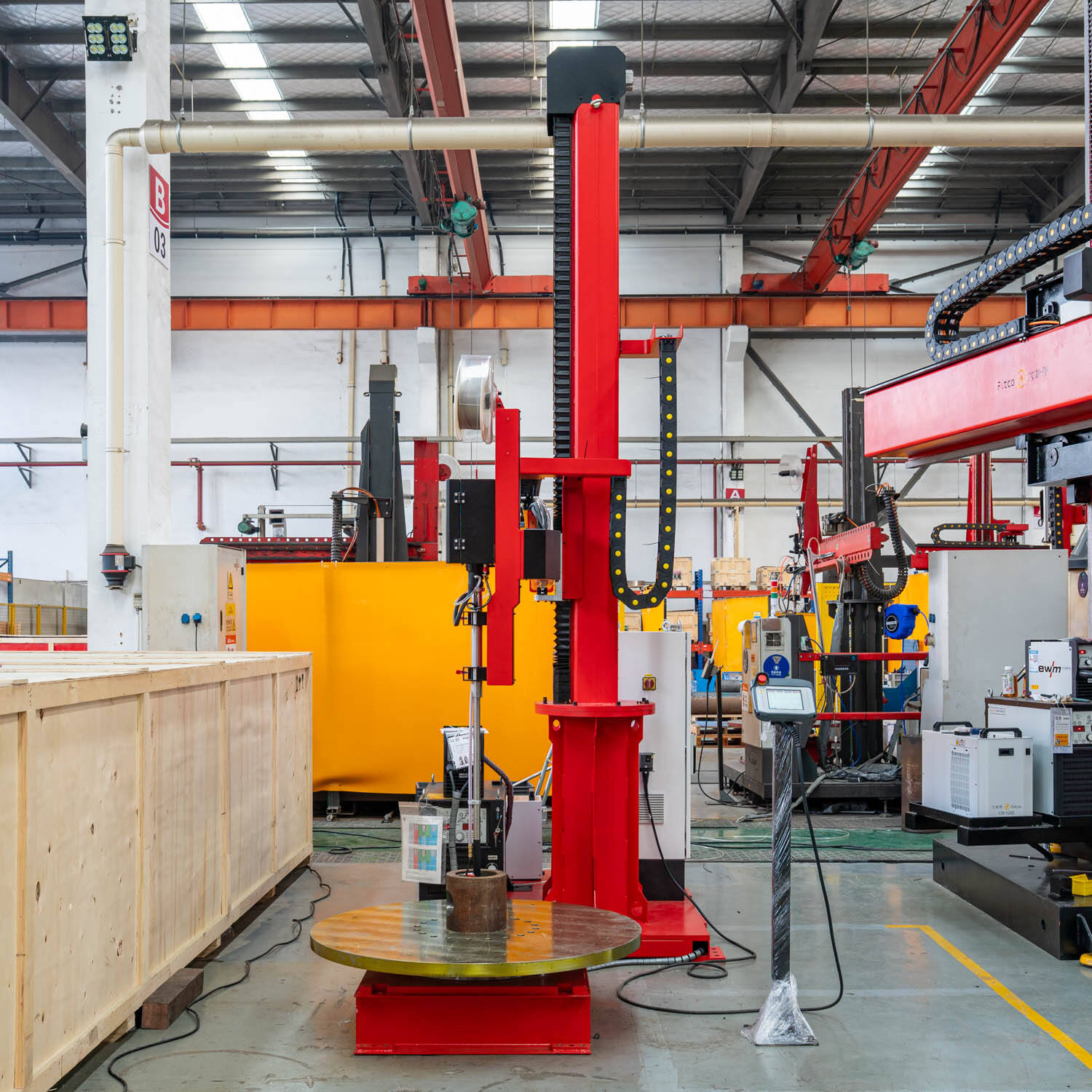
Professional Positioner Welding Machine Solutions - Advanced Positioning Technology for Superior Welding Results

Contact me immediately if you encounter problems!

All Categories

Get a Free Quote

Our representative will contact you soon.
Email
Mobile/WhatsApp
Name
Company Name
Message
0/1000

Get a Free Quote

Our representative will contact you soon.
Email
Mobile/WhatsApp
Name
Company Name
Message
0/1000

positioner welding machine

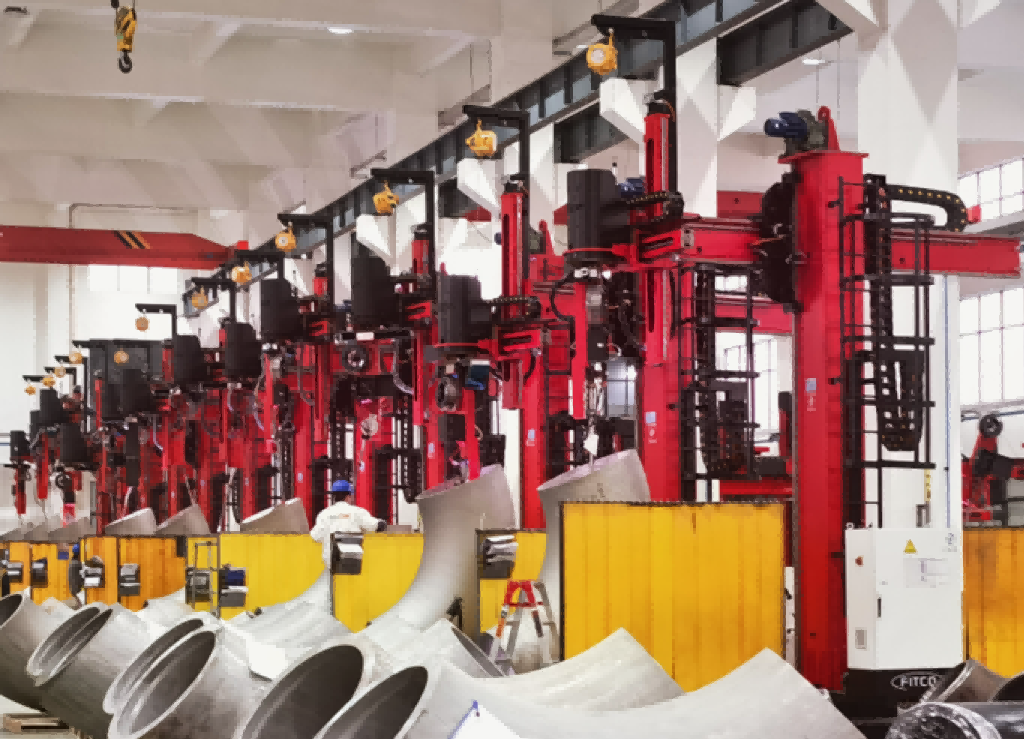
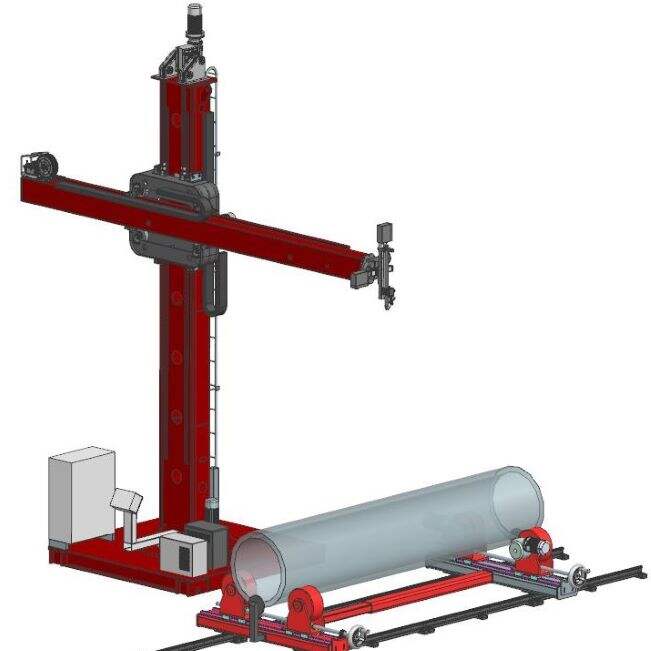
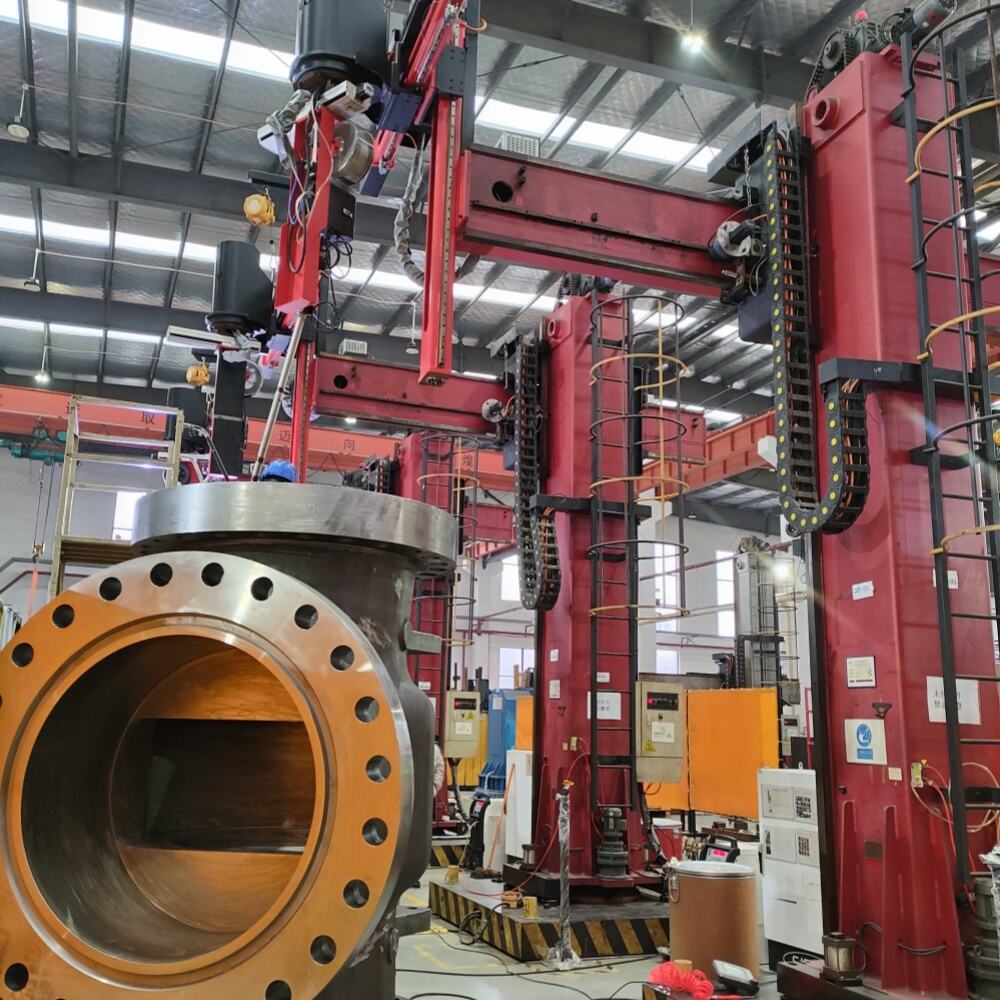
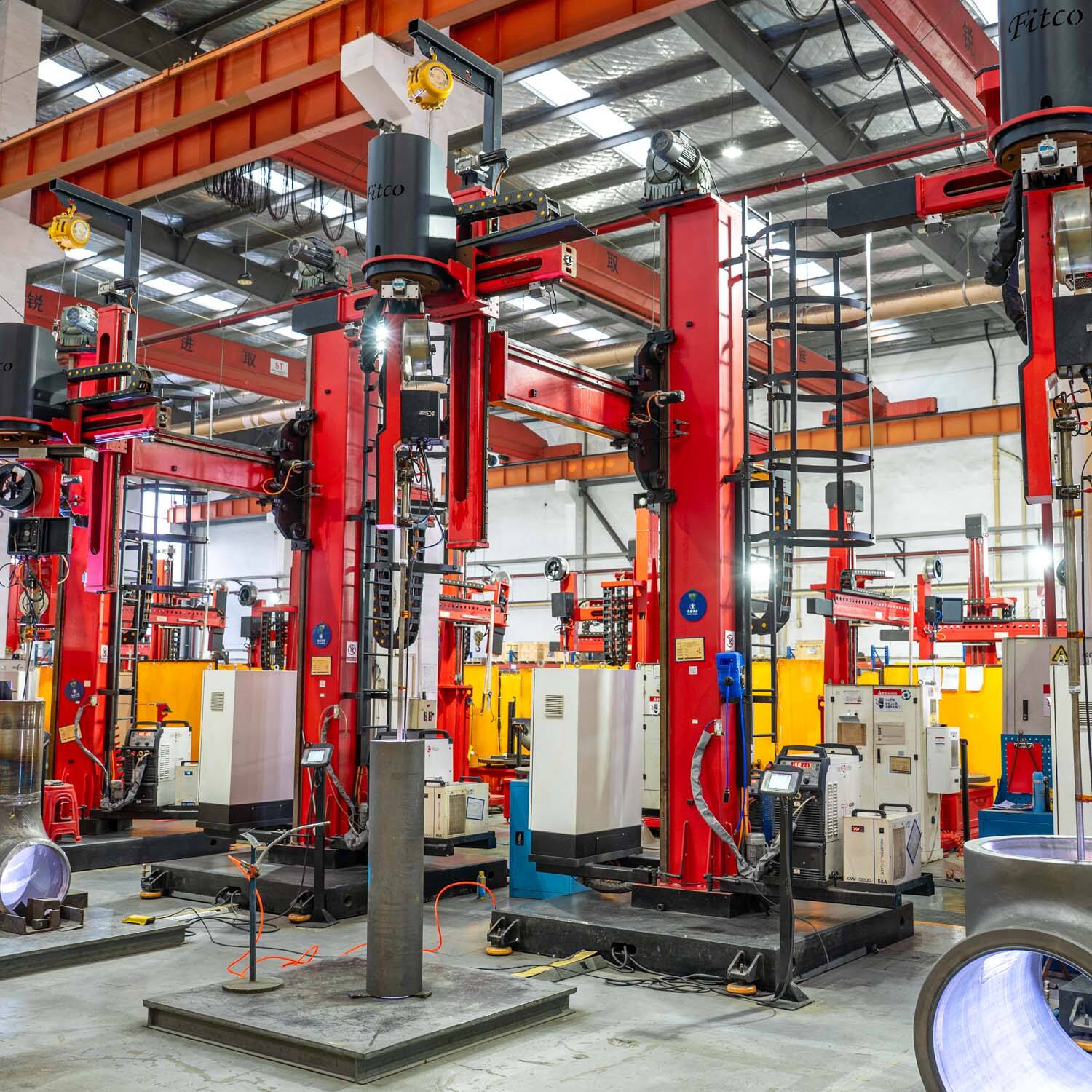
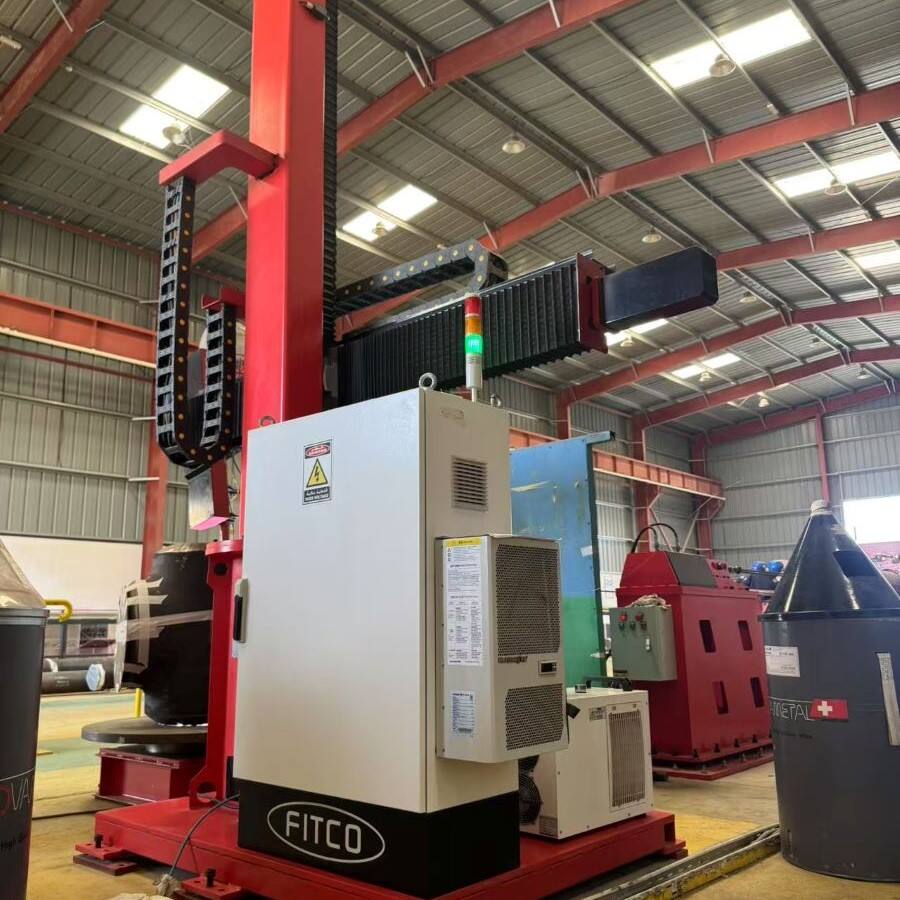
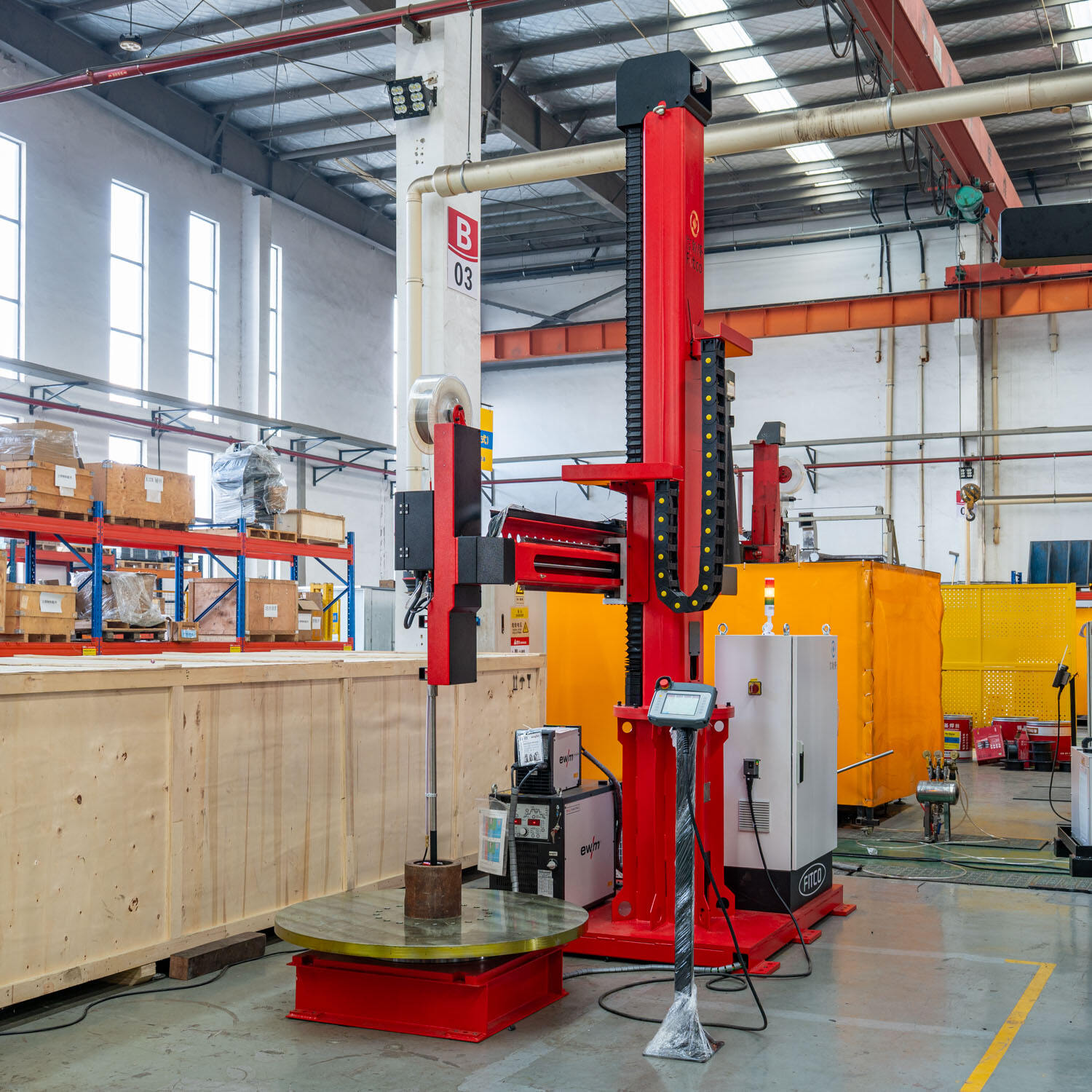
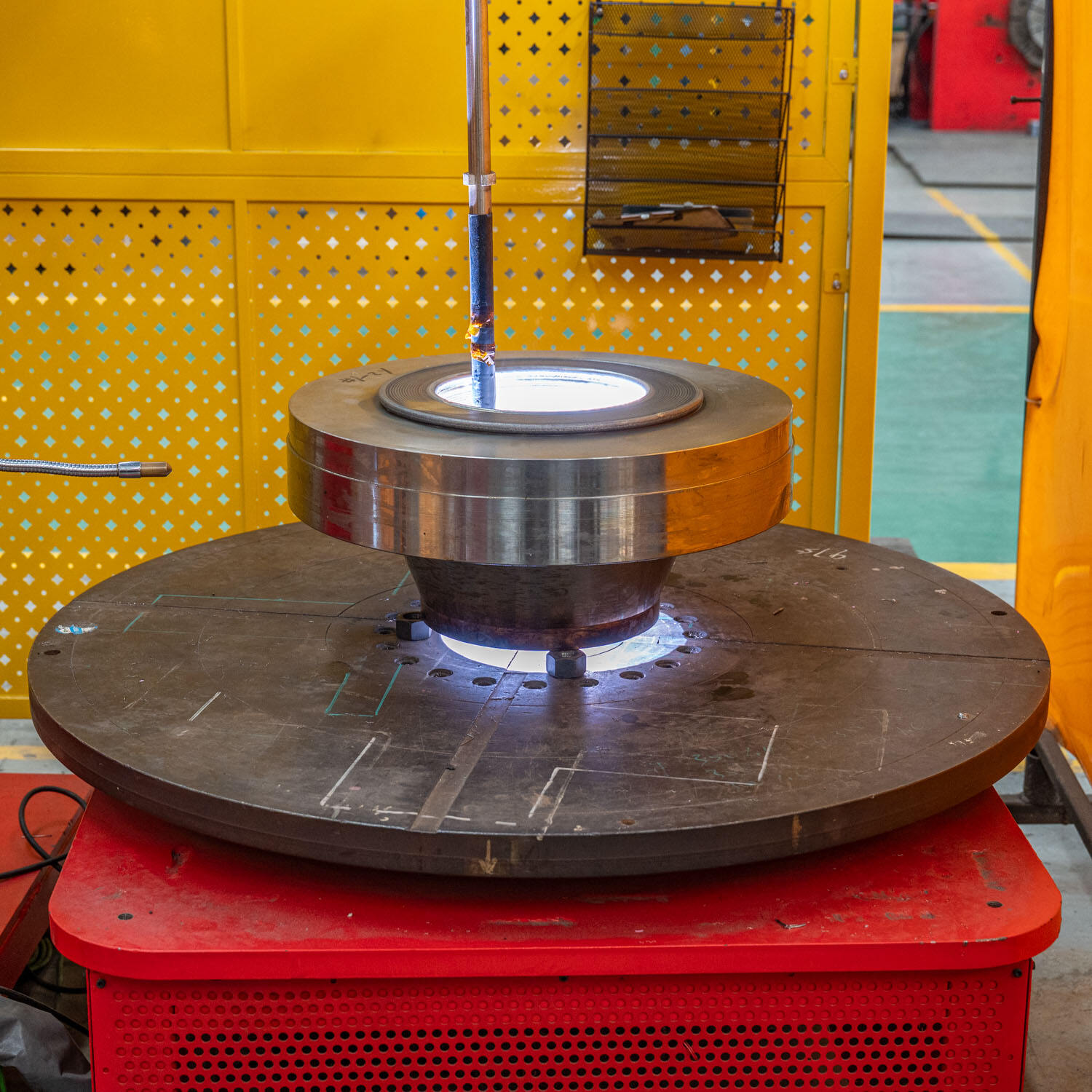
A positioner welding machine represents a revolutionary advancement in modern welding technology, designed to enhance precision, efficiency, and safety in various welding applications. This sophisticated equipment combines a welding power source with a positioning mechanism that rotates, tilts, or manipulates workpieces during the welding process. The positioner welding machine enables operators to maintain optimal welding positions while the workpiece moves automatically, eliminating the need for manual repositioning and reducing physical strain on welders. The core functionality of this equipment centers around its ability to provide controlled rotation and positioning of components, ensuring consistent weld quality throughout the entire process. The technological framework incorporates advanced servo motors, precise control systems, and robust mechanical components that work together to deliver exceptional performance. Modern positioner welding machines feature digital control panels with programmable settings, allowing operators to customize rotation speed, positioning angles, and welding parameters according to specific project requirements. The equipment typically includes variable speed controls, multiple axis movement capabilities, and integrated safety features such as emergency stops and overload protection. These machines accommodate various workpiece sizes and weights, from small components to large structural elements, making them versatile solutions for diverse manufacturing environments. The positioning system maintains consistent arc length and travel speed, resulting in superior weld penetration and reduced defects. Additionally, many models incorporate remote control functionality, enabling operators to adjust settings without interrupting the welding process. The integration of advanced sensors and feedback systems ensures precise positioning accuracy, while the sturdy construction guarantees long-term reliability in demanding industrial environments. This technology significantly reduces production time while improving overall weld quality and consistency across multiple projects.

New Products

The positioner welding machine delivers substantial benefits that transform welding operations and boost productivity across various industries. First and foremost, this equipment dramatically improves weld quality by maintaining optimal positioning throughout the entire welding process. Unlike manual welding where operators must frequently adjust their stance or reposition workpieces, the positioner welding machine keeps components in the ideal position for consistent arc characteristics and penetration. This results in stronger joints with fewer defects and reduced rework requirements. The machine also enhances operator safety by eliminating awkward welding positions that can cause fatigue, strain, or injury. Welders can work comfortably while the equipment handles all positioning tasks, reducing physical stress and improving work environment conditions. Productivity gains represent another significant advantage, as the continuous rotation and positioning capabilities allow for faster completion of welding tasks. The automated movement eliminates downtime associated with manual repositioning, enabling operators to focus entirely on welding technique rather than workpiece manipulation. Cost savings emerge through multiple channels including reduced labor costs, decreased material waste, and minimized rework expenses. The consistent quality produced by positioner welding machines reduces inspection time and ensures projects meet specifications on the first attempt. Furthermore, the equipment extends electrode life by maintaining proper arc conditions and reduces spatter formation, leading to cleaner welds and less post-welding cleanup. The precision control offered by these machines enables welding of complex geometries and intricate components that would be challenging or impossible to achieve manually. Operators can program specific rotation patterns and speeds to accommodate various joint configurations and welding procedures. The versatility of positioner welding machines makes them suitable for numerous applications, from pipe welding to structural fabrication, providing excellent return on investment. Training requirements are minimal since the equipment simplifies many aspects of the welding process, allowing less experienced operators to achieve professional results. The consistent performance and reliability of these machines reduce maintenance costs and extend equipment lifespan, making them economically attractive for businesses of all sizes.

Practical Tips

Common welding machine Faults and How to Troubleshoot Them

16

Mar

Common welding machine Faults and How to Troubleshoot Them

Welding machine malfunctions can halt production lines, compromise weld quality, and create costly downtime in industrial operations. Understanding common faults and their troubleshooting methods is essential for maintaining consistent welding perfor...
View More
The Role of overlay cladding in Refurbishing Heavy Machinery

16

Mar

The Role of overlay cladding in Refurbishing Heavy Machinery

Heavy machinery operates under extreme conditions, facing constant wear from abrasion, corrosion, and mechanical stress that gradually degrades critical components. When expensive equipment begins showing signs of deterioration, manufacturers and ope...
View More
Understanding the Duty Cycle of Your Heavy-Duty arc welding machine

16

Mar

Understanding the Duty Cycle of Your Heavy-Duty arc welding machine

The duty cycle of an arc welding machine represents one of the most critical specifications that determines its operational capabilities and longevity in heavy-duty industrial applications. This measurement defines how long your arc welding machine c...
View More
How Can Longitudinal TIG Equipment Improve Weld Uniformity?

13

Jan

How Can Longitudinal TIG Equipment Improve Weld Uniformity?

Achieving consistent weld quality across extended seams remains one of the most challenging aspects of modern fabrication. Manufacturing industries demand precision welding solutions that deliver uniform penetration, minimal distortion, and reliable ...
View More

Get a Free Quote

Our representative will contact you soon.
Email
Mobile/WhatsApp
Name
Company Name
Message
0/1000

positioner welding machine

Advanced Precision Control System

Advanced Precision Control System

The precision control system represents the cornerstone of modern positioner welding machine technology, delivering unparalleled accuracy and consistency in welding operations. This sophisticated system incorporates state-of-the-art servo motors, digital encoders, and programmable logic controllers that work in perfect harmony to provide exact positioning control. The control system allows operators to program specific rotation speeds ranging from incredibly slow movements of just a few degrees per minute to rapid positioning for high-volume production environments. This flexibility ensures optimal welding conditions for various materials, thicknesses, and joint configurations. The digital interface provides real-time feedback on positioning parameters, enabling operators to make instant adjustments and monitor performance throughout the welding process. Advanced algorithms built into the control system automatically compensate for workpiece weight distribution and inertial forces, maintaining smooth and stable movement even with irregularly shaped components. The system also features memory storage capabilities, allowing operators to save and recall specific programs for recurring jobs, significantly reducing setup time and ensuring consistency across multiple production runs. Safety interlocks integrated into the control system prevent operation under unsafe conditions and provide emergency stop functionality that immediately halts all movement when activated. The precision achieved through this control system results in superior weld quality with consistent penetration depth, reduced heat-affected zones, and minimal distortion. Additionally, the system monitors and records welding parameters, providing valuable data for quality control and process optimization. The user-friendly interface requires minimal training, making advanced welding capabilities accessible to operators with varying skill levels. This precision control system ultimately transforms welding from a manual craft requiring years of experience into a controlled process that consistently delivers professional results, regardless of operator expertise level.
Enhanced Safety and Ergonomic Design

Enhanced Safety and Ergonomic Design

The enhanced safety and ergonomic design of positioner welding machines addresses critical workplace concerns while promoting operator comfort and well-being throughout extended welding operations. These machines eliminate the need for welders to work in awkward positions, such as overhead welding or confined spaces, which traditionally lead to fatigue, repetitive strain injuries, and reduced productivity. The ergonomic benefits extend beyond simple comfort, as proper positioning reduces the risk of welding-related injuries and long-term health issues associated with poor posture and repetitive motions. Safety features integrated into the positioner welding machine include comprehensive emergency stop systems, overload protection, and automatic shutoff mechanisms that activate when irregularities are detected. The equipment incorporates safety barriers and guards that prevent accidental contact with moving parts while maintaining clear visibility of the welding area. Advanced models feature collision detection systems that immediately halt operation if unexpected resistance is encountered, protecting both the workpiece and equipment from damage. The remote control capabilities allow operators to maintain safe distances from the welding arc while retaining full control over the process, reducing exposure to harmful fumes, intense light, and heat radiation. Proper ventilation systems can be more effectively implemented when welding positions are predictable and consistent, further improving air quality in the work environment. The stable platform provided by the positioner welding machine eliminates the risk of workpiece shifting or falling during welding operations, a common cause of workplace accidents in traditional welding setups. Visual and audible warning systems alert operators to potential hazards and operational status changes, ensuring continuous awareness of equipment conditions. The ergonomic design also considers maintenance accessibility, with service points positioned for easy access without requiring awkward positions or special tools. This comprehensive approach to safety and ergonomics not only protects workers but also reduces insurance costs, workers' compensation claims, and downtime associated with workplace injuries.
Versatile Application Capabilities

Versatile Application Capabilities

The versatile application capabilities of positioner welding machines make them indispensable tools across diverse industries and welding scenarios, from intricate precision work to heavy industrial fabrication. These machines excel in pipe welding applications where consistent rotation ensures uniform heat input and penetration around the entire circumference, eliminating common defects such as lack of fusion or incomplete joint penetration. The equipment handles various pipe sizes and materials, from small diameter tubing used in instrumentation to large pipeline components used in oil and gas infrastructure. In structural fabrication, positioner welding machines enable efficient welding of complex assemblies, beams, and frameworks by providing optimal access to all joint locations without requiring extensive rigging or repositioning equipment. The machines accommodate workpieces ranging from delicate electronic components weighing just a few pounds to massive industrial equipment weighing several tons. Aerospace applications benefit from the precision and consistency offered by these machines, ensuring critical welds meet stringent quality standards required for flight-worthy components. The automotive industry utilizes positioner welding machines for exhaust systems, chassis components, and body panels where repeatability and quality are essential for mass production environments. Shipbuilding operations rely on these machines for hull welding, where the ability to maintain proper welding position on curved surfaces significantly improves productivity and quality. The equipment adapts to various welding processes including MIG, TIG, stick welding, and submerged arc welding, making it compatible with existing welding infrastructure and procedures. Custom fixture capabilities allow the positioner welding machine to accommodate unique workpiece geometries and specialized production requirements. The machines also support multi-axis positioning, enabling complex welding sequences that would be impossible to achieve manually. Maintenance and repair operations benefit from the flexibility of portable positioner welding machines that can be deployed to job sites for field welding applications. The scalability of these systems allows manufacturers to start with basic positioning capabilities and expand functionality as production requirements grow, providing an evolutionary path for business development and technological advancement.

Get a Free Quote

Our representative will contact you soon.
Email
Mobile/WhatsApp
Name
Company Name
Message
0/1000