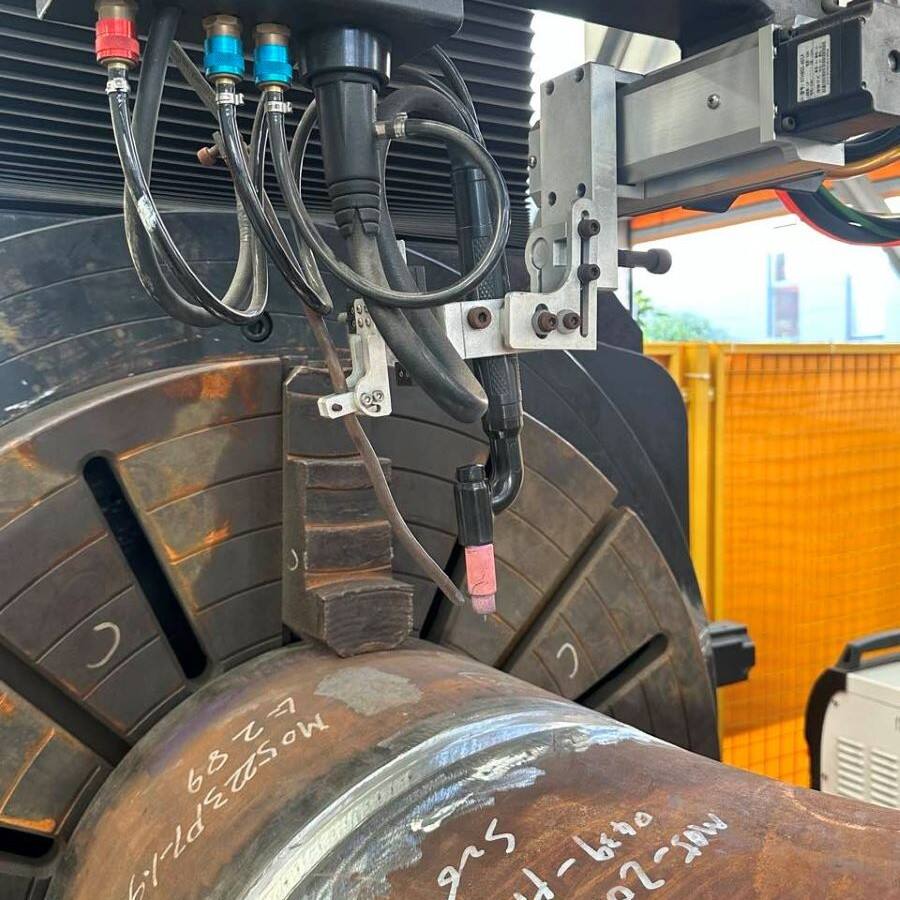
Professional Butt Fusion Welder - Advanced Pipe Joining Equipment for Reliable Thermoplastic Connections

Contact me immediately if you encounter problems!

All Categories

Get a Free Quote

Our representative will contact you soon.
Email
Mobile/WhatsApp
Name
Company Name
Message
0/1000

Get a Free Quote

Our representative will contact you soon.
Email
Mobile/WhatsApp
Name
Company Name
Message
0/1000

butt fusion welder

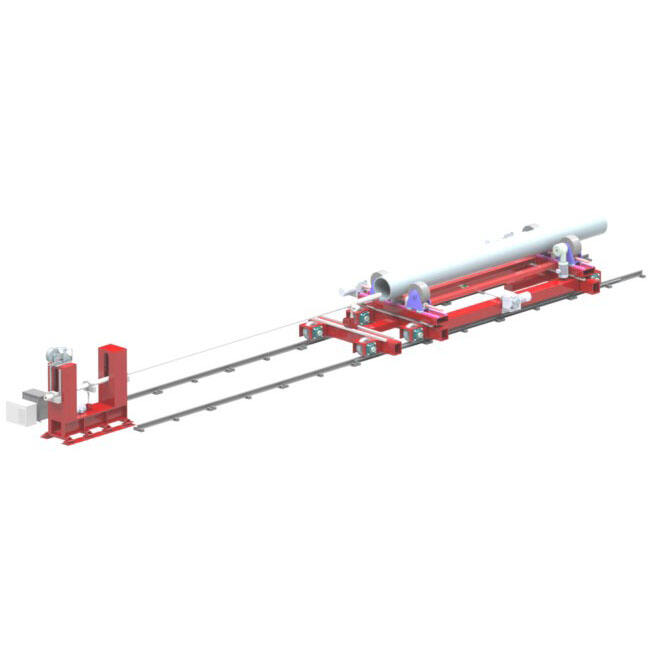
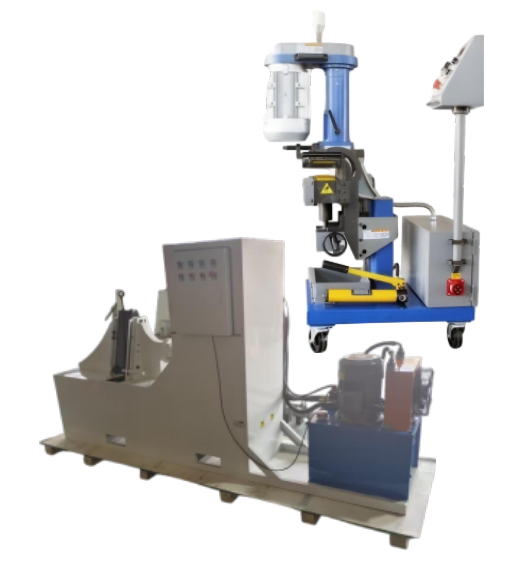
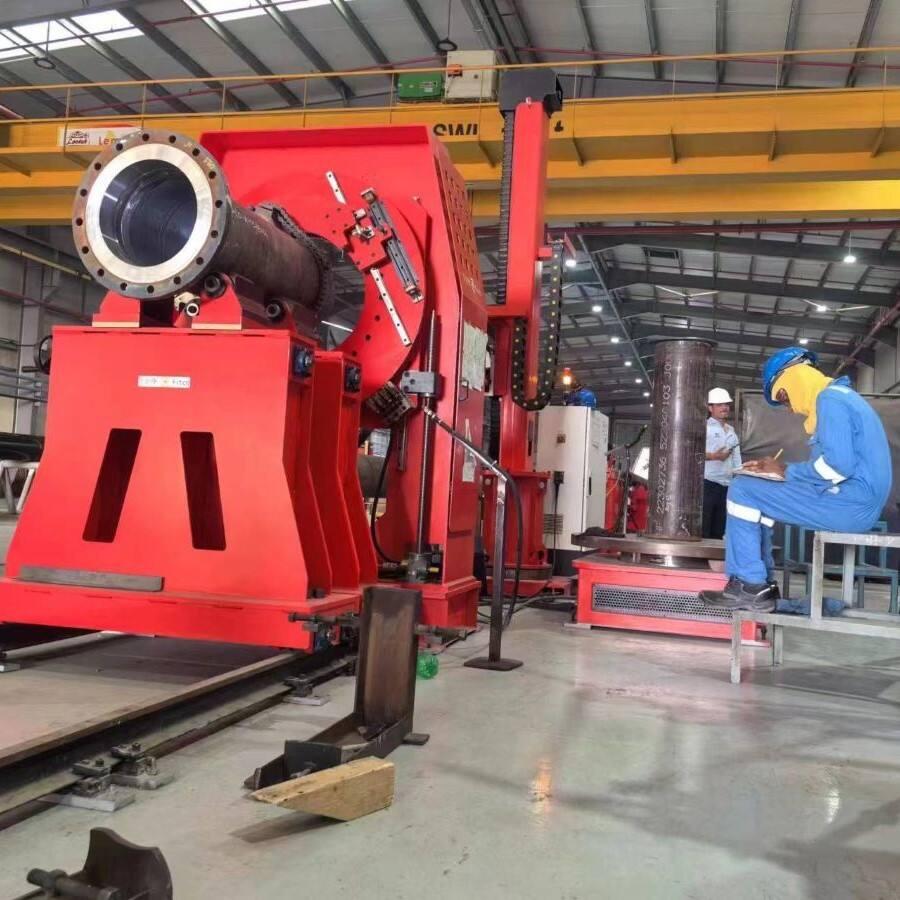
A butt fusion welder represents a critical piece of equipment designed specifically for joining thermoplastic pipes through the application of controlled heat and pressure. This sophisticated welding machine creates permanent, leak-proof connections by heating the pipe ends to their melting point and then pressing them together under precise pressure conditions. The butt fusion welder operates through a systematic process that begins with proper pipe preparation, including cutting and facing the pipe ends to ensure perfect alignment. The machine's heating plate, typically made of non-stick coated aluminum or Teflon, reaches temperatures ranging from 200 to 280 degrees Celsius, depending on the pipe material and diameter. Modern butt fusion welders incorporate advanced hydraulic systems that provide consistent pressure throughout the welding cycle, ensuring uniform heat distribution and optimal joint quality. These machines feature digital control panels that allow operators to program specific parameters including heating time, heating temperature, pressure levels, and cooling periods based on pipe specifications and environmental conditions. The technological framework includes precision positioning systems that maintain perfect pipe alignment during the entire welding process, preventing misalignment that could compromise joint integrity. Many contemporary butt fusion welders come equipped with data logging capabilities, enabling operators to record welding parameters for quality control and traceability purposes. The equipment typically includes interchangeable inserts and clamps to accommodate various pipe diameters, making it versatile for different project requirements. Safety features such as emergency stop buttons, pressure relief valves, and protective shields ensure operator safety during operation. The robust construction of these welders, often featuring heavy-duty steel frames and weather-resistant components, makes them suitable for both indoor and outdoor applications. Advanced models incorporate automatic cycles that reduce human error and ensure consistent results across multiple joints.

New Product Releases

The butt fusion welder delivers exceptional reliability and durability in pipe joining applications, making it the preferred choice for professionals across multiple industries. This equipment produces joints that are stronger than the original pipe material itself, creating connections that can withstand extreme pressure conditions and environmental stresses without failure. The welding process eliminates the need for additional fittings, gaskets, or adhesives, which significantly reduces material costs and potential failure points in piping systems. Operators benefit from the machine's user-friendly interface that simplifies the welding process through automated controls and preset parameters, reducing the learning curve for new technicians while maintaining consistent quality standards. The butt fusion welder operates efficiently in various weather conditions, from freezing temperatures to extreme heat, making it invaluable for year-round construction projects. The equipment's portability allows contractors to transport it easily between job sites, maximizing productivity and reducing downtime associated with equipment setup. Quality control becomes straightforward with built-in monitoring systems that track critical parameters throughout each welding cycle, providing immediate feedback on joint quality and helping prevent costly repairs or replacements. The welding process creates smooth internal joints without ridges or obstructions, maintaining optimal flow characteristics in fluid transport systems and reducing pressure losses. Maintenance requirements remain minimal due to the robust design and high-quality components, resulting in lower operational costs and extended equipment lifespan. The butt fusion welder accommodates a wide range of pipe materials including polyethylene, polypropylene, and other thermoplastics commonly used in water supply, gas distribution, and industrial applications. Environmental benefits include the elimination of chemical solvents or adhesives during the joining process, making it a cleaner and safer alternative to traditional pipe connection methods. The equipment's precision ensures repeatable results across thousands of joints, providing contractors with confidence in their work quality and helping establish strong customer relationships. Cost-effectiveness extends beyond initial purchase price, as the durable construction and reliable performance translate into years of productive service with minimal maintenance requirements.

Practical Tips

How Does MIG Welding Equipment Enhance Efficiency in Large-Scale Work?

27

Nov

How Does MIG Welding Equipment Enhance Efficiency in Large-Scale Work?

In today's competitive manufacturing landscape, industrial operations demand maximum productivity while maintaining superior quality standards. MIG welding equipment has emerged as a cornerstone technology for large-scale fabrication projects, revolu...
View More
How Do Pipe Cladding Machines Improve Welding Consistency and Quality?

27

Nov

How Do Pipe Cladding Machines Improve Welding Consistency and Quality?

Modern industrial welding operations demand exceptional precision and consistency, particularly in applications involving corrosion-resistant overlays and specialized pipe systems. Pipe cladding machines have emerged as revolutionary solutions that t...
View More
Why igbt inverter welder Technology is the Industry Standard in 2026

16

Mar

Why igbt inverter welder Technology is the Industry Standard in 2026

The welding industry has undergone a transformative evolution, with igbt inverter welder technology emerging as the definitive standard for professional and industrial applications in 2026. This revolutionary advancement represents a fundamental shif...
View More
How Can Longitudinal TIG Equipment Improve Weld Uniformity?

13

Jan

How Can Longitudinal TIG Equipment Improve Weld Uniformity?

Achieving consistent weld quality across extended seams remains one of the most challenging aspects of modern fabrication. Manufacturing industries demand precision welding solutions that deliver uniform penetration, minimal distortion, and reliable ...
View More

Get a Free Quote

Our representative will contact you soon.
Email
Mobile/WhatsApp
Name
Company Name
Message
0/1000

butt fusion welder

Advanced Hydraulic Pressure Control System

Advanced Hydraulic Pressure Control System

The sophisticated hydraulic pressure control system represents one of the most critical technological advancements in modern butt fusion welders, delivering unparalleled precision and consistency in every welding operation. This system utilizes high-grade hydraulic components including precision-engineered pumps, valves, and cylinders that work together to maintain exact pressure levels throughout the entire welding cycle. The hydraulic system provides variable pressure capabilities, allowing operators to adjust force settings based on specific pipe diameters, wall thicknesses, and material properties to achieve optimal joint quality. Unlike manual systems that rely on operator strength and experience, the hydraulic control eliminates human variability and ensures that each joint receives exactly the right amount of pressure at precisely the right moment. The system incorporates pressure feedback sensors that continuously monitor applied force and automatically adjust to maintain target levels, compensating for any fluctuations that might occur during the welding process. This real-time pressure monitoring capability prevents both under-pressure conditions that could result in weak joints and over-pressure situations that might damage pipe integrity or create uneven bead formation. The hydraulic system's responsiveness allows for smooth pressure transitions during different phases of the welding cycle, from initial contact through heat soak and final cooling periods. Advanced models feature programmable pressure profiles that can be customized for specific applications, storing multiple presets for different pipe types and sizes to streamline operations across diverse projects. The system's reliability stems from its use of industrial-grade components designed to withstand thousands of operating cycles while maintaining consistent performance standards. Maintenance becomes straightforward with easily accessible service points and diagnostic systems that alert operators to potential issues before they affect welding quality. The hydraulic control system also contributes to operator safety by providing precise force application that eliminates the need for manual pressure application, reducing physical strain and potential injury risks associated with heavy pipe handling.
Digital Temperature Management Technology

Digital Temperature Management Technology

The digital temperature management technology integrated into modern butt fusion welders revolutionizes the heating process through precise thermal control and intelligent monitoring systems that ensure optimal welding conditions for every joint. This advanced system employs multiple temperature sensors strategically positioned throughout the heating plate to monitor thermal distribution and identify any hot spots or cool zones that could affect joint quality. The digital control unit processes temperature data in real-time, making micro-adjustments to heating elements to maintain uniform temperature across the entire heating surface, regardless of pipe size or environmental conditions. Temperature profiles can be programmed and stored for different pipe materials and thicknesses, eliminating guesswork and ensuring that each welding operation follows proven parameters for optimal results. The system features rapid heat-up capabilities that reduce waiting time between joints, significantly improving productivity on large projects while maintaining energy efficiency through intelligent power management. Advanced thermal modeling algorithms predict heating requirements based on pipe specifications and ambient conditions, automatically adjusting power output to achieve target temperatures quickly and maintain them consistently throughout the welding process. The technology includes safety features such as over-temperature protection that prevents damage to both equipment and pipes while automatic shut-off systems activate if temperature sensors detect any anomalies during operation. Digital displays provide clear, real-time temperature readings that allow operators to monitor heating progress and confirm that proper temperatures have been achieved before proceeding with joint formation. The system's memory functions store temperature history for each welding cycle, creating detailed records for quality assurance and regulatory compliance requirements. Energy efficiency improvements result from the precise temperature control that eliminates energy waste associated with temperature overshoot or extended heating cycles. The digital temperature management system adapts to varying environmental conditions, compensating for ambient temperature fluctuations, wind conditions, and humidity levels that could otherwise affect heating performance and joint quality.
Precision Alignment and Clamping Mechanism

Precision Alignment and Clamping Mechanism

The precision alignment and clamping mechanism stands as a cornerstone feature of professional-grade butt fusion welders, ensuring perfect pipe positioning and maintaining exact alignment throughout the entire welding process to create flawless joints every time. This sophisticated system incorporates heavy-duty steel construction with precision-machined components that provide rock-solid stability and eliminate any possibility of pipe movement during critical welding phases. The mechanism features adjustable clamps that accommodate various pipe diameters while maintaining consistent clamping force distribution around the entire pipe circumference, preventing deformation or stress concentration that could compromise joint integrity. Advanced models include fine-adjustment capabilities that allow operators to make micro-positioning corrections, ensuring that pipe ends meet with perfect perpendicularity and concentricity for optimal fusion results. The clamping system utilizes ergonomic handles and mechanical advantage systems that enable operators to achieve proper clamping force without excessive physical effort, reducing fatigue during extended welding sessions. Quick-release mechanisms allow for rapid pipe loading and unloading, minimizing setup time between joints and maximizing productivity on large-scale projects. The alignment system incorporates visual indicators and measurement scales that help operators verify proper pipe positioning before initiating the welding cycle, preventing costly mistakes and ensuring consistent quality across all joints. Interchangeable insert systems accommodate different pipe outside diameters and wall thicknesses, making the equipment versatile enough to handle diverse project requirements without compromising precision or requiring additional equipment purchases. The mechanism's robust construction withstands the repeated stresses of clamping and releasing while maintaining dimensional accuracy over thousands of operating cycles. Safety features include positive locking mechanisms that prevent accidental clamp release during welding operations and protective guards that shield operators from heated surfaces and moving parts. The precision engineering extends to the pipe end preparation capabilities, with integrated facing tools that ensure perfectly square, smooth pipe ends that are essential for creating strong, leak-proof joints. Quality control benefits from the consistent positioning provided by the alignment system, which eliminates variables that could affect joint quality and allows operators to focus on monitoring welding parameters rather than managing pipe positioning throughout the process.

Get a Free Quote

Our representative will contact you soon.
Email
Mobile/WhatsApp
Name
Company Name
Message
0/1000