
 EN
EN
 AR
AR BG
BG HR
HR CS
CS DA
DA NL
NL FI
FI FR
FR DE
DE EL
EL HI
HI IT
IT JA
JA KO
KO NO
NO PL
PL PT
PT RO
RO RU
RU ES
ES SV
SV TL
TL IW
IW ID
ID LT
LT UK
UK SQ
SQ HU
HU TH
TH TR
TR FA
FA AF
AF CY
CY MK
MK LA
LA MN
MN KK
KK UZ
UZ KY
KY
In precision manufacturing, where tolerances are measured in microns and component integrity is non-negotiable, the choice of welding process can determine the success or failure of an entire product line. plasma arc welding has steadily carved out a dominant role in micro-welding applications precisely because it offers a level of heat control, arc stability, and dimensional precision that few other processes can match. From medical device fabrication to aerospace sensor housings, the demands of micro-welding require a process that can deposit the right amount of energy in an extremely confined area without distorting the surrounding material.
Understanding why plasma arc welding has become so central to micro-welding is not just an academic exercise. For engineers, procurement managers, and production planners operating in high-precision industries, knowing how this process works at small scales, what advantages it delivers, and where it fits into a broader fabrication workflow is essential for making sound technical and commercial decisions. This article explores the specific role that plasma arc welding plays in micro-welding applications, examining its mechanism, practical benefits, process considerations, and common industrial use cases.
How Plasma Arc Welding Works at the Micro Scale
The Fundamental Mechanism of the Plasma Arc
Plasma arc welding operates by constricting an electrical arc through a fine copper nozzle using a flow of ionized gas, typically argon or a mixed gas blend. This constriction increases the energy density of the arc dramatically compared to conventional TIG welding. The result is a highly focused, extremely hot column of plasma that can be directed with great precision onto a workpiece surface. At the micro scale, this focused energy becomes the defining advantage of the process.
When applied to micro-welding, the plasma arc is configured at low current levels, often in the range of 0.1 to 15 amperes. This low-amperage operation allows manufacturers to work on thin-gauge materials and miniature components without burning through them or introducing excessive heat into the base metal. The tight arc column remains stable even at these reduced power levels, which is a characteristic that distinguishes plasma arc welding from many other arc-based processes that become erratic at low currents.
The keyhole welding mode, while more associated with higher-power applications, also has a micro-scale adaptation. In micro keyhole plasma arc welding, a precisely controlled plasma jet penetrates fully through very thin materials, producing a clean, consistent weld bead with minimal spatter. This makes the process especially attractive for applications where the weld must be visually clean and structurally sound simultaneously.
Arc Stability and Its Importance in Precision Joining
Arc stability is the cornerstone of repeatable quality in micro-welding. Any fluctuation in arc behavior translates directly into weld bead irregularities, which can compromise the mechanical strength, leak integrity, or conductivity of miniature joints. Plasma arc welding maintains a stable, constricted arc even under conditions where other processes struggle, such as when welding dissimilar metals or extremely thin foils.
The pilot arc feature, unique to plasma arc welding, keeps a low-energy arc maintained between the electrode and nozzle at all times. When the main welding arc is initiated, it strikes immediately and consistently without the random arc initiation problems that can affect micro-TIG welding. This pilot arc functionality is particularly valuable when welding small, closely spaced components where arc wander could damage adjacent structures.
Modern plasma arc welding power sources used in micro-welding applications also incorporate high-frequency pulsing capabilities. By rapidly alternating between peak and background current levels, the process further refines heat input control, reduces distortion, and improves penetration consistency on materials as thin as 0.05 millimeters. This level of process control makes plasma arc welding uniquely suited to the demands of precision micro-joining.
Key Advantages of Plasma Arc Welding in Micro-Welding Contexts
Precision Heat Control and Low Distortion
One of the most significant advantages plasma arc welding offers in micro-welding applications is its superior heat control. The constricted arc deposits energy into a very narrow zone, which minimizes the heat-affected zone in the surrounding material. For components made from heat-sensitive alloys such as titanium, Inconel, or thin stainless steel, keeping the heat-affected zone small is critical to preserving metallurgical properties and dimensional accuracy.
Low distortion is a direct consequence of precise heat management. When working with miniature components, even a fraction of a millimeter of warping can render a part unusable. Plasma arc welding's ability to concentrate its thermal energy limits the temperature differential across the workpiece, reducing the thermal stresses that cause distortion. This is why many manufacturers who previously struggled with distortion in micro-welding switched to plasma arc welding as their primary joining process.
The controlled nature of plasma arc welding also means that operators can program and reproduce specific heat inputs across a production run. When combined with automated fixturing and CNC motion control, this repeatability is invaluable for manufacturers producing thousands of identical micro-welded assemblies to tight quality specifications.
Versatility Across Thin and Exotic Materials
Plasma arc welding handles a wide range of materials effectively at the micro scale. Thin stainless steel foils, Nitinol (a shape-memory nickel-titanium alloy used extensively in medical devices), pure titanium, platinum alloys, and even refractory metals such as molybdenum can be welded successfully using plasma arc welding with the appropriate gas mixture and parameter settings. This material versatility makes the process a single-platform solution for manufacturers who work across multiple product lines.
In contrast to laser welding, which requires careful surface preparation and is sensitive to surface reflectivity, plasma arc welding is more forgiving with materials that have varying surface conditions. While cleanliness is still important in any precision welding application, the robustness of the plasma arc against minor surface variations gives it practical advantages in production environments where absolute cleanliness is difficult to guarantee throughout an entire shift.
Plasma arc welding can also join dissimilar metals at the micro scale, provided the metallurgical compatibility of the materials is understood and the process parameters are correctly set. This capability is particularly useful in sensor manufacturing and electronic component assembly, where different metals must be joined to create functional interfaces between materials with different electrical or thermal properties.
Industrial Applications Where Plasma Arc Welding Defines the Standard
Medical Device Manufacturing
The medical device industry is arguably the most demanding arena for micro-welding, and plasma arc welding has become a standard process within it. Surgical instruments, implantable devices, catheter components, pacemaker housings, and endoscopic tools all require welds that are geometrically precise, biocompatible, and free of porosity or contamination. Plasma arc welding meets these requirements through its low heat input, stable arc, and clean gas shielding that prevents oxidation of sensitive alloys.
Nitinol stent fabrication is one specific application where plasma arc welding has demonstrated clear technical superiority. Nitinol's shape-memory properties are highly sensitive to heat, meaning that any welding process that introduces excessive thermal energy risks destroying the material's functional characteristics. The precise energy control of plasma arc welding makes it possible to fuse Nitinol components without compromising their superelastic behavior.
Hermetic sealing of implantable electronic enclosures is another area where plasma arc welding excels. These welds must be leak-tight at the molecular level, visually clean, and structurally robust enough to survive decades of cyclic loading inside the human body. The process's ability to produce consistent, full-penetration welds on titanium enclosures as thin as 0.2 millimeters makes it the process of choice for manufacturers in this segment.
Aerospace and Defense Sensor Assemblies
Aerospace and defense applications demand welded joints that perform reliably under extreme temperature cycling, vibration, and pressure differentials. Plasma arc welding is used extensively in this sector for welding pressure sensor diaphragms, fuel nozzle components, thermocouple assemblies, and precision actuator parts. The process's ability to produce narrow, deep welds with minimal heat input makes it ideal for these thermally sensitive, high-performance assemblies.
Inconel and other nickel-based superalloys are common in aerospace micro-welding because of their exceptional high-temperature strength. Plasma arc welding handles these alloys well due to its concentrated energy and controllable heat input, which reduces the risk of hot cracking that can occur when these alloys experience uneven thermal cycling during welding. Precise parameter control allows operators to dial in exactly the right combination of arc current, travel speed, and gas flow to produce defect-free welds on these challenging materials.
Electronics packaging for defense avionics also relies on plasma arc welding for hermetic sealing of hybrid microcircuit packages and MEMS devices. These packages must protect sensitive internal components from moisture, vibration, and electromagnetic interference, and the seal weld must not degrade the delicate electronics inside. Plasma arc welding's fine arc control and low overall heat input make it one of the few processes capable of meeting all these requirements simultaneously.
Process Considerations and Setup for Micro-Welding Success
Equipment Selection and Parameter Optimization
Selecting the right plasma arc welding equipment for micro-welding applications requires careful consideration of the power source's low-end current control capabilities, arc starting reliability, and pulsing functionality. Not all plasma arc welding systems are optimized for micro-scale work. Power sources intended for micro-welding must deliver stable, repeatable current at levels well below one ampere in some applications, which demands high-quality electronics and precise current regulation circuits.
Torch design is equally important. Micro-plasma torches are significantly smaller than standard plasma arc welding torches and are engineered to maintain good gas shielding coverage even when working in extremely tight geometries. The nozzle orifice diameter determines the degree of arc constriction, and selecting the correct nozzle for a given application requires balancing arc stability, energy density, and shielding gas coverage. A nozzle that is too restrictive may cause turbulence in the plasma column, while one that is too open reduces the energy concentration that makes plasma arc welding advantageous.
Parameter optimization for micro-welding with plasma arc welding typically involves iterative trials on representative test pieces. Key variables include peak and background current, pulse frequency, duty cycle, plasma gas flow rate, shielding gas composition and flow rate, travel speed, and standoff distance. Documenting and controlling these parameters consistently is essential for achieving repeatable results in production, and modern plasma arc welding systems often include programmable parameter storage to facilitate this.
Fixturing, Automation, and Quality Assurance
In micro-welding, fixturing is as critical as the welding process itself. Components that measure just a few millimeters must be held with absolute consistency from part to part. Any variation in joint fit-up or torch-to-workpiece distance translates directly into weld quality variation. Custom-designed fixtures that ensure precise alignment and repeatable positioning are a standard investment for manufacturers implementing plasma arc welding at the micro scale.
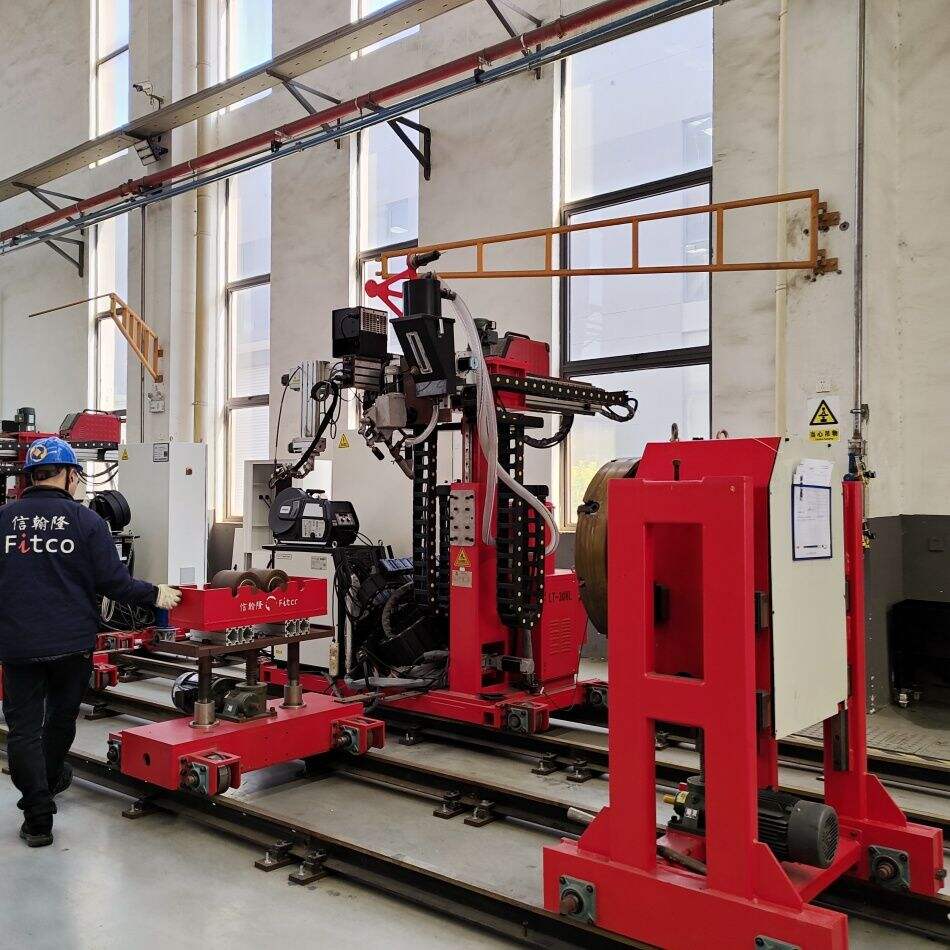
Automation significantly enhances the value of plasma arc welding in micro-welding production environments. CNC-controlled motion systems allow the torch to follow complex joint geometries with consistent speed and standoff, eliminating the operator-to-operator variation that inevitably affects manual welding of tiny components. Automated plasma arc welding cells can be programmed to weld hundreds of parts per shift with statistical process control monitoring in place to flag any deviations before they result in rejected parts.
Quality assurance for micro-welded plasma arc welding joints typically involves a combination of visual inspection under magnification, dye penetrant or fluorescent penetrant testing, leak testing for hermetic applications, and tensile or peel testing of sample joints. For medical device and aerospace applications, full traceability from raw material through to finished weld is often required, making the data logging capabilities of modern plasma arc welding power sources particularly valuable in these regulated environments.
FAQ
What thickness range can plasma arc welding handle in micro-welding applications?
Plasma arc welding is capable of welding materials from approximately 0.01 millimeters thick up to several millimeters in a single pass, depending on the power configuration. In micro-welding applications, it is most commonly used on materials between 0.05 and 2 millimeters thick. The process's stable low-current arc makes it one of the few arc welding methods capable of consistently joining extremely thin foils without burn-through.
How does plasma arc welding compare to laser welding for micro-applications?
Both plasma arc welding and laser welding are used in micro-welding, but they suit different scenarios. Laser welding offers a smaller spot size and is well-suited for highly reflective or extremely delicate components. However, plasma arc welding tends to be more robust across variable surface conditions, more cost-effective to implement and maintain, and more versatile when welding dissimilar metals. For many medical device and aerospace applications, plasma arc welding delivers equivalent quality at a significantly lower capital investment.
What gases are used in plasma arc welding for micro-welding?
In micro-welding applications, plasma arc welding typically uses pure argon as both the plasma gas and the shielding gas, particularly when welding reactive metals like titanium or Nitinol. For stainless steel, a helium or hydrogen addition to the shielding gas can improve bead wetting and arc energy. The exact gas selection depends on the material being welded, the joint configuration, and the required weld appearance and metallurgical properties.
Is plasma arc welding suitable for automated production of micro-welded components?
Yes, plasma arc welding is highly suitable for automated production environments. Its stable arc characteristics, programmable power sources, and compatibility with CNC motion systems make it straightforward to integrate into automated welding cells. Many manufacturers in the medical device, aerospace, and electronics sectors use automated plasma arc welding systems to produce large volumes of micro-welded assemblies with consistent quality, full process traceability, and minimal operator dependence.
Table of Contents
- How Plasma Arc Welding Works at the Micro Scale
- Key Advantages of Plasma Arc Welding in Micro-Welding Contexts
- Industrial Applications Where Plasma Arc Welding Defines the Standard
- Process Considerations and Setup for Micro-Welding Success
-
FAQ
- What thickness range can plasma arc welding handle in micro-welding applications?
- How does plasma arc welding compare to laser welding for micro-applications?
- What gases are used in plasma arc welding for micro-welding?
- Is plasma arc welding suitable for automated production of micro-welded components?