
 EN
EN
 AR
AR BG
BG HR
HR CS
CS DA
DA NL
NL FI
FI FR
FR DE
DE EL
EL HI
HI IT
IT JA
JA KO
KO NO
NO PL
PL PT
PT RO
RO RU
RU ES
ES SV
SV TL
TL IW
IW ID
ID LT
LT UK
UK SQ
SQ HU
HU TH
TH TR
TR FA
FA AF
AF CY
CY MK
MK LA
LA MN
MN KK
KK UZ
UZ KY
KY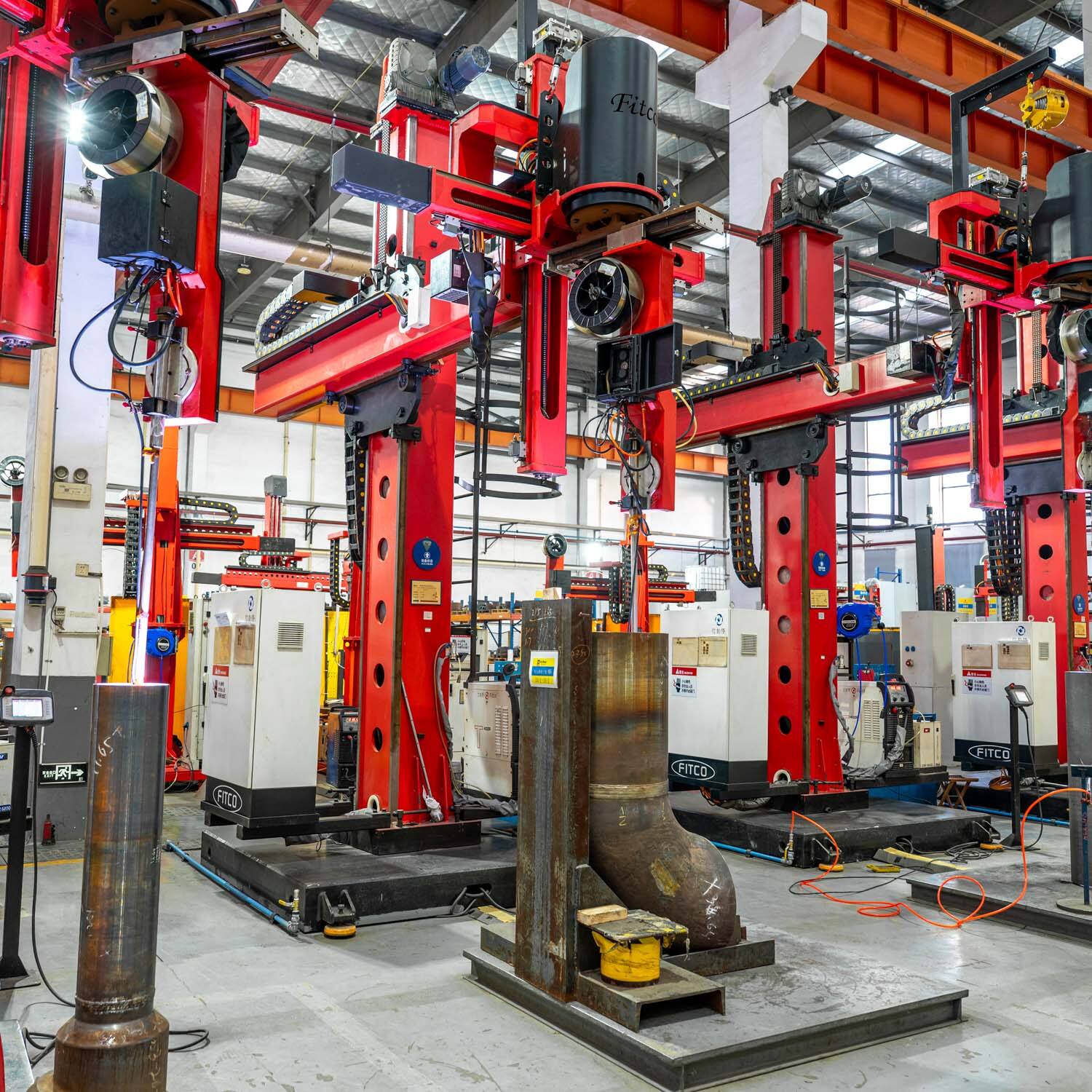
In today's competitive manufacturing landscape, every dollar spent on production must deliver measurable returns. For fabrication shops, structural manufacturers, and precision engineering facilities, welding represents one of the most labor-intensive and cost-sensitive operations on the floor. As skilled welders become harder to find and quality demands continue to rise, the financial case for automated welding has never been stronger. Organizations that have made the switch are reporting faster cycle times, lower rework rates, and a significantly improved return on investment across the board.
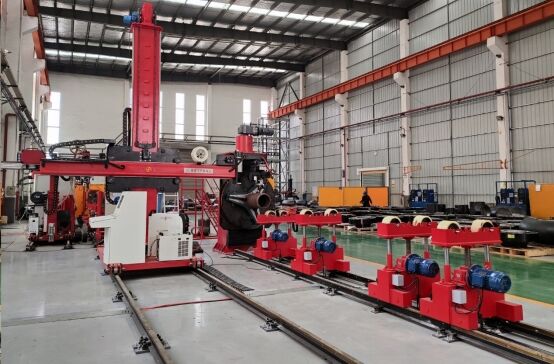
Switching from manual to automated welding is not simply a technology upgrade — it is a strategic business decision with long-term financial implications. The transition changes how labor is allocated, how quality is controlled, and how capacity is scaled. Understanding the ROI case requires looking beyond the initial capital investment and examining the compounding productivity gains, material savings, and risk reduction that automated welding consistently delivers over time. This article breaks down the key pillars of that financial argument and gives decision-makers the structured view they need to move forward with confidence.
The Hidden Costs of Manual Welding That Erode ROI
Labor Variability and Its Financial Impact
Manual welding is inherently dependent on the skill, consistency, and availability of individual operators. Even experienced welders produce results that vary from shift to shift due to fatigue, technique differences, and concentration lapses. This variability translates directly into inconsistent weld quality, which leads to higher inspection failure rates and costly rework cycles that eat into margins. When a production run requires multiple corrections, the labor cost per finished part escalates well beyond original estimates.
In contrast, automated welding eliminates operator-dependent variability by executing the same programmed parameters on every joint, every cycle. The result is a predictable, repeatable output that makes quality cost modeling far more accurate. For high-volume production environments, reducing variability alone can justify the capital outlay for an automated welding system within the first year of deployment.
Beyond individual performance variation, manual welding operations are also exposed to absenteeism risk. A single missing operator can delay an entire production schedule. Automated welding systems run continuously within their programmed parameters, making throughput far more predictable and resilient against workforce disruptions.
Consumable Waste and Material Inefficiency
Manual welding processes often result in excessive filler metal consumption, spatter generation, and inconsistent heat input that can distort base materials. These inefficiencies may seem minor on individual welds but accumulate significantly across thousands of production cycles. Scrap rates, material rejections, and the cost of grinding away excess weld material all represent hidden costs that rarely appear in simple labor cost calculations.
Automated welding systems are programmed to deliver precise wire feed rates, arc voltages, and travel speeds, which minimizes filler metal usage and dramatically reduces spatter. The consistency of automated welding means less post-weld cleanup, less grinding, and far lower rates of material rejection. Over a full production year, these savings in consumables and materials can represent a substantial percentage of the total cost reduction delivered by automation.
How Automated Welding Increases Throughput and Capacity
Arc-On Time as a Productivity Metric
One of the most important productivity metrics in welding operations is arc-on time — the percentage of available production time during which welding is actually occurring. Manual welding operations typically achieve arc-on times of 20 to 35 percent, as operators need time for positioning, electrode changes, slag removal, and rest. In contrast, automated welding systems routinely achieve arc-on times of 60 to 85 percent, more than doubling effective welding output per shift without adding headcount.
This dramatic improvement in arc-on time means that automated welding systems can complete the same volume of work in roughly half the time required by manual methods. For manufacturers competing on delivery lead times, this speed advantage translates directly into the ability to accept more orders, reduce backlog, and improve customer satisfaction. Higher throughput from the same floor space is one of the clearest and most quantifiable ROI contributors in any automated welding implementation.
Multi-Shift Capability Without Proportional Labor Cost Increases
Extending production hours with manual welding means hiring additional operators for second and third shifts, multiplying labor costs and supervision requirements. Automated welding systems, once set up and validated, can run extended shifts with minimal human intervention beyond basic monitoring and material loading. This fundamentally changes the economics of capacity expansion, allowing output to scale without a proportional increase in labor expenditure.
For manufacturers evaluating the ROI of automated welding, the ability to increase shift utilization without adding skilled labor headcount is particularly valuable in regions where welding labor is scarce or expensive. The capital investment in automation effectively replaces recurring labor costs that would otherwise grow every year with wage inflation. Over a three-to-five-year horizon, this cost displacement compounds significantly in the system's favor.
Additionally, automated welding systems maintain the same process parameters at midnight as they do at noon, eliminating the quality degradation that often occurs on late shifts with fatigued manual operators. Consistent quality across all shifts means fewer rejections and rework incidents regardless of when production is running.
Quality Improvements That Reduce Long-Term Costs
Weld Consistency and Reduced Inspection Burden
Quality is a financial issue, not just a technical one. Every failed inspection, every reworked joint, and every field warranty claim has a direct cost attached to it. Manual welding operations that struggle with consistency create a constant stream of quality-related expenses that are difficult to eliminate without changing the fundamental process. Automated welding addresses this at the source by producing welds that conform tightly to specified parameters every single time.
When weld quality is consistent, the inspection burden decreases significantly. Quality teams can shift from 100 percent inspection protocols to statistical sampling, reducing inspection labor and freeing quality personnel for higher-value tasks. The reduced inspection burden is a meaningful cost saving that is often overlooked when calculating the ROI of automated welding, but it compounds over time across every production run.
In industries where traceability and compliance documentation are mandatory — such as pressure vessel fabrication, aerospace, or medical device manufacturing — automated welding systems provide precise digital records of every weld parameter used. This documentation capability reduces audit preparation time and provides defensible quality records that protect the manufacturer against warranty claims and liability exposure.
Lower Rework Rates and Scrap Reduction
Rework is one of the most expensive hidden costs in manual welding operations. When a weld fails inspection, the cost of correction includes not only the labor and materials to repair the joint but also the disruption to the production schedule, the delay to downstream processes, and the potential for additional damage to the base material during rework. These cascading costs can be three to five times the original cost of the failed weld.
Automated welding dramatically reduces rework rates by eliminating the process variability that causes most weld defects in the first place. When defect rates drop, the entire production system becomes more efficient — less time is lost to rework, schedules become more reliable, and customer delivery commitments become easier to meet. The financial impact of scrap and rework reduction is one of the fastest and most visible contributors to positive ROI after an automated welding implementation.
Strategic ROI Considerations for the Transition
Calculating the Full Payback Period
A rigorous ROI analysis for automated welding should account for the full range of cost impacts rather than focusing narrowly on labor displacement. The most complete models include labor cost savings, consumable savings, scrap and rework reduction, throughput increases, quality cost reductions, and the value of improved delivery reliability. When all of these factors are included, payback periods for automated welding systems in mid-to-high volume applications typically range from one to three years, depending on production volume and the baseline performance of the manual process being replaced.
Capital investment in automated welding should also be viewed in the context of the recurring costs it replaces. Unlike labor, which costs more every year due to wage inflation, benefits costs, and training expenses, an automated welding system has a largely fixed cost profile after installation. The longer the system operates, the more favorable the total cost of ownership becomes relative to the manual alternative it replaced.
Workforce Redeployment and Upskilling Value
A common concern among manufacturers considering automated welding is workforce displacement. In practice, most successful automation implementations redeploy existing welders into higher-value roles such as programming, setup, quality monitoring, and maintenance rather than eliminating positions outright. This shift actually increases the skill level and engagement of the workforce while reducing the total number of operators required for a given production volume.
Upskilled operators who work alongside automated welding systems develop broader technical competencies that increase their value to the organization. The ability to program weld sequences, interpret process data, and troubleshoot system faults creates a more capable and versatile workforce that supports long-term production resilience. The human capital developed through this transition is an intangible but real contributor to the overall ROI of automated welding adoption.
Manufacturers who approach the transition to automated welding with a clear workforce strategy tend to achieve faster adoption rates and better system utilization. When operators understand that automation is an enabler of their professional development rather than a threat to their employment, engagement and buy-in improve significantly, which accelerates the path to realizing the projected ROI.
FAQ
How long does it typically take to achieve ROI after switching to automated welding?
The payback period for automated welding depends on production volume, the complexity of the work being automated, and the cost baseline of the manual process it replaces. For mid-to-high volume applications with consistent joint types, payback periods of one to three years are common when all financial benefits — including labor, consumables, scrap, and throughput gains — are factored into the analysis.
Is automated welding suitable for small batch or custom production environments?
Modern automated welding systems offer significant programming flexibility, and many platforms are designed to handle small batches with quick changeover capability. While the highest ROI is typically achieved in high-volume repeating applications, advances in collaborative robotics and adaptive welding technology have made automated welding increasingly viable for lower-volume and mixed-product environments.
What maintenance requirements should be factored into the ROI calculation for automated welding?
Automated welding systems require scheduled preventive maintenance including torch inspection, liner replacement, drive roll checks, and periodic calibration of process parameters. These costs should be included in the total cost of ownership model. However, well-maintained automated welding systems typically have lower unplanned downtime and longer service lives than manual operations exposed to operator variability and ergonomic strain.
Does automated welding work for all material types and joint configurations?
Automated welding is compatible with a wide range of materials including carbon steel, stainless steel, aluminum, and specialty alloys. It is suitable for butt joints, fillet welds, pipe welds, and many other common configurations. The key factor is that the joint geometry must be consistent enough for repeatable automated execution. Pre-weld fit-up quality is critical for automated welding to deliver its full performance and quality benefits.
Table of Contents
- The Hidden Costs of Manual Welding That Erode ROI
- How Automated Welding Increases Throughput and Capacity
- Quality Improvements That Reduce Long-Term Costs
- Strategic ROI Considerations for the Transition
-
FAQ
- How long does it typically take to achieve ROI after switching to automated welding?
- Is automated welding suitable for small batch or custom production environments?
- What maintenance requirements should be factored into the ROI calculation for automated welding?
- Does automated welding work for all material types and joint configurations?