
 EN
EN
 AR
AR BG
BG HR
HR CS
CS DA
DA NL
NL FI
FI FR
FR DE
DE EL
EL HI
HI IT
IT JA
JA KO
KO NO
NO PL
PL PT
PT RO
RO RU
RU ES
ES SV
SV TL
TL IW
IW ID
ID LT
LT UK
UK SQ
SQ HU
HU TH
TH TR
TR FA
FA AF
AF CY
CY MK
MK LA
LA MN
MN KK
KK UZ
UZ KY
KY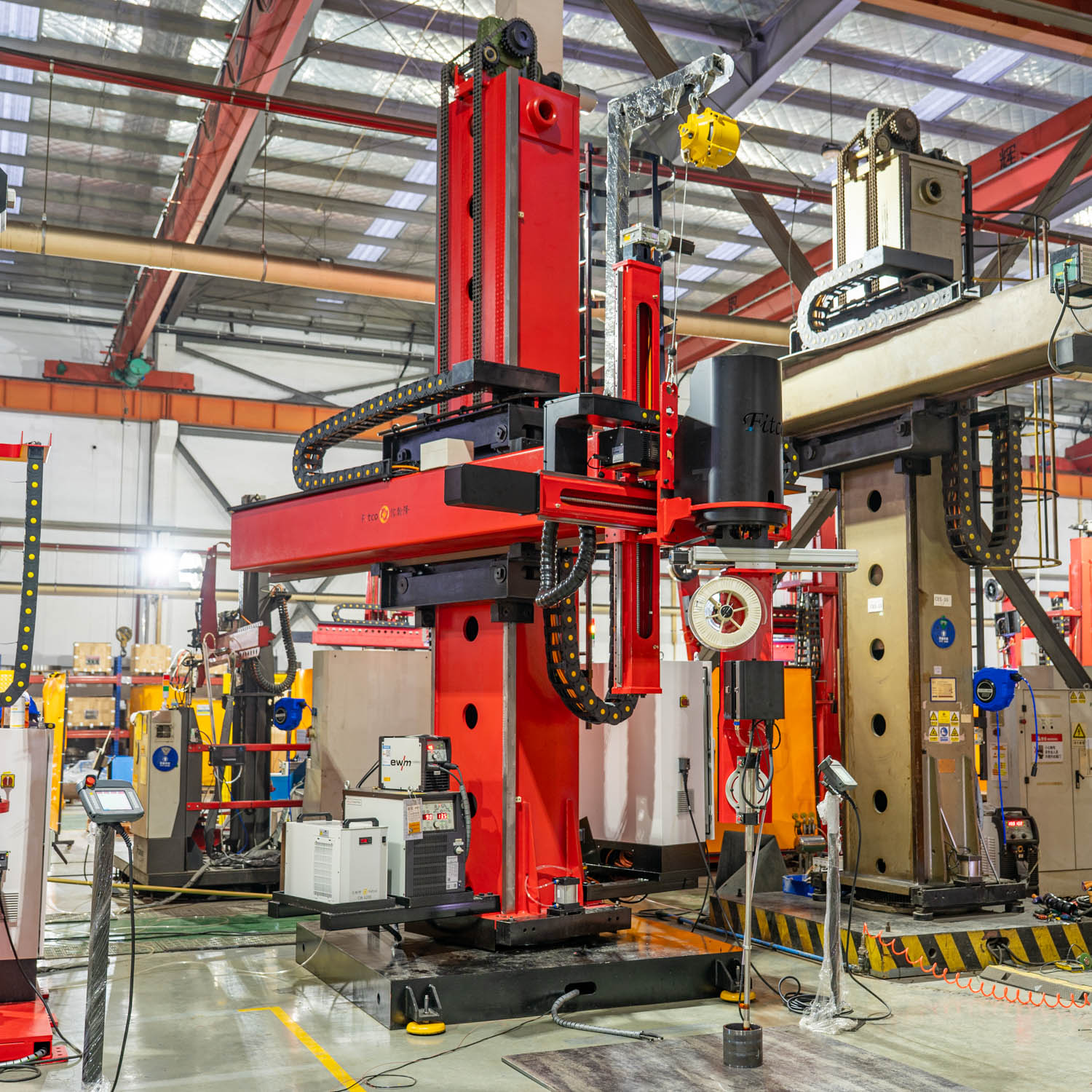
The manufacturing industry is facing a deepening crisis that shows no signs of reversing on its own. Across fabrication shops, shipyards, pipeline contractors, and heavy equipment manufacturers, the pool of qualified welders continues to shrink while production demands grow. Retirement rates among experienced welding professionals are outpacing training pipelines, and younger workers are not entering the trade in sufficient numbers to fill the gap. This is precisely where automated welding steps in—not as a distant future technology, but as a practical, deployable solution that manufacturers are adopting right now to maintain output, quality, and competitiveness.
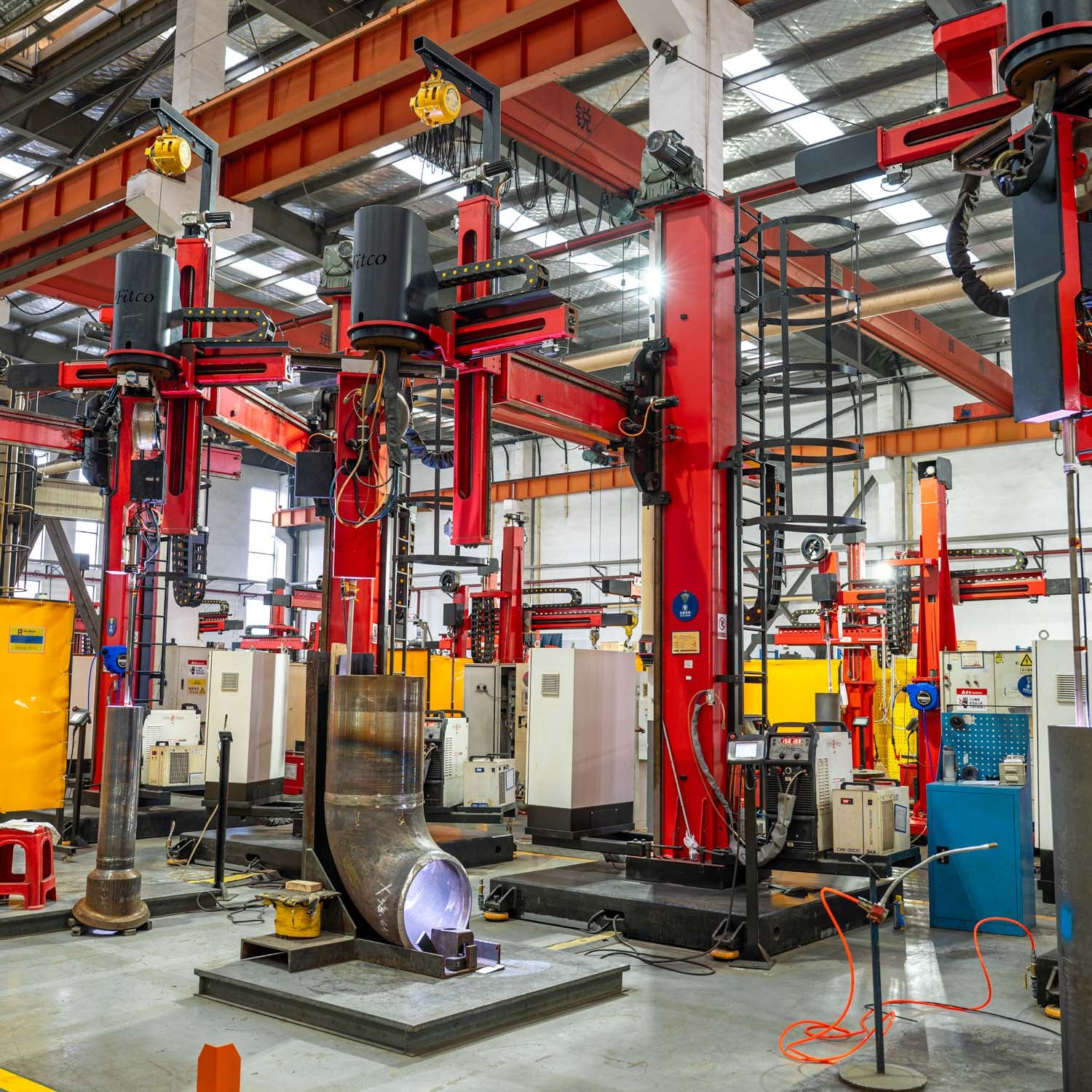
Understanding how automated welding systems address the skilled labor shortage requires looking beyond the surface-level argument of 'machines replacing people.' The reality is more nuanced and, for most operations, far more strategic. Automated welding fills specific capability gaps, extends the productivity of the skilled workers still on the floor, reduces dependence on an unstable labor market, and delivers consistent weld quality that human fatigue and variability simply cannot guarantee at scale. This article explores the mechanisms by which automated welding systems have become the most effective structural response to one of manufacturing's most pressing workforce challenges.
The Scope of the Skilled Welding Labor Shortage
Why the Shortage Is Structural, Not Cyclical
Many industry observers initially treated the decline in skilled welders as a temporary market correction—a dip that would self-correct once wages rose or training programs expanded. Decades of data have proven otherwise. The shortage is structural, driven by demographic realities that training initiatives alone cannot overcome fast enough. A significant portion of the active welding workforce is approaching retirement age, and the time required to develop a truly skilled welder—someone capable of executing critical-path welds on pressure vessels, structural steel, or aerospace components—is measured in years, not months.
The technical complexity of modern welding applications has also increased. Tighter tolerances, exotic base materials, and demanding industry certifications mean that entry-level welders require substantially more supervised development time before they can handle high-value work independently. This widens the gap between workforce supply and production demand, making automated welding not a preference but a necessity for operations that cannot afford quality compromises or production slowdowns.
Geographic distribution also compounds the problem. Skilled welders are concentrated in certain industrial regions, and facilities in areas with weaker vocational training infrastructure face even more acute shortages. Automated welding systems are location-agnostic in a way that human talent is not—they can be deployed wherever the work is, without the constraints of labor market geography.
The Business Cost of Relying Entirely on Manual Welding Capacity
Companies that have continued to depend entirely on manual welding capacity face a compounding set of business risks. Delayed delivery schedules tied to staffing shortfalls, elevated labor costs driven by competition for scarce talent, and inconsistent quality from an overstretched workforce are all measurable impacts. Some manufacturers report turning down contracts because they lack the certified welding capacity to fulfill them on time—a direct loss of revenue attributable to the labor gap.
The retention challenge adds another layer of cost. Recruiting experienced welders often involves significant signing bonuses and premium hourly rates, yet turnover remains high as workers move between employers for marginal wage increases. Automated welding systems, by contrast, represent a capital investment with a predictable operational cost profile and no attrition risk. For finance and operations leadership, this shift from variable labor cost to fixed capital cost offers both predictability and long-term savings.
How Automated Welding Systems Directly Address the Labor Gap
Multiplying the Output of Available Skilled Workers
One of the most immediately impactful ways that automated welding solves the labor shortage is through workforce multiplication. Rather than eliminating skilled welders, well-designed automated welding systems allow a single experienced operator to oversee and manage multiple welding cells simultaneously. A welder who might manually complete a fixed number of joints per shift can, with automated welding equipment, supervise a production process that completes several times that volume with the same quality standards.
This multiplication effect is particularly valuable for repetitive, high-volume applications such as pipe butt welding, longitudinal seam welding, or circumferential joint production. In these scenarios, automated welding handles the physical execution while the skilled worker focuses on setup, parameter optimization, monitoring, and quality verification—tasks that genuinely require human expertise and judgment. The result is that the existing labor pool becomes dramatically more productive without requiring additional headcount.
This model also changes the skill profile that manufacturers need to recruit. Rather than searching for large numbers of expert manual welders, operations can hire fewer highly skilled process engineers and machine operators who understand automated welding systems, supplemented by technicians who handle material prep and post-weld inspection. This reduces hiring pressure considerably and makes the talent pipeline more manageable.
Enabling Consistent Quality Without Dependence on Individual Skill Levels
Manual welding quality is inherently variable. Even among experienced welders, output quality fluctuates based on fatigue, health, day-to-day focus, and the cumulative physical demands of the trade. For manufacturers producing components that must pass strict radiographic testing, ultrasonic inspection, or pressure certification, this variability introduces scrap, rework, and compliance risk. Automated welding eliminates this source of variability by executing each weld to programmed parameters with machine precision, every time.
In process-critical applications—particularly in industries governed by ASME, AWS, or API standards—automated welding's repeatability is not just a quality benefit but a compliance enabler. Once a weld procedure is validated and programmed into the system, the automated welding equipment replicates that procedure exactly across every joint in the production run. This dramatically reduces the risk of non-conforming welds and the costly inspection failures that follow them.
Consistency also carries significant downstream benefits in assembly and inspection workflows. When weld geometry, penetration, and bead profile are uniform across a production batch, subsequent machining, coating, and testing processes become more streamlined and predictable. Automated welding thus creates quality upstream that simplifies operations downstream, reducing total production complexity.
Matching Automated Welding Systems to the Right Applications
Applications Where Automation Delivers Maximum Value
Not every welding application is equally suited to automation, but the range of suitable applications is broader than many manufacturers initially assume. Orbital and butt welding stations excel in pipe fabrication, tube mills, heat exchanger manufacturing, and pressure vessel production—all high-volume, high-precision applications where automated welding delivers maximum return. TIG-based automated welding systems are particularly well-suited to thin-wall, corrosion-resistant, or high-purity applications found in pharmaceutical equipment, food processing systems, and semiconductor manufacturing.
For structural fabrication, automated welding systems designed for longer seam runs can dramatically reduce cycle time on beams, columns, and frames. Robotic automated welding platforms handle complex three-dimensional weld paths in automotive, agricultural equipment, and heavy machinery production. The key is matching the automation platform to the joint geometry, material type, and production volume that define each specific application.
Even job shops producing lower volumes of varied parts are finding ways to leverage automated welding through flexible, quick-change tooling and intuitive programming interfaces that reduce setup time. Modern automated welding systems are designed with operator usability in mind, reducing the specialized programming knowledge traditionally required and making automation accessible to a wider range of manufacturing environments.
Transitioning from Manual to Automated Welding Without Disrupting Production
A common concern among manufacturers evaluating automated welding is the risk of production disruption during the transition. In practice, a well-planned implementation minimizes this risk by running manual and automated welding operations in parallel during the qualification phase. This allows process parameters to be validated and operators to be trained without removing manual welding capacity from the production floor before the automated system is proven.
Training existing welders to operate automated welding equipment is typically faster than training new employees to weld manually to production quality standards. Experienced welders understand weld metallurgy, joint preparation requirements, and quality indicators—knowledge that directly translates to effective operation and oversight of automated welding systems. This means the transition also serves as a workforce development opportunity that increases the value and versatility of current staff.
Phased implementation also allows manufacturers to build internal expertise gradually, starting with the most repetitive and highest-volume applications where automated welding provides the clearest return on investment, then expanding automation scope as confidence and competency grow across the organization.
Long-Term Strategic Implications of Automated Welding Adoption
Reducing Business Vulnerability to Labor Market Volatility
Every manufacturer that has experienced a skilled welder shortage knows the vulnerability that labor dependency creates. A single resignation on a critical project, a wave of retirements across a department, or a regional labor market shift can put delivery commitments at risk. Automated welding fundamentally reduces this vulnerability by anchoring a significant portion of production capacity in capital equipment rather than individual skill availability.
This does not mean eliminating human welding roles, but it does mean that the production volume and quality a facility can commit to becomes far less dependent on how many certified manual welders are available on any given day. Automated welding systems show up consistently, operate across extended shifts, and do not call in sick, leave for competitors, or require ongoing wage renegotiation. For operations planning and customer commitment purposes, this reliability has substantial strategic value.
The long-term competitive implication is significant. Manufacturers who have invested in automated welding capacity can accept larger contracts, offer shorter lead times, and provide more reliable quality guarantees than competitors still entirely dependent on manual labor. In procurement contexts where customers evaluate supplier risk, a robust automated welding infrastructure signals operational maturity and delivery reliability.
Building a Scalable Production Model Around Automated Welding
Perhaps the most strategically compelling aspect of automated welding is its scalability. When demand increases, scaling manual welding capacity means hiring, onboarding, and training additional skilled workers—a process that takes months and competes with every other manufacturer in the same labor pool. Scaling automated welding capacity means adding equipment and training existing operators to run additional cells, a far faster and more controllable growth pathway.
This scalability advantage compounds over time. Manufacturers who build their production model around automated welding develop increasingly efficient workflows, refined process parameters, and growing operator expertise that make each incremental expansion faster and more cost-effective. The institutional knowledge embedded in their automated welding programs becomes a durable competitive asset that is difficult for competitors to replicate quickly.
For companies pursuing growth or facing cyclical demand peaks, automated welding also offers the ability to increase throughput without the hiring risk associated with bringing on large numbers of skilled workers who may be difficult to retain if demand softens. The result is a more agile, responsive production operation that can capture market opportunities without the workforce overhead that previously limited growth ambitions.
FAQ
Does automated welding completely replace the need for skilled welders?
No. Automated welding reduces dependence on large numbers of manual welders but does not eliminate the need for skilled personnel. Experienced welders are essential for system setup, weld procedure development, quality oversight, and handling non-standard or complex geometries that fall outside the scope of automated execution. The workforce model shifts toward fewer, more technically versatile operators rather than complete replacement of human expertise.
What types of joints and materials are best suited for automated welding?
Automated welding performs best on repetitive joint configurations where consistent parameters can be applied across a production run. Butt welds on pipe and tube, circumferential joints on vessels, and longitudinal seam welds on structural profiles are all highly suitable. In terms of materials, automated welding is widely used on carbon steel, stainless steel, aluminum, and specialty alloys including titanium and duplex stainless, particularly where high-purity or corrosion-resistant weld integrity is required.
How long does it typically take to qualify an automated welding process for production use?
Qualification timelines vary depending on the applicable welding standard, the complexity of the joint configuration, and the base material. For many standard applications governed by ASME or AWS codes, automated welding process qualification can be completed within a few weeks once equipment is installed and parameters are established. The repeatability of automated welding systems actually accelerates qualification in many cases because parameter consistency makes test results highly reproducible.
Is automated welding accessible for smaller fabrication shops, or only large manufacturers?
Modern automated welding systems are available across a wide range of scales, from compact orbital welding stations suited to small-diameter pipe work in job shop environments to large robotic cells designed for high-volume structural fabrication. Many smaller operations find that even a single automated welding station provides a meaningful productivity increase and quality improvement that justifies the investment, particularly when the alternative is competing for scarce manual welding talent in a tight labor market.
Table of Contents
- The Scope of the Skilled Welding Labor Shortage
- How Automated Welding Systems Directly Address the Labor Gap
- Matching Automated Welding Systems to the Right Applications
- Long-Term Strategic Implications of Automated Welding Adoption
-
FAQ
- Does automated welding completely replace the need for skilled welders?
- What types of joints and materials are best suited for automated welding?
- How long does it typically take to qualify an automated welding process for production use?
- Is automated welding accessible for smaller fabrication shops, or only large manufacturers?