
 EN
EN
 AR
AR BG
BG HR
HR CS
CS DA
DA NL
NL FI
FI FR
FR DE
DE EL
EL HI
HI IT
IT JA
JA KO
KO NO
NO PL
PL PT
PT RO
RO RU
RU ES
ES SV
SV TL
TL IW
IW ID
ID LT
LT UK
UK SQ
SQ HU
HU TH
TH TR
TR FA
FA AF
AF CY
CY MK
MK LA
LA MN
MN KK
KK UZ
UZ KY
KY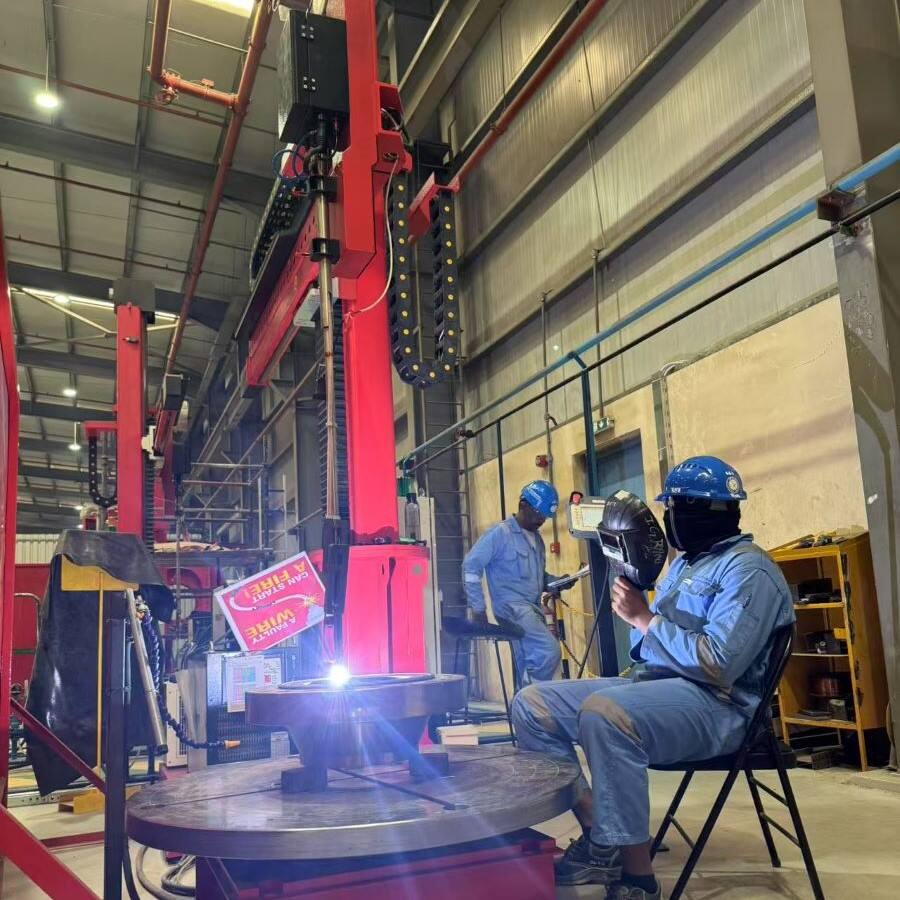
When manufacturing facilities and fabrication shops evaluate welding equipment investments, the question of cost-effectiveness between an arc welder and MIG welding system becomes critically important. Both processes serve distinct operational needs, yet the total cost of ownership extends far beyond the initial equipment purchase price. Understanding which welding method delivers better financial value requires examining equipment costs, consumable expenses, labor productivity, maintenance requirements, and the specific application context of your production environment. This comprehensive analysis helps industrial decision-makers align welding technology choices with budget constraints and long-term profitability goals.
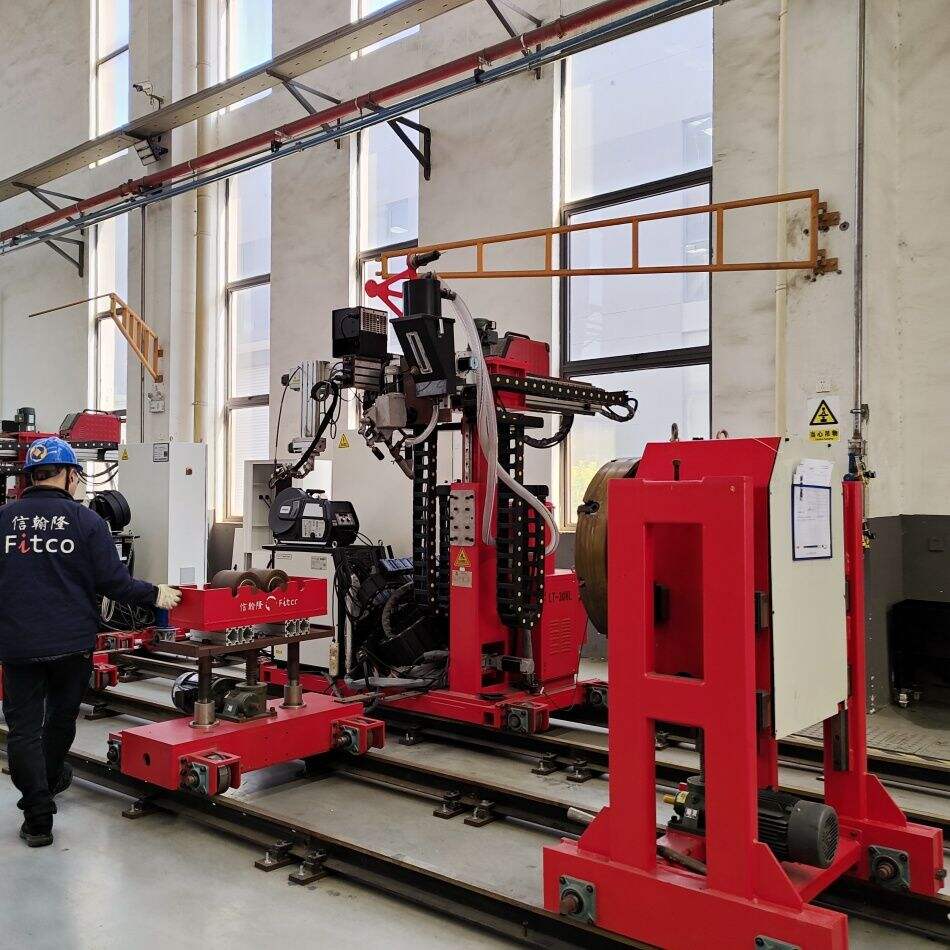
The cost-effectiveness comparison between arc welder technology and MIG welding depends on multiple operational factors including production volume, material thickness, operator skill availability, and quality requirements. While an arc welder typically presents lower upfront equipment costs and simpler operational requirements, MIG systems often demonstrate superior cost efficiency in high-volume production scenarios through faster deposition rates and reduced labor time. The selection decision must account for both direct expenses and indirect operational considerations that impact your facility's bottom line over the equipment's service life.
Initial Equipment Investment Comparison
Capital Cost Differences Between Arc Welder and MIG Systems
The upfront purchase price represents the most visible cost difference between these welding technologies. A conventional arc welder system, also known as Shielded Metal Arc Welding or stick welding equipment, generally requires significantly less capital investment than a MIG welding station. Entry-level industrial arc welder units suitable for professional fabrication work typically range from fifteen hundred to four thousand dollars, depending on amperage capacity and duty cycle ratings. These machines feature straightforward designs with fewer complex components, contributing to their lower manufacturing costs and market pricing.
MIG welding systems present a higher initial investment threshold due to their more sophisticated technology and additional required components. A complete MIG welding setup includes the power source, wire feed mechanism, gun assembly, gas regulator, and shielding gas cylinder infrastructure. Industrial-grade MIG equipment suitable for continuous production environments typically costs between three thousand and eight thousand dollars for mid-range models. Advanced pulse MIG systems with digital controls and synergic programming can exceed twelve thousand dollars. This price differential makes the arc welder more attractive for operations with limited capital budgets or occasional welding needs.
Infrastructure and Facility Requirements
Beyond the equipment itself, facility infrastructure costs differ substantially between these welding processes. An arc welder requires minimal supporting infrastructure, needing only appropriate electrical power supply and adequate ventilation for fume extraction. The portability of stick welding equipment allows deployment across diverse work locations without permanent installation requirements. This flexibility reduces facility modification costs and enables welding operations in field locations where fixed infrastructure is impractical.
MIG welding installations demand more comprehensive facility preparation and ongoing infrastructure costs. Shielding gas storage and distribution systems represent a significant infrastructure investment, particularly for facilities operating multiple welding stations. Gas cylinder storage areas must meet safety regulations, and gas distribution piping requires professional installation. Additionally, MIG systems benefit from cleaner workshop environments since contamination affects wire feed reliability and weld quality. Climate-controlled facilities that reduce moisture and dust exposure extend equipment life but increase operational overhead costs that affect the overall cost-effectiveness calculation.
Consumable Material Costs and Usage Efficiency
Electrode and Filler Material Expenses
Consumable material costs represent a significant ongoing expense that dramatically impacts long-term cost-effectiveness. The arc welder utilizes coated electrodes that combine both filler metal and flux in a single consumable. Electrode costs vary by size, coating type, and metallurgical specification, typically ranging from thirty to eighty cents per electrode for common carbon steel varieties. While individual electrode costs appear modest, the deposition efficiency of stick welding processes averages only fifty to sixty-five percent, meaning substantial material is lost to slag, spatter, and stub waste.
MIG welding consumables include solid or flux-cored wire on spools, contact tips, and shielding gas. Wire costs range from two to six dollars per pound depending on alloy composition and wire diameter. The higher deposition efficiency of MIG processes, typically achieving eighty-five to ninety-five percent material utilization, significantly reduces filler metal waste. This efficiency advantage becomes increasingly important in high-volume production environments where material costs multiply across thousands of welds. When comparing an arc welder against MIG systems for cost-effectiveness, the superior material utilization of MIG technology often compensates for higher equipment investment in production scenarios exceeding moderate volume thresholds.
Shielding Gas and Auxiliary Consumables
Shielding gas represents a unique recurring cost for MIG welding operations that does not apply to traditional arc welder processes. Carbon dioxide or argon-carbon dioxide mixtures commonly used for steel fabrication cost between twenty-five and fifty dollars per cylinder for standard industrial sizes. High-volume production facilities may consume multiple cylinders weekly, creating substantial annual gas expenses. Gas costs vary regionally based on supply logistics and vendor pricing structures, but typically add fifteen to thirty percent to the total consumable cost structure for MIG operations.
The arc welder eliminates shielding gas expenses entirely since the electrode coating generates protective gases during the welding process. This self-shielding characteristic reduces supply chain complexity and eliminates gas cylinder handling logistics. However, arc welder operations generate significant slag that requires removal through chipping and grinding, consuming abrasive materials and adding labor time. The trade-off between gas costs in MIG welding and slag removal requirements in arc welder operations must be evaluated within your specific production workflow to determine true cost-effectiveness.
Labor Productivity and Operational Efficiency
Welding Speed and Deposition Rates
Labor costs typically represent the largest component of total welding expenses in industrial operations, making productivity differences critically important for cost-effectiveness comparisons. MIG welding processes deliver substantially higher deposition rates than arc welder technology, with typical MIG operations achieving three to eight pounds of deposited metal per hour compared to one to five pounds per hour for stick welding. This productivity advantage translates directly to reduced labor hours per fabricated unit, lowering overall production costs despite higher equipment investment.
The continuous wire feed mechanism in MIG systems eliminates the frequent interruptions required when arc welder operators must change electrodes. A skilled stick welder typically changes electrodes every few minutes depending on electrode size and amperage settings, creating non-productive time that accumulates throughout production shifts. These interruptions also create stop-start points in weld beads that require additional care to avoid defects. The continuous operation capability of MIG welding reduces these interruptions, enabling longer uninterrupted weld runs that improve both productivity and quality consistency.
Operator Skill Requirements and Training Costs
The skill level required to produce quality welds significantly impacts labor costs and training investments. An arc welder demands considerable operator skill to maintain proper arc length, electrode angle, and travel speed while managing the consumable electrode length. Developing proficient stick welders requires extensive training periods, often spanning several months of supervised practice before operators achieve consistent production quality. This extended training timeline increases labor development costs and limits workforce flexibility when production demands fluctuate.
MIG welding systems offer more forgiving operation that enables faster operator training and skill development. The automated wire feed and stable arc characteristics reduce the manual coordination complexity, allowing new operators to produce acceptable welds within weeks rather than months. This accelerated learning curve reduces training costs and enables facilities to cross-train personnel more economically. However, the arc welder maintains advantages in outdoor and field applications where environmental conditions challenge MIG equipment, requiring cost-effectiveness evaluation to consider the specific operational context rather than production volume alone.
Maintenance Requirements and Equipment Longevity
Routine Maintenance and Service Costs
Long-term cost-effectiveness depends significantly on maintenance requirements and equipment reliability over the service life. The arc welder features robust, mechanically simple construction with fewer components subject to wear and failure. Routine maintenance primarily involves cleaning, cable inspection, and occasional replacement of electrode holders and ground clamps. Annual maintenance costs for arc welder equipment typically represent less than three percent of the initial equipment value, making these systems economically attractive for operations prioritizing minimal maintenance overhead.
MIG welding systems incorporate more complex mechanical and electrical components that require regular maintenance attention. Wire feed mechanisms contain drive rolls, guide tubes, and liner systems that experience wear and require periodic replacement. Contact tips and nozzles represent high-frequency replacement items, particularly in production environments with extended duty cycles. Gas regulators, solenoid valves, and electronic control systems add maintenance complexity. Annual maintenance costs for MIG equipment typically range from five to eight percent of equipment value, though preventive maintenance programs can minimize unexpected downtime costs that significantly impact production economics.
Equipment Durability and Replacement Cycles
The expected service life of welding equipment fundamentally affects total cost of ownership calculations. Industrial arc welder units typically deliver fifteen to twenty-five years of reliable service with proper maintenance, owing to their simple transformer-based or inverter designs with minimal moving parts. This exceptional longevity spreads capital investment across extended periods, reducing annualized equipment costs. The robust construction of stick welding equipment tolerates harsh environmental conditions including dust, moisture, and temperature extremes that would compromise more sensitive equipment.
MIG welding systems generally achieve ten to fifteen years of production service before major component replacement or equipment retirement becomes necessary. The wire feed mechanisms and electronic controls represent higher-technology components with finite service lives influenced by production intensity and environmental conditions. However, technological advancement in MIG equipment occurs more rapidly than arc welder development, potentially making older MIG units functionally obsolete before mechanical failure occurs. This technology evolution cycle may motivate earlier replacement to capture productivity improvements, affecting long-term cost-effectiveness calculations differently than simple mechanical longevity would suggest.
Application-Specific Cost Effectiveness Analysis
Material Thickness and Joint Configuration Considerations
The cost-effectiveness balance between arc welder and MIG technologies shifts dramatically based on material specifications and joint designs. Thick section welding applications, particularly those exceeding three-eighths inch thickness, often favor arc welder processes that deliver deep penetration with robust electrodes designed for heavy structural work. The higher amperage capability and forceful arc characteristics of stick welding excel in groove welds, heavy equipment repair, and structural steel fabrication where joint preparation quality may be less than ideal.
Thin sheet metal fabrication and precision joining applications demonstrate clear cost advantages for MIG welding technology. The controllable heat input and stable arc characteristics of MIG processes reduce distortion and enable productive welding of materials below one-eighth inch thickness where arc welder technology becomes impractical. Automotive manufacturing, appliance production, and sheet metal fabrication industries rely heavily on MIG welding specifically because the process economics favor high-speed production of thin-gauge assemblies where arc welder technology cannot compete on either quality or cost grounds.
Production Volume and Batch Size Economics
Production volume represents perhaps the most critical factor determining which process delivers superior cost-effectiveness. Low-volume job shops, custom fabricators, and maintenance operations typically find arc welder equipment more economical due to lower capital investment, operational simplicity, and flexibility across diverse applications. When annual welding volume remains below moderate thresholds, the labor productivity advantages of MIG systems cannot overcome the higher equipment and infrastructure costs.
High-volume manufacturing environments with repetitive welding operations demonstrate compelling cost advantages for MIG technology despite higher initial investment. The labor productivity gains from faster travel speeds and continuous operation multiply across thousands of production units, creating substantial annual savings that quickly recover equipment costs. Facilities welding more than twenty hours weekly on similar materials and joint configurations typically achieve payback on MIG equipment investment within eighteen to thirty-six months through labor savings alone, after which the ongoing productivity advantage continues delivering cost benefits throughout the equipment service life.
Environmental and Positional Welding Factors
Working environment conditions significantly influence practical cost-effectiveness beyond theoretical productivity calculations. The arc welder excels in outdoor construction, field repair, and adverse weather conditions where wind, moisture, and temperature extremes challenge gas-shielded processes. Pipeline construction, structural steel erection, and heavy equipment maintenance operations rely on stick welding specifically because the self-shielding electrode coating functions reliably in environments where MIG welding becomes impractical or impossible without expensive environmental controls.
Overhead and vertical welding positions present another application-specific consideration affecting cost-effectiveness. While skilled arc welder operators can produce quality welds in all positions using appropriate electrode types, the technique demands significant skill and physical stamina. MIG welding in overhead and vertical positions requires specific technique adjustments and may sacrifice some of the productivity advantages demonstrated in flat position work. For fabrication shops with predominantly flat-position production welding, MIG systems deliver clear cost advantages, while operations requiring extensive out-of-position work may find arc welder technology more economically practical despite lower theoretical productivity metrics.
FAQ
What is the typical payback period when investing in MIG equipment versus an arc welder for a small fabrication shop?
For small fabrication operations, the payback period for MIG equipment investment compared to arc welder technology typically ranges from two to four years depending on production volume and application mix. Shops performing more than fifteen hours of welding weekly on repetitive thin-gauge steel fabrication generally achieve payback within twenty-four months through labor savings. Operations with diverse materials, thick sections, or predominantly field work may not recover the additional MIG investment cost within the equipment service life, making the arc welder more cost-effective for those specific circumstances.
How do consumable costs compare between arc welder and MIG processes for typical structural steel fabrication?
For structural steel fabrication averaging three-sixteenths to three-eighths inch material thickness, total consumable costs typically favor MIG welding by fifteen to thirty percent despite the additional shielding gas expense. The superior deposition efficiency of MIG processes reduces filler metal waste substantially compared to arc welder electrode stub loss and spatter. However, this advantage assumes clean base material and proper gas coverage. Field conditions with contaminated steel or windy environments may reverse this advantage, making arc welder consumable costs more predictable and potentially lower in adverse working conditions.
Can facilities justify maintaining both arc welder and MIG equipment, or should shops standardize on one process?
Many industrial fabrication facilities find that maintaining both arc welder and MIG welding capabilities delivers optimal cost-effectiveness across diverse production requirements. This dual-process approach allows matching each welding task to the most economical technology based on material thickness, production volume, positional requirements, and working environment. The additional equipment investment for both systems typically proves justified when facilities regularly encounter applications where each process demonstrates clear advantages. Shops with narrowly defined production scope may achieve better cost efficiency through single-process standardization that simplifies training, consumable inventory, and maintenance procedures.
How does operator availability and regional labor markets affect the cost-effectiveness comparison between these welding processes?
Regional labor market conditions significantly influence practical cost-effectiveness beyond theoretical productivity calculations. Areas with scarce certified welding personnel may find MIG systems more economical despite higher equipment costs because the shorter training period and reduced skill requirements enable faster workforce development. Conversely, regions with established pipelines of experienced arc welder operators may achieve better cost efficiency leveraging existing workforce skills rather than investing in new equipment and retraining. Labor availability, prevailing wage rates, and training infrastructure all interact with equipment economics to determine the most cost-effective welding process choice for specific geographic markets and competitive environments.
Table of Contents
- Initial Equipment Investment Comparison
- Consumable Material Costs and Usage Efficiency
- Labor Productivity and Operational Efficiency
- Maintenance Requirements and Equipment Longevity
- Application-Specific Cost Effectiveness Analysis
-
FAQ
- What is the typical payback period when investing in MIG equipment versus an arc welder for a small fabrication shop?
- How do consumable costs compare between arc welder and MIG processes for typical structural steel fabrication?
- Can facilities justify maintaining both arc welder and MIG equipment, or should shops standardize on one process?
- How does operator availability and regional labor markets affect the cost-effectiveness comparison between these welding processes?