
 EN
EN
 AR
AR BG
BG HR
HR CS
CS DA
DA NL
NL FI
FI FR
FR DE
DE EL
EL HI
HI IT
IT JA
JA KO
KO NO
NO PL
PL PT
PT RO
RO RU
RU ES
ES SV
SV TL
TL IW
IW ID
ID LT
LT UK
UK SQ
SQ HU
HU TH
TH TR
TR FA
FA AF
AF CY
CY MK
MK LA
LA MN
MN KK
KK UZ
UZ KY
KY
In any fabrication environment, worker safety and operational efficiency depend heavily on the quality of equipment used to support and position workpieces. Among the most essential tools on any shop floor or job site, pipe stands play a foundational role in maintaining stability during cutting, welding, and assembly tasks. Without proper support systems in place, pipes and cylindrical workpieces can shift, roll, or fall, creating serious hazards for workers and causing costly damage to materials and equipment. Understanding the importance of pipe stands in fabrication safety is not optional — it is a core operational responsibility.
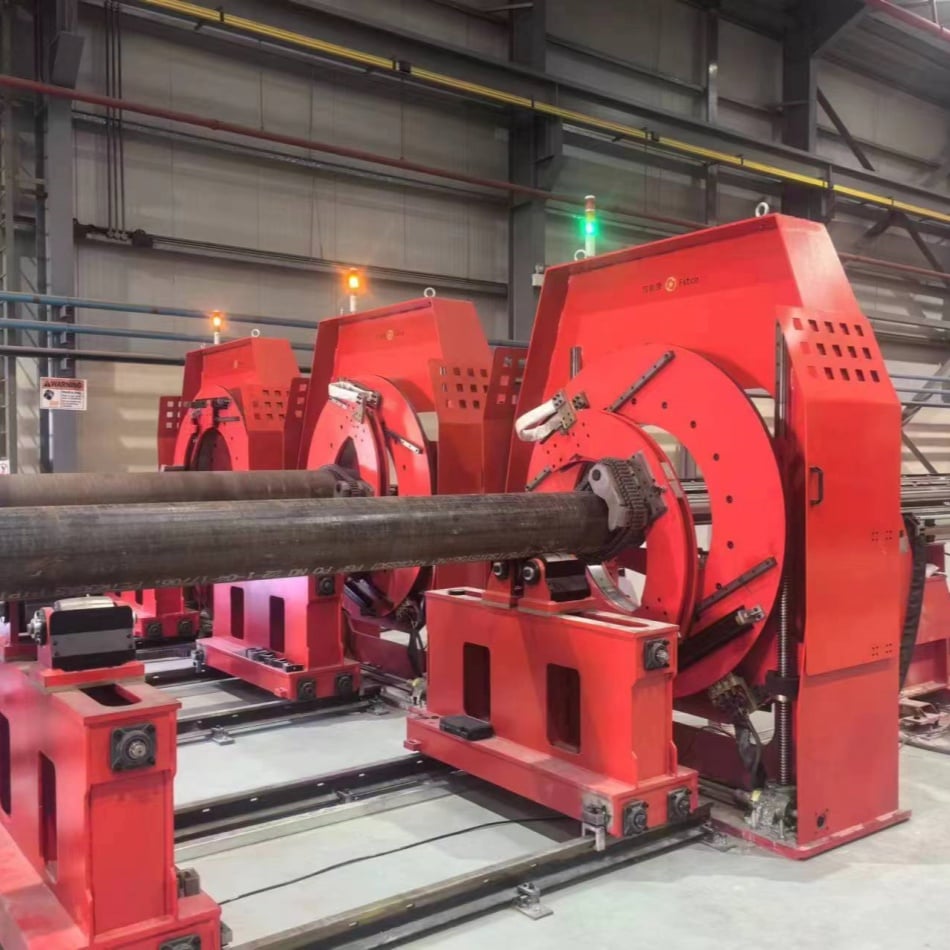
Heavy-duty pipe stands are specifically engineered to handle the demands of industrial fabrication, where workpieces can be extremely heavy, awkwardly shaped, or require precise positioning over extended periods. These pipe stands provide a stable, adjustable, and reliable platform that keeps pipes at the correct working height throughout every stage of fabrication. Investing in the right pipe stands is not merely a matter of convenience — it is a direct investment in reducing workplace injuries, improving weld quality, and maintaining consistent production standards across every project.
Why Pipe Stands Are Essential for Fabrication Safety
The Risk of Unsupported Pipe During Fabrication
Unsupported pipes during cutting, welding, or grinding operations represent one of the most common and preventable sources of workplace accidents in fabrication. When pipe stands are not used, workers often attempt to improvise support using blocks, scrap material, or even their own bodies, all of which introduce significant risk. Pipe stands eliminate this improvisation by providing a controlled, purpose-built support point that holds the workpiece securely in position. This directly reduces the chance of pipe rolling, sudden drops, or uncontrolled movement during critical operations.
The consequences of inadequate pipe support go beyond minor incidents. A falling length of heavy-gauge pipe can cause severe injuries, damage adjacent equipment, or disrupt surrounding workstations. Pipe stands are designed to absorb the static and dynamic load of industrial pipes while keeping the working surface clear and organized. Every fabrication team that takes safety seriously should treat pipe stands as non-negotiable standard equipment rather than optional accessories.
How Pipe Stands Reduce Fatigue and Improve Body Mechanics
Worker fatigue is a significant contributor to accidents in fabrication environments. When workers must constantly adjust, hold, or reposition unsupported pipe, their physical endurance is depleted faster, increasing the chance of errors and injuries during later stages of a shift. Pipe stands bring the workpiece to an ergonomic working height, reducing the need for bending, crouching, or awkward reaching. This improvement in body mechanics directly translates to fewer musculoskeletal injuries and a more productive, focused workforce.
Adjustable pipe stands are particularly valuable because they can be set to match the exact working height of the operator or the requirements of the task. Whether working on a floor-level assembly or a raised work table, pipe stands can be configured to eliminate strain and maintain consistent tool-to-work alignment. Over the course of a long fabrication project, this ergonomic advantage has a measurable impact on output quality and worker well-being.
Structural Requirements for Heavy-Duty Pipe Stands
Load Capacity and Material Durability
Not all pipe stands are created equal. In heavy fabrication settings, pipe stands must be rated to handle substantial loads without deformation, wobbling, or failure. Heavy-duty pipe stands are typically constructed from hardened steel frames with reinforced base plates that distribute weight evenly and resist tipping. The load capacity of pipe stands should always be matched to the maximum expected workpiece weight, with an appropriate safety margin applied. Using undersized pipe stands in demanding applications is a shortcut that directly undermines the safety benefits they are intended to provide.
The roller or V-head design on quality pipe stands also plays a critical role in safety. A well-designed head allows pipe to rotate freely during welding while keeping it centered and contained. This reduces the risk of the pipe slipping sideways during rotation and ensures that the welder maintains full control of the workpiece at all times. Pipe stands with low-quality or worn heads can become a liability rather than an asset on the shop floor.
Stability Features That Prevent Accidents
The base design of pipe stands is directly related to their safety performance. Wide-stance base frames, anti-slip feet, and locking height adjustment mechanisms are all features that prevent pipe stands from shifting or collapsing under load. In environments where floors may be uneven, oily, or cluttered, these stability features become even more critical. Pipe stands that are prone to sliding or tipping under working conditions negate their purpose entirely and create new hazards instead of eliminating existing ones.
Some pipe stands incorporate chain vises or clamping mechanisms that hold the pipe firmly in position during stationary operations such as threading or precision cutting. These clamping pipe stands are especially important when working with heavy or long pipe sections that may exert significant rotational or lateral force on the support point. Choosing pipe stands with the right combination of stability features for the specific application is a key part of responsible fabrication planning.
Integrating Pipe Stands Into a Safety-First Fabrication Workflow
Positioning and Setup Best Practices
The safety benefits of pipe stands are only fully realized when they are set up and positioned correctly before work begins. Pipe stands should be spaced at intervals that prevent sagging or cantilevering of the pipe between support points. For longer pipe sections, multiple pipe stands should be used to distribute the load evenly and maintain consistent elevation along the full length of the workpiece. Neglecting proper setup undermines the stability that pipe stands are designed to provide, even when high-quality equipment is used.
Before beginning any fabrication task, workers should verify that all pipe stands are locked at the correct height, that the load capacity is appropriate for the workpiece, and that the base is sitting flat and securely on the work surface. This pre-task inspection takes only a few minutes but significantly reduces the risk of equipment failure during the job. Building this verification step into standard operating procedures ensures that pipe stands are consistently used as intended.
Training Workers on Proper Pipe Stand Use
Even the best pipe stands will fail to deliver their safety benefits if workers do not know how to use them correctly. Training programs should cover the correct selection of pipe stands based on pipe diameter and weight, proper height adjustment procedures, and the importance of spacing multiple pipe stands for long pipe runs. Workers should also be trained to inspect pipe stands for wear, damage, or mechanical failure before each use. A culture that treats pipe stands as precision safety tools — rather than simple props — produces measurably safer fabrication environments.
FAQ
What makes heavy-duty pipe stands different from standard pipe stands?
Heavy-duty pipe stands are built with higher load ratings, reinforced steel construction, and more robust stability features than standard pipe stands. They are designed for industrial fabrication environments where workpieces are heavier, operations last longer, and safety margins must be strictly maintained. Standard pipe stands may be adequate for light-duty tasks, but heavy fabrication requires pipe stands that will not deform or shift under significant load.
How many pipe stands should be used for a single pipe section?
The number of pipe stands required depends on the length, diameter, and weight of the pipe. As a general guideline, pipe stands should be placed at regular intervals to prevent the pipe from sagging between support points. For most industrial pipe sections, a minimum of two pipe stands is required, and longer sections may need three or more. Always consult load distribution guidelines and apply a conservative safety margin when determining the number of pipe stands needed.
Can pipe stands be used on uneven or outdoor surfaces?
Yes, many pipe stands are designed with adjustable legs or wide-base frames that allow them to function on uneven or outdoor surfaces. However, it is important to verify that the pipe stands are fully stable before loading them with pipe. On soft ground or sloped surfaces, additional measures such as base plates or ground anchors may be needed to prevent the pipe stands from sinking or shifting during use. Always prioritize surface stability when deploying pipe stands outside a controlled shop environment.