
 EN
EN
 AR
AR BG
BG HR
HR CS
CS DA
DA NL
NL FI
FI FR
FR DE
DE EL
EL HI
HI IT
IT JA
JA KO
KO NO
NO PL
PL PT
PT RO
RO RU
RU ES
ES SV
SV TL
TL IW
IW ID
ID LT
LT UK
UK SQ
SQ HU
HU TH
TH TR
TR FA
FA AF
AF CY
CY MK
MK LA
LA MN
MN KK
KK UZ
UZ KY
KY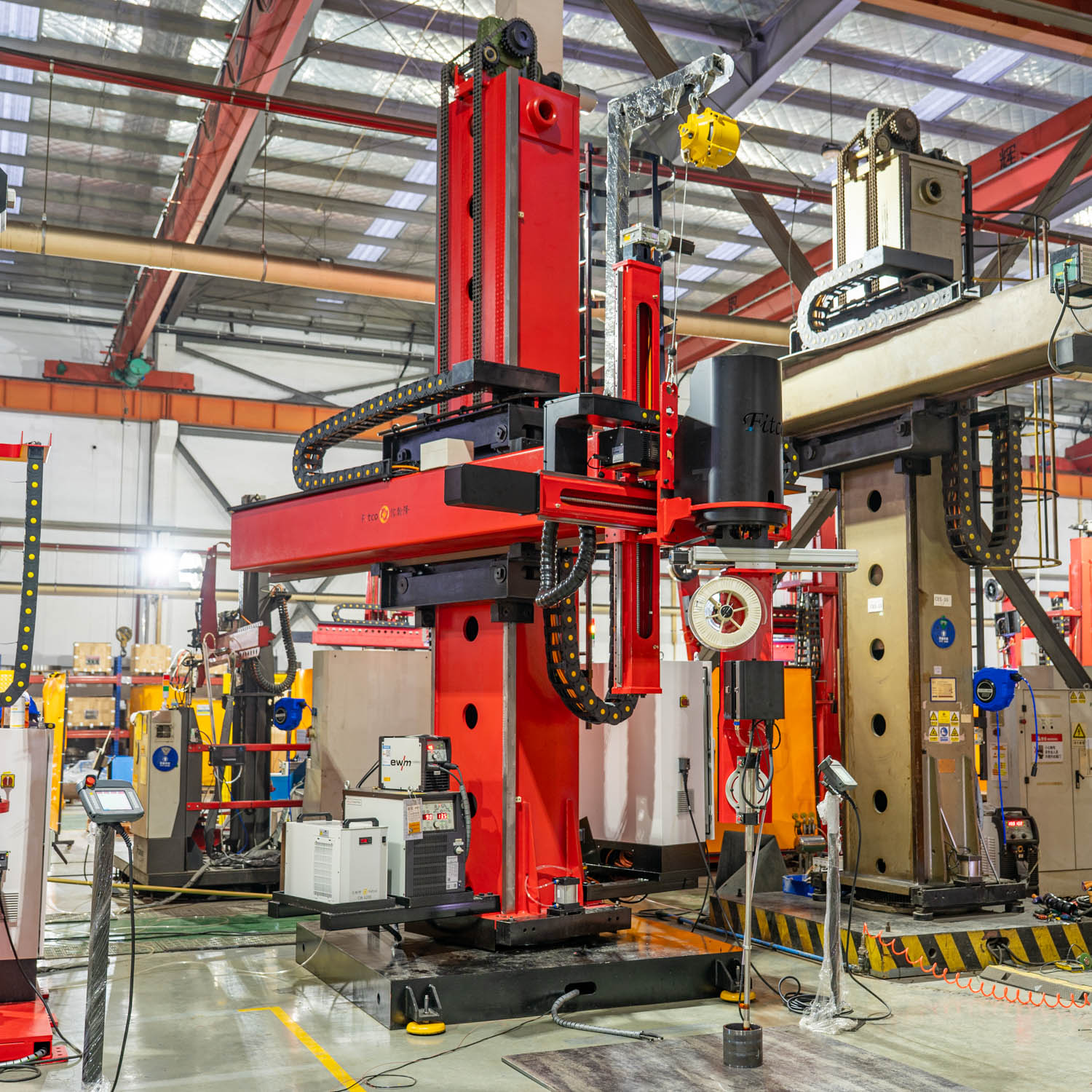
In demanding fabrication environments, weld consistency is not optional — it is a core quality requirement. Whether producing pressure vessels, pipelines, or structural steel components, even minor deviations in travel speed, arc length, or torch angle can introduce defects that compromise structural integrity. Automatic welding carriages address these challenges directly by mechanizing the torch movement and maintaining precise, repeatable parameters across every weld pass. The result is a dramatic reduction in human-error-related inconsistencies and a measurable improvement in overall weld quality.

The shift from manual to automatic welding is not simply about speed. It is fundamentally about control. automatic welding carriages are engineered to travel along a defined path at a consistent speed while holding the torch at an exact angle and distance from the workpiece. This level of mechanical precision is virtually impossible to sustain manually over long weld seams or during high-volume production runs. Understanding how automatic welding carriages achieve and maintain weld consistency is essential for any fabricator looking to raise quality standards without inflating labor costs.
How Automatic Welding Carriages Deliver Consistent Results
Stable Travel Speed and Torch Positioning
One of the primary contributors to weld inconsistency in manual operations is fluctuating travel speed. A welder's hand speed naturally varies, especially over long seams or during fatigue. Automatic welding carriages eliminate this variable entirely by using motorized drive systems that maintain a set speed throughout the entire weld run. This stable travel speed ensures uniform heat input, which directly controls bead width, penetration depth, and fusion quality.
Beyond travel speed, automatic welding systems hold the torch at a fixed angle and standoff distance from the joint. In TIG-based automatic welding applications, this is especially critical because even small changes in arc length alter the heat distribution and weld pool behavior. Carriage-mounted torch holders can be adjusted with fine precision before welding begins, and they maintain that setting without drift throughout the entire pass. The consistency achieved by automatic welding in this regard simply cannot be replicated manually in production conditions.
Repeatable Parameter Control Across Multiple Passes
Many industrial welds require multiple passes to achieve the required throat thickness or fill a deep joint. Each pass must be consistent with the previous one to ensure proper fusion and avoid cold lap, porosity, or undercut. With automatic welding, operators program the carriage parameters once and replicate them exactly for every subsequent pass. This repeatability is one of the most significant quality advantages automatic welding offers over conventional manual methods.
Automatic welding carriages used in longitudinal and circumferential seam applications are particularly well-suited for multi-pass work. The mechanical memory of the system means that the second, third, and fourth passes are executed with the same precision as the first. This consistency is reflected in radiographic and ultrasonic test results, where automatic welding-produced joints routinely outperform manually welded equivalents in acceptance rate metrics.
Weld Quality Benefits Specific to Carriage-Based Automatic Welding
Reduced Porosity and Surface Defects
Porosity is a common defect in manual welding that results from gas entrapment in the weld pool. It is often caused by inconsistent torch movement, poor shielding gas coverage, or variations in travel speed. Automatic welding carriages minimize these risks by maintaining steady motion and ensuring the torch stays correctly oriented over the joint at all times. The stable arc behavior produced by automatic welding results in a calmer weld pool with less turbulence, reducing the likelihood of gas being trapped before solidification.
Surface finish quality also improves significantly with automatic welding. Consistent bead profiles, smooth ripple patterns, and uniform crown height are all natural outcomes of controlled torch travel. In industries where aesthetics matter alongside structural integrity — such as food-grade equipment or visible architectural metalwork — automatic welding carriages deliver a surface quality that manual welding can rarely match consistently at production volumes.
Improved Fusion and Heat-Affected Zone Control
Proper fusion between the weld metal and base material depends on controlled, consistent heat input. Automatic welding systems maintain this control because travel speed and amperage remain stable throughout the weld. The heat-affected zone (HAZ) produced by automatic welding is predictable and narrower compared to manual welds, which is a significant advantage when working with heat-sensitive alloys or thin materials where distortion must be minimized.
In circumferential seam applications such as pipe welding, automatic welding carriages follow the joint profile continuously without the stop-and-restart interruptions that manual welders must make. These interruptions create thermally inconsistent zones that are potential defect sites. By eliminating them, automatic welding produces a continuous, thermally stable weld seam with fewer weak points and more predictable mechanical properties.
Operational Advantages That Support Consistent Output
Operator Fatigue Elimination and Skill Leveling
Manual welding quality degrades over time as operators experience fatigue, especially on long shifts or repetitive tasks. Automatic welding carriages do not fatigue. They perform the hundredth weld with the same precision as the first. This is a critical operational advantage in high-volume production where maintaining quality at the end of a shift is as important as at the beginning. Automatic welding also reduces the dependency on the highest-skilled welders for every joint, since the carriage handles the most demanding aspects of torch control.
Process Documentation and Quality Traceability
Modern automatic welding systems often integrate with digital monitoring tools that log travel speed, amperage, voltage, and other parameters in real time. This data is invaluable for quality assurance, process certification, and traceability in regulated industries such as pressure vessel fabrication or petrochemical construction. When automatic welding is used, deviations are flagged immediately, allowing corrective action before defective welds accumulate. The audit trail generated by automatic welding systems supports compliance with industry standards and customer quality requirements.
For fabrication teams aiming to improve first-pass acceptance rates and reduce rework costs, adopting automatic welding carriages represents a clear, process-driven solution. Automatic welding does not replace skilled operators — it empowers them to focus on setup, monitoring, and process optimization while the carriage handles the mechanical execution with unwavering consistency.
FAQ
What types of joints are best suited for automatic welding carriages?
Automatic welding carriages excel on long, continuous joints such as longitudinal seams on tanks, circumferential pipe welds, and flat butt or fillet welds on structural plates. Any joint that requires consistent travel over a defined path benefits significantly from automatic welding. Complex joints with irregular geometry may require specialized torch guidance systems to achieve the same results.
Can automatic welding carriages be used with TIG processes?
Yes. Automatic welding carriages are widely used with TIG (GTAW) processes, particularly for stainless steel, aluminum, and high-purity material applications. TIG-based automatic welding demands precise arc length and travel speed control, both of which carriage systems provide reliably. The combination of automatic welding carriages and TIG process is common in food, pharmaceutical, and aerospace fabrication.
How does automatic welding reduce rework rates on production lines?
Automatic welding reduces rework by eliminating the human inconsistencies that cause most common weld defects. Consistent travel speed prevents undercut and overlap. Stable torch positioning prevents porosity and poor fusion. Because automatic welding parameters are programmed and held constant, defect rates drop significantly compared to manual methods. Lower defect rates mean fewer rejected parts, less repair labor, and higher throughput efficiency across the production line.