
 EN
EN
 AR
AR BG
BG HR
HR CS
CS DA
DA NL
NL FI
FI FR
FR DE
DE EL
EL HI
HI IT
IT JA
JA KO
KO NO
NO PL
PL PT
PT RO
RO RU
RU ES
ES SV
SV TL
TL IW
IW ID
ID LT
LT UK
UK SQ
SQ HU
HU TH
TH TR
TR FA
FA AF
AF CY
CY MK
MK LA
LA MN
MN KK
KK UZ
UZ KY
KY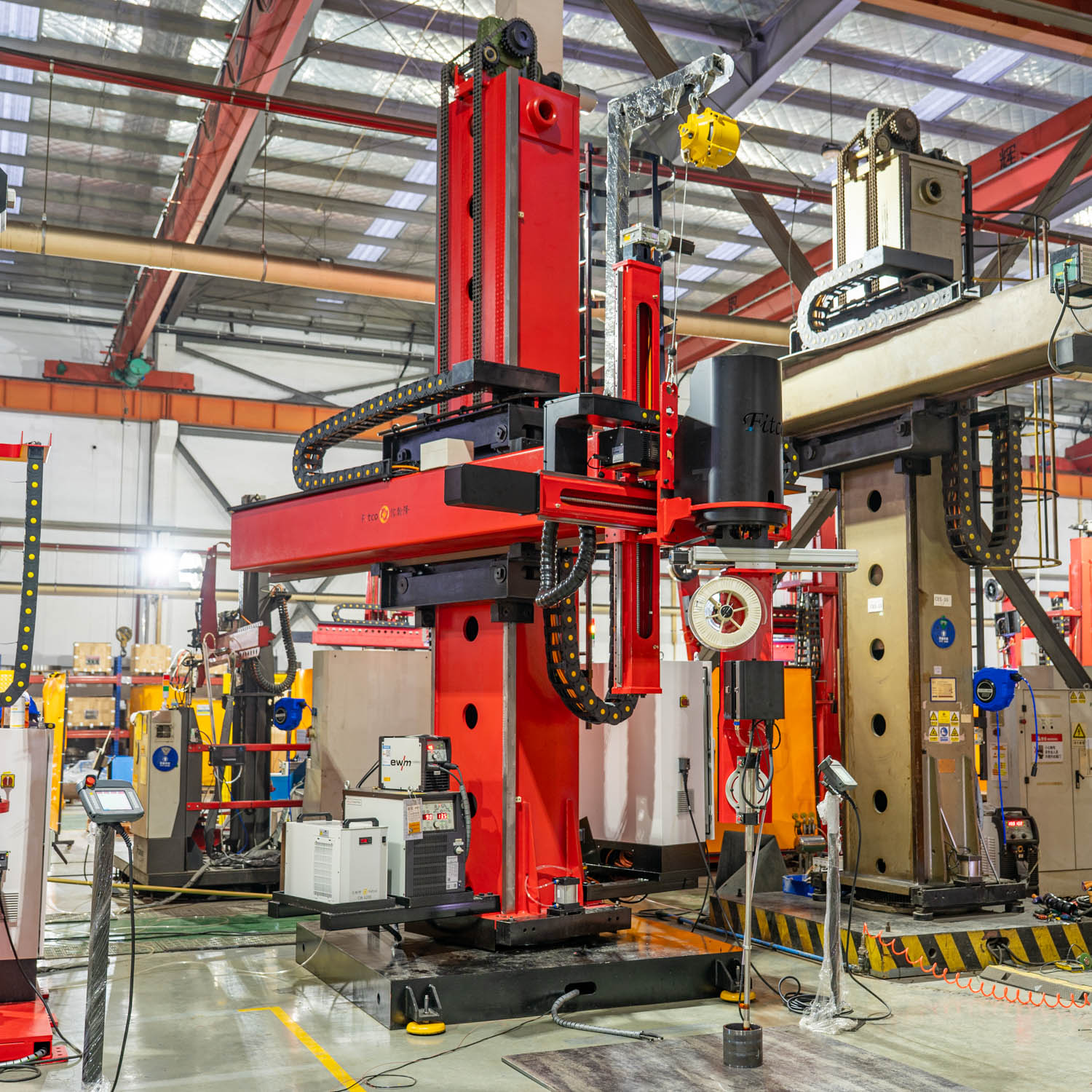
When fabricating large diameter tanks, every hour of downtime and every defective weld joint carries serious cost consequences. automatic welding has emerged as the defining solution for manufacturers who need to maintain high throughput without sacrificing structural integrity. Unlike manual processes, automatic welding delivers consistent arc control, uniform bead geometry, and repeatable performance across every joint on a tank shell — regardless of the operator on shift.
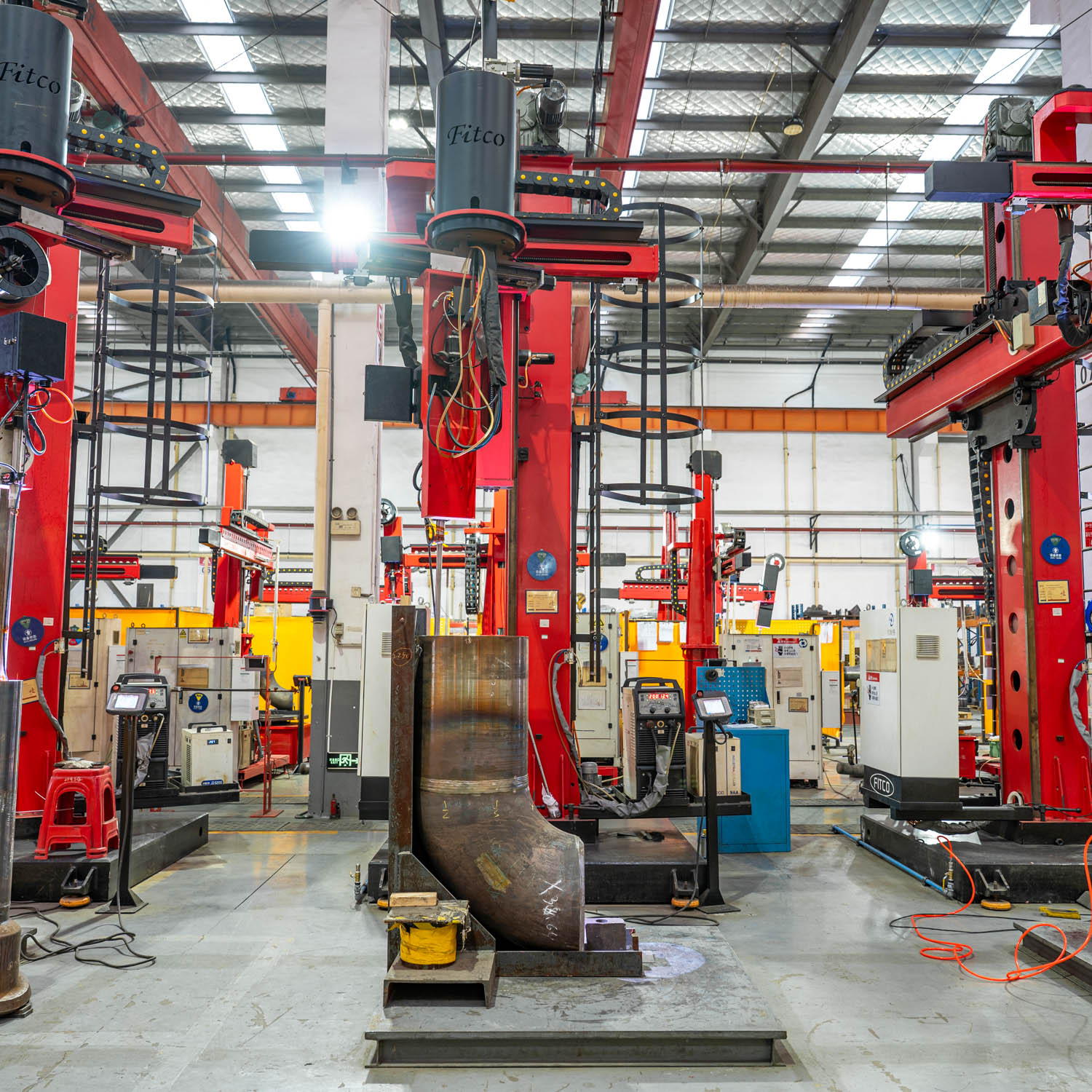
Large diameter tanks used in oil and gas storage, chemical processing, and water treatment demand extremely tight weld quality standards. Achieving those standards manually is slow, expensive, and prone to human variability. Automatic welding addresses these challenges directly by automating travel speed, voltage, wire feed rate, and torch positioning — all critical parameters when welding long circumferential or longitudinal seams on tank structures. The efficiency gains from adopting automatic welding in this environment are measurable, documented, and transformative.
Productivity Gains Through Automatic Welding
Faster Deposition and Continuous Arc Time
One of the most immediate efficiency gains from automatic welding is the dramatic increase in arc-on time. Manual welding operations typically achieve arc-on time rates of 20 to 30 percent during a shift, largely because welders need rest, repositioning, and setup time. Automatic welding systems, by contrast, consistently achieve arc-on time rates of 70 to 90 percent. For a large diameter tank project involving hundreds of meters of weld seam, that difference translates directly into faster project completion and lower labor cost per meter.
Automatic welding also enables higher deposition rates by sustaining optimal welding parameters without fatigue-related drift. Pulse MIG-based automatic welding equipment can deposit weld metal at rates that are two to four times higher than typical manual MIG operations. When applied to tank shell seams, this means fewer passes are needed to achieve full penetration, reducing total welding time significantly and freeing up downstream inspection resources sooner.
Reduced Rework and Inspection Burden
Rework is one of the most damaging efficiency killers in large tank fabrication. A single defective weld on a shell seam can require full gouge-and-reweld procedures, adding days to the schedule. Automatic welding reduces the root cause of rework — inconsistent torch travel speed, incorrect voltage drift, and uneven wire feed — because these variables are locked in by the machine controller rather than left to human judgment. This leads to first-pass acceptance rates that are measurably higher than those achieved through manual welding on long seams.
With automatic welding, weld parameters are logged and traceable. Quality engineers can review weld data and correlate it with NDT results, allowing faster diagnosis and faster corrective action when deviations occur. This traceability feature also supports compliance with pressure vessel and storage tank codes, reducing the administrative burden of quality documentation.
Weld Quality Consistency on Tank Seams
Uniform Heat Input Across Long Seams
Large diameter tanks feature seam lengths that can extend several meters in a single run. Maintaining uniform heat input across that entire length manually is nearly impossible, especially on the circumferential seams of tank shells rotating on turning rolls. Automatic welding systems paired with tank positioners maintain perfectly constant torch-to-work distance, travel speed, and voltage throughout the entire rotation. The result is a weld bead with consistent crown width, penetration depth, and heat-affected zone profile from start to finish.
Consistent heat input through automatic welding also reduces distortion risk. Tanks fabricated with manual welding often experience thermal distortion that complicates fit-up of subsequent shell courses. Automatic welding minimizes this risk by applying heat in a controlled, predictable manner, which in turn reduces the time spent on straightening, re-fitting, and realignment activities between welding passes.
Process Stability for Challenging Materials
Many large diameter tanks are fabricated from materials that require strict heat management — stainless steel liners, low-alloy high-strength steels, and clad plates among them. Automatic welding handles these materials more reliably than manual methods because the machine holds interpass temperature windows and travel speed tolerances far more precisely than a human welder can under fatigue or production pressure. Pulse MIG-based automatic welding, in particular, is well suited to thin-to-medium thickness tank shells where spatter control and heat management are critical to surface quality and corrosion resistance.
Cost Efficiency and Return on Investment
Labor Cost Reduction and Workforce Flexibility
Automatic welding reduces the number of highly skilled manual welders required to complete a tank project. A single operator can oversee multiple automatic welding heads simultaneously, meaning the skilled labor cost per meter of completed weld seam drops substantially. In markets where certified welders are expensive or in short supply, this is a decisive competitive advantage. Fabrication shops that adopt automatic welding can take on larger tank projects without proportionally scaling their workforce, directly improving margin and capacity.
The learning curve for operators of automatic welding systems is also shorter than developing highly skilled manual welders. A trained machine operator who understands welding parameter logic can manage an automatic welding station effectively after structured training, reducing the long-term dependence on scarce certified welder talent.
Energy and Consumable Efficiency
Automatic welding reduces consumable waste by maintaining precise wire feed and shielding gas flow rates throughout the weld cycle. Manual welding frequently results in over-consumption of shielding gas due to inconsistent gun positioning and unnecessary purging. Automatic welding systems regulate gas flow precisely to what the weld pool requires. Over the course of a large tank project, these savings in wire and gas consumables add up to a meaningful reduction in material cost per weld joint.
Power consumption is also more efficient with automatic welding because the duty cycle is optimized by the machine controller. The arc burns only when the weld is actively progressing, minimizing idle power draw. For fabrication shops managing energy costs across multiple welding stations, automatic welding contributes to leaner overall facility operating costs.
FAQ
What types of tank seams benefit most from automatic welding?
Circumferential seams and longitudinal shell seams benefit most from automatic welding because they are long, repetitive, and require consistent heat input throughout. Automatic welding paired with tank rotators or seam tracking systems is ideal for these joint types in large diameter tank fabrication.
Can automatic welding be adapted to different tank diameters?
Yes. Automatic welding systems can be configured for a wide range of tank diameters by adjusting travel speed settings and torch angle parameters. Many automatic welding stations used in tank fabrication are designed with adjustable carriages or column-and-boom arrangements that accommodate varying vessel sizes without major equipment changes.
How does automatic welding support weld code compliance for storage tanks?
Automatic welding supports code compliance by enabling precise parameter control and data logging. Welding procedure specifications require defined voltage, current, travel speed, and heat input ranges. Automatic welding systems lock in and record these values, making it straightforward to demonstrate compliance during audits and third-party inspections for standards such as API 650 and ASME Section VIII.