
 EN
EN
 AR
AR BG
BG HR
HR CS
CS DA
DA NL
NL FI
FI FR
FR DE
DE EL
EL HI
HI IT
IT JA
JA KO
KO NO
NO PL
PL PT
PT RO
RO RU
RU ES
ES SV
SV TL
TL IW
IW ID
ID LT
LT UK
UK SQ
SQ HU
HU TH
TH TR
TR FA
FA AF
AF CY
CY MK
MK LA
LA MN
MN KK
KK UZ
UZ KY
KY
Selecting the right foot pedals and remote controls for your tig welding equipment directly impacts the quality, precision, and efficiency of your welding operations. These control accessories serve as the critical interface between the welder and the machine, determining how smoothly you can adjust amperage, control arc initiation, and manage heat input during complex welding procedures. The choice between different control options depends on your specific welding applications, workspace constraints, and the technical requirements of your projects.
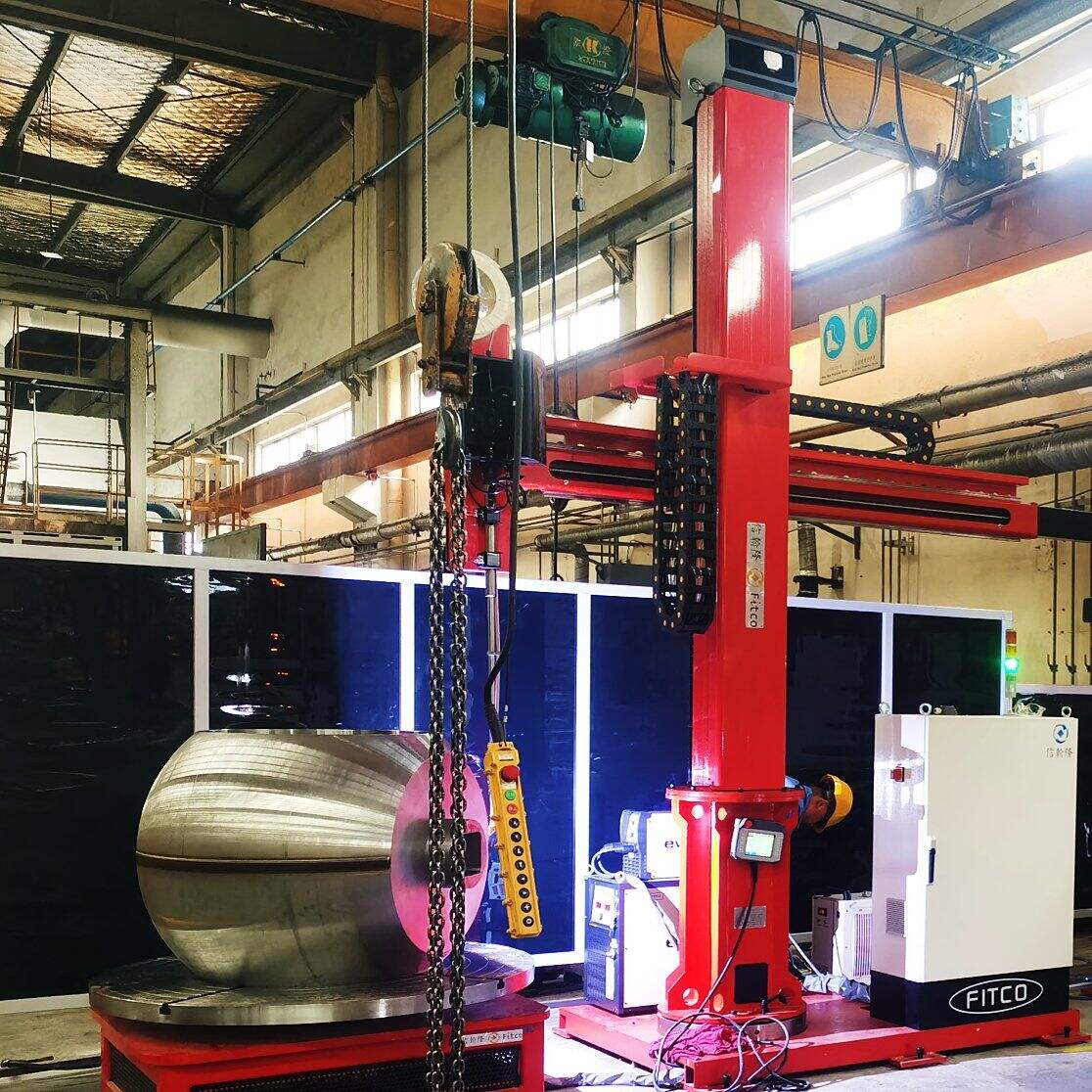
Modern tig welding equipment offers various control configurations, from traditional foot pedals to advanced wireless remote systems, each designed to enhance operator control and welding performance. Understanding the technical specifications, compatibility requirements, and operational advantages of each control type enables welders to make informed decisions that optimize their welding setup. This selection process involves evaluating factors such as amperage range, response sensitivity, durability requirements, and integration capabilities with existing welding systems.
Understanding Control System Compatibility
Electrical Interface Requirements
The electrical compatibility between control devices and your tig welding equipment forms the foundation of effective system integration. Most professional tig welding equipment uses standardized control circuits that operate on low-voltage DC signals, typically ranging from 0-10 volts for amperage control. The control interface must match the input impedance and signal characteristics of your welding machine to ensure accurate and responsive amperage adjustment throughout the welding process.
Digital tig welding equipment often incorporates advanced control protocols that support both analog and digital control signals. These systems provide enhanced precision and programming capabilities, allowing for custom amperage curves, pulse timing control, and multi-step welding sequences. When selecting control devices for digital welding systems, verify that the controller supports the specific communication protocol used by your equipment, whether it employs proprietary digital interfaces or industry-standard communication methods.
Connector compatibility represents another critical consideration, as different manufacturers may use various plug configurations for control connections. Standard 14-pin connectors are common in professional tig welding equipment, but some systems utilize custom connector designs that require specific control devices. Always verify the connector type and pinout configuration before purchasing control accessories to ensure proper electrical connection and signal transmission.
Power Supply Considerations
The power requirements for control devices vary significantly between different types of foot pedals and remote controls. Basic analog foot pedals typically draw minimal power from the welding machine's control circuit, usually less than 50 milliamps, making them compatible with virtually all tig welding equipment without affecting machine performance. These low-power devices rely on simple potentiometer circuits that provide reliable amperage control without complex electronic components.
Wireless remote controls and advanced digital controllers require dedicated power sources, either through internal batteries or external power connections. Battery-powered systems offer maximum portability but require regular charging or battery replacement to maintain consistent operation. Some advanced tig welding equipment provides auxiliary power outputs specifically designed to supply remote control devices, eliminating battery dependency while maintaining wireless operation capabilities.
Power consumption patterns also affect long-term reliability and operational costs. High-frequency wireless systems typically consume more power than simple radio frequency controllers, potentially reducing battery life and increasing maintenance requirements. Consider the expected duty cycle and operational environment when evaluating power requirements, particularly for applications involving extended welding sessions or remote work locations where power access may be limited.
Foot Pedal Selection Criteria
Mechanical Design and Ergonomics
The mechanical construction of foot pedals significantly influences operator comfort and control precision during extended welding operations. Heavy-duty foot pedals designed for industrial tig welding equipment feature robust metal housings and precision-engineered pivot mechanisms that provide consistent pedal response over thousands of operating cycles. The pedal surface should offer adequate grip and size to accommodate different foot positions while maintaining stable control pressure throughout the amperage range.
Pedal travel distance and force requirements directly affect operator fatigue and control accuracy. Professional-grade foot pedals typically provide 2-4 inches of linear travel with progressive resistance that increases gradually from minimum to maximum amperage settings. This progressive resistance helps welders develop muscle memory for specific amperage levels and provides tactile feedback that enhances control precision during critical welding phases.
Adjustable pedal configurations allow customization of control characteristics to match individual operator preferences and specific welding applications. Some advanced foot pedals include adjustable spring tension, variable travel limits, and reversible control action to accommodate left-handed operators or specialized welding positions. These adjustability features prove particularly valuable in multi-operator environments where different welders share the same tig welding equipment.
Response Characteristics and Sensitivity
The response curve of foot pedals determines how amperage changes relate to pedal position, directly affecting welding control and heat input management. Linear response curves provide proportional amperage changes across the entire pedal travel range, making them suitable for applications requiring consistent control sensitivity. Exponential response curves offer finer control at lower amperage settings, beneficial for precision welding of thin materials where subtle heat adjustments are critical.
Control sensitivity settings enable welders to match pedal response to specific welding techniques and material requirements. High-sensitivity configurations provide rapid amperage changes with minimal pedal movement, suitable for dynamic welding applications requiring quick heat adjustments. Low-sensitivity settings offer more stable control for steady-state welding conditions, reducing the risk of accidental amperage fluctuations during long weld passes.
Dead zone characteristics at the pedal extremes affect starting and stopping behavior of the welding arc. Properly designed foot pedals include minimal dead zones that allow precise control near zero amperage for arc initiation and termination. Excessive dead zones can cause abrupt arc starts or difficulty achieving complete arc extinction, potentially affecting weld quality and operator control during critical welding phases.
Remote Control Technology Options
Wireless Communication Protocols
Modern wireless remote controls for tig welding equipment utilize various communication protocols, each offering distinct advantages for different operational environments. Radio frequency systems operating in the 2.4 GHz band provide reliable communication over moderate distances while maintaining compatibility with most welding environments. These systems typically offer 50-100 foot operating ranges with minimal interference from standard industrial equipment, making them suitable for most shop-based welding applications.
Bluetooth-enabled remote controls integrate seamlessly with digital tig welding equipment that supports wireless connectivity standards. These systems offer advanced programming capabilities, including custom control profiles, data logging, and integration with welding management software. Bluetooth protocols provide secure communication channels that resist interference while enabling bidirectional data exchange between the remote control and welding system.
Proprietary wireless protocols developed specifically for welding applications offer optimized performance characteristics tailored to the unique requirements of tig welding equipment. These systems typically provide faster response times, enhanced interference immunity, and specialized features such as automatic frequency hopping to maintain reliable communication in electromagnetically noisy environments. The trade-off involves potential compatibility limitations with third-party accessories or future equipment upgrades.
Control Interface Features
Advanced remote controls incorporate multiple control interfaces that extend beyond basic amperage adjustment to include comprehensive welding parameter management. Digital displays provide real-time feedback on amperage settings, battery status, and communication signal strength, enabling operators to monitor system performance throughout welding operations. Touch-sensitive controls or rotary encoders offer precise parameter adjustment with tactile feedback that remains functional even when wearing welding gloves.
Programmable control buttons allow welders to store and recall custom welding profiles optimized for specific materials, joint configurations, or welding techniques. These memory functions prove particularly valuable in production welding environments where consistent parameter settings are essential for maintaining weld quality and productivity. Some systems support dozens of stored profiles with automatic parameter switching based on job selection or material identification codes.
Multi-function capabilities enable single remote controls to manage multiple aspects of tig welding equipment operation, including gas flow control, pulse timing adjustment, and post-flow duration settings. Integrated controls reduce the number of separate devices required while providing centralized access to all critical welding parameters. This consolidation improves operator efficiency and reduces the potential for setup errors that could affect weld quality or safety.
Application-Specific Selection Guidelines
Production Welding Requirements
High-volume production welding environments require control devices that prioritize reliability, repeatability, and minimal maintenance requirements. Industrial-grade foot pedals with sealed construction and heavy-duty switching components provide consistent performance throughout extended production runs while resisting contamination from welding fumes, spatter, and environmental debris. The control system must maintain calibration accuracy over thousands of operating cycles to ensure consistent weld quality across production batches.
Production efficiency considerations favor control systems that minimize setup time and operator training requirements. Simple, intuitive control interfaces reduce the learning curve for new operators while maintaining the precision required for quality welding. Standardized control configurations across multiple tig welding equipment installations enable operators to move between workstations without requiring specific training on different control systems, improving workforce flexibility and reducing training costs.
Quality assurance requirements in production environments often mandate traceable control settings and parameter documentation. Digital remote controls with data logging capabilities provide automatic recording of welding parameters, operator identification, and time stamps for quality tracking purposes. These documented control records support quality certification processes and enable rapid identification of parameter variations that might affect weld integrity or production consistency.
Precision and Specialty Welding
Precision welding applications involving thin materials, exotic alloys, or critical structural components require control systems with enhanced sensitivity and stability characteristics. Ultra-responsive foot pedals with fine-resolution potentiometers enable micro-adjustments in heat input that are essential for controlling penetration depth and minimizing distortion in precision welding applications. The control system must provide smooth, stepless amperage adjustment without electrical noise or signal fluctuations that could affect arc stability.
Specialty welding techniques such as orbital welding, automatic seam tracking, or multi-pass procedures benefit from programmable remote controls that can execute complex amperage sequences automatically. These systems reduce operator workload while ensuring consistent parameter control throughout lengthy welding procedures. Advanced programming capabilities allow welders to develop custom control sequences optimized for specific joint geometries, material combinations, or penetration requirements.
Environmental considerations for precision welding include electromagnetic interference immunity and temperature stability of control devices. Precision tig welding equipment often operates in laboratory or cleanroom environments where electrical interference must be minimized to maintain measurement accuracy and process control. Control systems must demonstrate stable operation across varying ambient temperatures while maintaining calibration accuracy that supports repeatable welding results.
FAQ
What is the difference between analog and digital foot pedals for tig welding equipment?
Analog foot pedals use simple potentiometer circuits to provide continuous amperage control through variable resistance, offering reliable operation with minimal electronic complexity. Digital foot pedals incorporate microprocessor-based control systems that provide enhanced precision, programmable response curves, and integration capabilities with advanced tig welding equipment. Digital systems typically offer better repeatability and additional features such as memory settings, but analog pedals often provide more intuitive tactile feedback and greater compatibility across different welding machine brands.
Can wireless remote controls interfere with the welding arc or other shop equipment?
Modern wireless remote controls designed for tig welding equipment use frequency bands and power levels specifically chosen to minimize interference with welding operations and shop equipment. Most systems operate in the 2.4 GHz ISM band with low power transmission that does not affect arc stability or welding quality. However, proper installation and setup procedures should be followed to ensure optimal performance, including maintaining adequate separation from high-power electrical equipment and verifying communication reliability before critical welding operations.
How do I determine if my existing tig welding equipment is compatible with aftermarket control devices?
Compatibility verification requires checking three key factors: electrical interface specifications, connector types, and control signal requirements. Review your welding equipment manual for control input specifications, including voltage ranges, current requirements, and connector pinout diagrams. Most professional tig welding equipment uses standardized 0-10 volt control signals and common connector types, but some manufacturers use proprietary interfaces. Contact the control device manufacturer with your welding equipment model information to confirm compatibility before purchasing aftermarket accessories.
What maintenance is required for foot pedals and remote controls used with tig welding equipment?
Regular maintenance includes cleaning control surfaces and connections to prevent contamination from welding spatter and debris, checking cable integrity for signs of damage or wear, and verifying calibration accuracy periodically. Wireless systems require battery maintenance and charging cycle management to ensure reliable operation. Mechanical components such as pedal pivots and springs should be inspected for wear and lubricated according to manufacturer recommendations. Professional calibration services may be required annually for precision applications where control accuracy is critical for weld quality certification.
Table of Contents
- Understanding Control System Compatibility
- Foot Pedal Selection Criteria
- Remote Control Technology Options
- Application-Specific Selection Guidelines
-
FAQ
- What is the difference between analog and digital foot pedals for tig welding equipment?
- Can wireless remote controls interfere with the welding arc or other shop equipment?
- How do I determine if my existing tig welding equipment is compatible with aftermarket control devices?
- What maintenance is required for foot pedals and remote controls used with tig welding equipment?