
 EN
EN
 AR
AR BG
BG HR
HR CS
CS DA
DA NL
NL FI
FI FR
FR DE
DE EL
EL HI
HI IT
IT JA
JA KO
KO NO
NO PL
PL PT
PT RO
RO RU
RU ES
ES SV
SV TL
TL IW
IW ID
ID LT
LT UK
UK SQ
SQ HU
HU TH
TH TR
TR FA
FA AF
AF CY
CY MK
MK LA
LA MN
MN KK
KK UZ
UZ KY
KY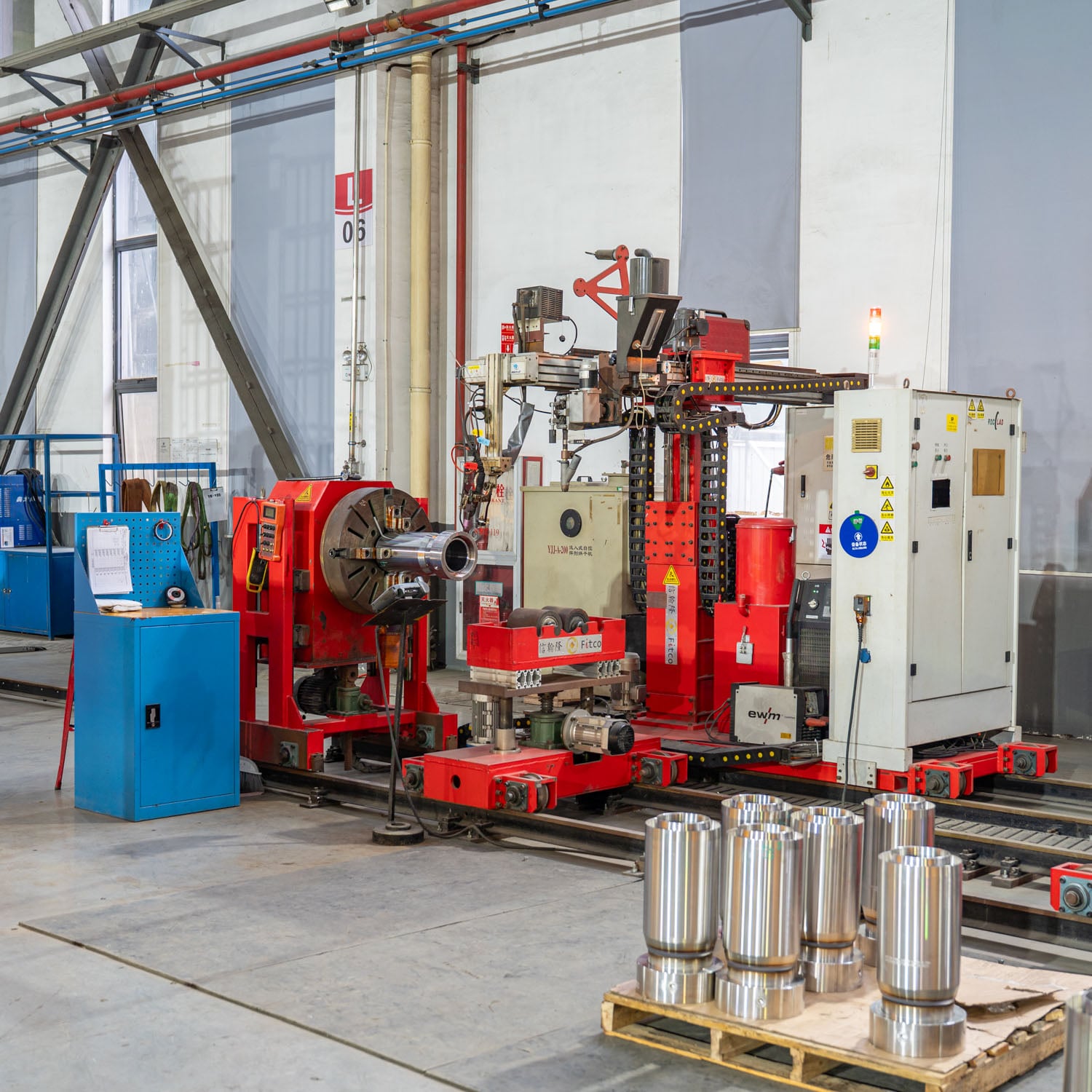
Achieving perfect longitudinal joints requires more than standard welding equipment and operator skill. A seam welder delivers the precision, consistency, and control necessary to create high-quality joints that meet stringent industrial specifications. Whether you work in automotive manufacturing, pressure vessel fabrication, or pipe production, understanding how a seam welder produces flawless longitudinal welds is essential to maintaining production standards and reducing rework costs.
The seam welder stands apart from conventional welding methods because it applies continuous, overlapping heat and pressure along the joint line. This rolling electrode contact creates a series of overlapping nuggets that form a continuous seam, eliminating gaps and ensuring uniform penetration. A seam welder excels at closing longitudinal seams where two metal edges must join in a linear path, particularly when consistency and leak-proof integrity are required.
Understanding Seam Welder Technology and Longitudinal Joint Formation
How a Seam Welder Creates Continuous Longitudinal Joints
A seam welder operates by rolling electrodes that maintain constant contact with the workpiece while electrical current flows through the material. As the electrodes move along the longitudinal seam, they generate heat that melts the base metals and filler material simultaneously. The seam welder applies precise pressure at each point of contact, forcing the molten metal into intimate contact and creating a solid bond. Unlike spot welding, which creates individual points of fusion, a seam welder produces an unbroken line of fusion that runs the full length of the joint.
The rolling electrode design of a seam welder allows for smooth, predictable motion along curved or straight longitudinal paths. Modern seam welder systems incorporate servo-controlled electrode speed, adjustable current settings, and real-time monitoring to maintain consistency across the entire joint. When a seam welder moves along the longitudinal seam at controlled speed while delivering regulated current, the result is uniform heat distribution and equal penetration depth throughout the weld bead.
Critical Parameters for Achieving Perfect Longitudinal Joints
Operating a seam welder successfully requires precise control of electrode force, welding current, travel speed, and electrode wheel diameter. Each parameter directly affects how the seam welder penetrates the base material and fuses the longitudinal edges. The electrode force must be high enough to create sufficient contact pressure but not so high that it deforms the workpiece or damages the electrode wheels. A seam welder operator must calibrate current settings based on material thickness, composition, and desired penetration depth to achieve perfect longitudinal joints.
Travel speed represents another critical factor when using a seam welder to close longitudinal seams. If the electrode moves too quickly, the seam welder may not deposit enough heat to fully fuse the joint, resulting in incomplete penetration or surface cracks. Conversely, excessive dwell time can cause burn-through, electrode sticking, or distortion of thin materials. A seam welder must maintain optimal speed settings to balance heat input with material flow, ensuring the longitudinal joint achieves both structural integrity and dimensional stability.
Advantages of Using a Seam Welder for Longitudinal Joints
Superior Consistency and Quality Control
One of the most compelling reasons manufacturers choose a seam welder for longitudinal joints is the exceptional repeatability it delivers. Because a seam welder automates the electrode motion and current delivery, it eliminates much of the variability introduced by manual welding techniques. Each pass of the seam welder across the longitudinal joint deposits material at the same speed, heat input, and pressure, producing virtually identical welds from the first piece to the last. This consistency reduces scrap rates, rework expenses, and quality inspection time.
A seam welder also provides continuous monitoring and feedback systems that flag deviations before they compromise joint quality. Modern seam welder equipment logs electrode force, current, and travel time, allowing operators to verify that each longitudinal joint meets specification. This data-driven approach to using a seam welder transforms welding from a craft-dependent process into a measurable, controllable manufacturing operation.
Speed and Production Efficiency
Production throughput increases dramatically when a seam welder handles longitudinal joint closure. Since a seam welder operates continuously along the joint rather than making discrete spot welds, the time to complete each component decreases substantially. For high-volume operations—such as automotive fuel tanks, HVAC ducts, or cylindrical containers—employing a seam welder to join longitudinal seams becomes economically essential. The speed advantage of a seam welder multiplies across thousands of parts, translating into significant labor and cycle-time savings.
Beyond raw speed, a seam welder reduces handling and repositioning time because the longitudinal joint can be completed in a single pass. Operators simply position the workpiece, activate the seam welder, and the equipment manages the continuous welding process. This efficiency gain, combined with reduced defect rates, makes a seam welder the preferred choice for longitudinal joint applications across industries.
Practical Implementation of Seam Welder Systems for Longitudinal Joints
Equipment Setup and Preparation
Successfully deploying a seam welder requires careful equipment selection and workplace preparation. The seam welder must be sized to handle the material gauge, joint geometry, and production volume required. Electrode wheels must be chosen based on desired weld width and penetration characteristics; a seam welder with larger diameter wheels provides different heat distribution than smaller wheels. Fixturing and part positioning systems must hold the workpiece securely during the seam welder operation to prevent deflection or misalignment of the longitudinal joint.
Surface preparation plays a vital role in seam welder performance. Before running a seam welder on longitudinal joints, operators should remove oil, rust, scale, and other contaminants that could weaken the fusion bond. Many facilities use wire brushing, solvent cleaning, or mechanical abrasion to prepare surfaces before the seam welder begins operation. This preparatory step ensures the seam welder can deliver full-strength welds and extends electrode wheel life.
Operator Training and Process Documentation
Proper operator training maximizes the benefits of any seam welder investment. Operators must understand how adjusting force, current, and speed affects the seam welder's output and the resulting longitudinal joint quality. Training should include troubleshooting procedures—such as recognizing electrode sticking, burn-through, or cold joints—and the corrective adjustments needed when using a seam welder. Documented standard operating procedures ensure that all operators run the seam welder consistently, maintaining uniform quality across shifts and production runs.
Regular maintenance of the seam welder equipment is equally important. Electrode wheels must be dressed or replaced periodically to maintain their shape and contact characteristics. The seam welder's drive system, cooling water circuits, and electrical connections require routine inspection to prevent downtime. When a seam welder is properly maintained and staffed by trained operators, it becomes a reliable workhorse for producing perfect longitudinal joints day after day.
FAQ
What makes a seam welder different from other welding methods for longitudinal joints?
A seam welder differs fundamentally because it creates a continuous fusion line rather than discrete spot welds or intermittent beads. The rolling electrode design allows the seam welder to move smoothly along the longitudinal joint while maintaining constant heat and pressure. This continuous process delivers superior leak-proof integrity, uniform strength, and faster production speed compared to manual arc welding or spot welding techniques. A seam welder is purpose-built to handle the specific demands of longitudinal joint closure.
How do I choose the right seam welder specifications for my longitudinal joint application?
Selection depends on material thickness, desired weld width, joint geometry, and production volume. Thicker materials require a seam welder with higher electrode force and current capacity. The seam welder's electrode wheel diameter should match your target weld bead size and heat distribution requirements. Consider whether your seam welder will run continuously or operate intermittently, as this affects cooling capacity and duty cycle ratings. Consulting with equipment manufacturers and reviewing your specific material and joint geometry ensures you select a seam welder matched to your needs.
Can a seam welder handle curved or non-linear longitudinal joints?
Yes, modern seam welder equipment can accommodate curved and complex joint paths through programmable electrode motion and specialized fixturing. Many industrial seam welder systems incorporate servo-controlled drive systems that follow programmed trajectories, allowing the seam welder to traverse curved longitudinal seams with consistent speed and pressure. The flexibility of a seam welder makes it suitable for cylindrical tanks, conical vessels, and other components with non-straight seams. However, complex geometry may require custom fixturing or skilled setup to ensure the seam welder maintains optimal electrode-to-workpiece contact throughout the weld path.