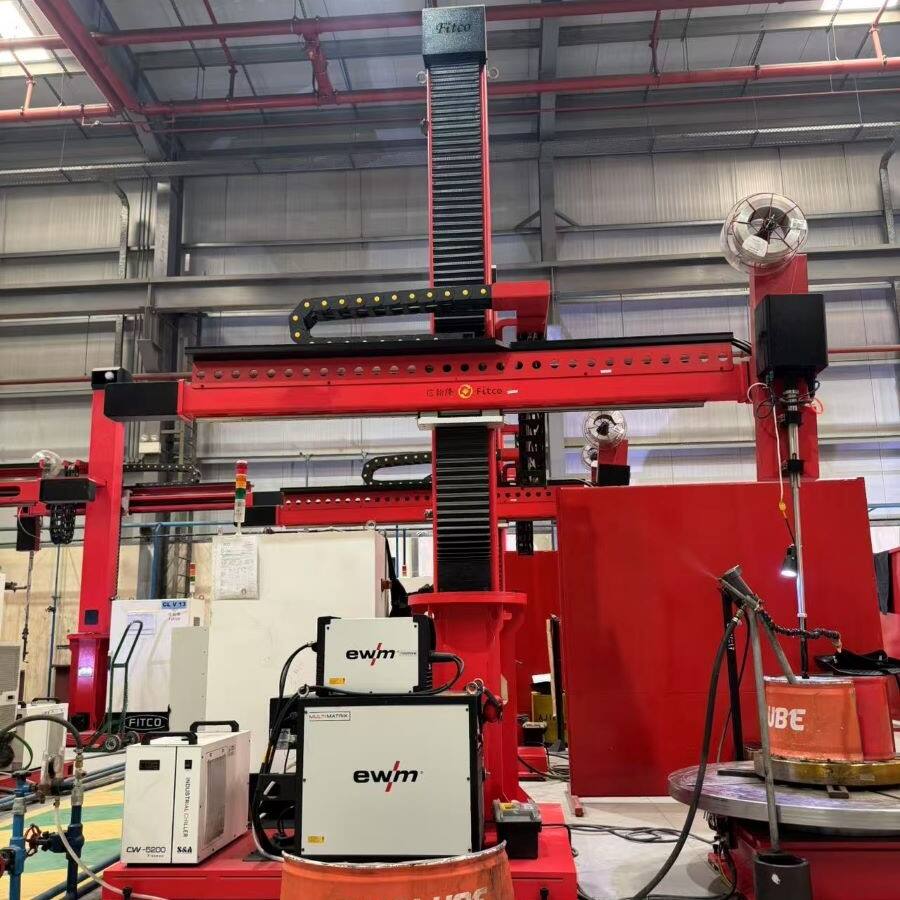
Professional ACDC TIG Welding Machine - Superior Dual Current Technology for Precision Welding

Contact me immediately if you encounter problems!

All Categories

Get a Free Quote

Our representative will contact you soon.
Email
Mobile/WhatsApp
Name
Company Name
Message
0/1000

Get a Free Quote

Our representative will contact you soon.
Email
Mobile/WhatsApp
Name
Company Name
Message
0/1000

acdc tig welding machine

The ACDC TIG welding machine represents a pinnacle of welding technology that combines alternating current and direct current capabilities in one versatile unit. This advanced welding equipment delivers exceptional performance for professional welders who demand precision and reliability in their work. The ACDC TIG welding machine operates using tungsten inert gas technology, which creates a protective atmosphere around the weld zone using inert gases like argon or helium. This process ensures clean, high-quality welds with minimal contamination and superior aesthetic results. The machine features sophisticated electronic controls that allow welders to switch seamlessly between AC and DC modes depending on the material being welded. When working with aluminum and magnesium alloys, the AC mode provides excellent oxide cleaning action through its cathodic cleaning effect. The DC mode excels when welding steel, stainless steel, titanium, and other ferrous metals, offering deep penetration and stable arc characteristics. Modern ACDC TIG welding machines incorporate inverter technology that significantly reduces weight while improving energy efficiency and arc stability. These units typically feature digital displays that provide real-time feedback on welding parameters including amperage, voltage, and arc length. Advanced models include pulse welding capabilities that help control heat input and reduce distortion in thin materials. The machines often come equipped with high-frequency start systems that eliminate the need for scratch starting, protecting tungsten electrodes and ensuring consistent arc initiation. Remote control compatibility allows operators to adjust settings while maintaining focus on the weld joint. Many units feature pre-programmed welding procedures for different materials and thicknesses, making them suitable for both experienced professionals and operators developing their skills. The ACDC TIG welding machine finds applications across diverse industries including aerospace, automotive, shipbuilding, pipeline construction, and architectural metalwork where precision and quality are paramount.

New Product Releases

The ACDC TIG welding machine offers numerous practical benefits that make it an essential tool for professional welders and fabrication shops. First, its dual-current capability eliminates the need for multiple welding machines, saving significant workspace and reducing equipment costs. Users can tackle virtually any welding project with confidence, knowing their ACDC TIG welding machine handles both ferrous and non-ferrous materials effectively. The superior weld quality achieved with this equipment results in stronger joints with excellent appearance, reducing the need for post-weld finishing work and saving valuable time. The precise control offered by modern ACDC TIG welding machines enables welders to work on thin materials without burn-through, while also providing sufficient power for thicker sections. This versatility makes the investment worthwhile for shops handling diverse projects. The inverter technology incorporated in contemporary units delivers consistent arc performance while consuming less electricity compared to traditional transformer-based machines. This energy efficiency translates to lower operating costs and reduced environmental impact. The lightweight design of inverter-based ACDC TIG welding machines improves portability, allowing contractors to transport equipment easily between job sites. The digital controls and preset programs reduce setup time and help maintain consistent welding parameters, leading to more predictable results and higher productivity. Operators experience less fatigue due to the smooth, stable arc characteristics, enabling longer welding sessions with maintained precision. The high-frequency start feature protects tungsten electrodes from contamination, extending their lifespan and reducing consumable costs. Remote control functionality allows operators to fine-tune parameters without interrupting their welding position, improving both comfort and weld quality. The pulse welding capabilities help manage heat input effectively, reducing distortion in heat-sensitive materials and assemblies. Many ACDC TIG welding machines include advanced safety features such as thermal overload protection and voltage fluctuation compensation, ensuring reliable operation in challenging environments. The comprehensive documentation and technical support typically provided with these machines help users maximize their investment through proper operation and maintenance practices.

Tips And Tricks

Understanding the Duty Cycle of Your Heavy-Duty arc welding machine

16

Mar

Understanding the Duty Cycle of Your Heavy-Duty arc welding machine

The duty cycle of an arc welding machine represents one of the most critical specifications that determines its operational capabilities and longevity in heavy-duty industrial applications. This measurement defines how long your arc welding machine c...
View More
How Does MIG Welding Equipment Enhance Efficiency in Large-Scale Work?

27

Nov

How Does MIG Welding Equipment Enhance Efficiency in Large-Scale Work?

In today's competitive manufacturing landscape, industrial operations demand maximum productivity while maintaining superior quality standards. MIG welding equipment has emerged as a cornerstone technology for large-scale fabrication projects, revolu...
View More
Why Are Pipe Cladding Machines Vital for Industrial Corrosion Protection?

27

Nov

Why Are Pipe Cladding Machines Vital for Industrial Corrosion Protection?

Industrial facilities worldwide face a constant battle against corrosion, with pipe systems serving as critical infrastructure that demands exceptional protection. The implementation of advanced welding technologies has revolutionized how industries ...
View More
How Do TIG Overlay Cladding Machines Improve Surface Durability?

22

Dec

How Do TIG Overlay Cladding Machines Improve Surface Durability?

Industrial surface protection has evolved significantly with the advent of advanced welding technologies, particularly in applications requiring exceptional durability and precision. TIG overlay cladding machines represent a revolutionary approach to...
View More

Get a Free Quote

Our representative will contact you soon.
Email
Mobile/WhatsApp
Name
Company Name
Message
0/1000

acdc tig welding machine

Dual Current Versatility for Complete Material Coverage

Dual Current Versatility for Complete Material Coverage

The most significant advantage of the ACDC TIG welding machine lies in its ability to seamlessly switch between alternating current and direct current modes, providing unmatched versatility for welding different materials. This dual-current capability represents a fundamental shift from traditional single-current machines that limit operators to specific material types. When the ACDC TIG welding machine operates in AC mode, it excels at welding aluminum and magnesium alloys by providing essential oxide cleaning action. The alternating current creates a cathodic cleaning effect during the reverse polarity portion of each cycle, breaking down the tenacious aluminum oxide layer that forms naturally on these metals. This cleaning action is crucial because aluminum oxide has a much higher melting point than the base metal, and without proper removal, it prevents proper fusion and creates weak, contaminated welds. The AC mode also provides excellent arc stability when welding aluminum, with the ability to maintain consistent penetration across varying joint configurations. Switching to DC mode, the ACDC TIG welding machine transforms into a precision tool for welding steel, stainless steel, titanium, copper, and other materials. The direct current provides deep, narrow penetration characteristics that are ideal for structural welding applications where strength is paramount. The consistent polarity in DC mode concentrates heat at the workpiece, enabling efficient welding of thicker sections while maintaining excellent control over thin materials. This versatility means fabrication shops no longer need separate machines for different material types, significantly reducing equipment costs and workspace requirements. The ability to handle diverse materials with one machine also improves workflow efficiency, as operators can switch between different projects without changing equipment or relocating to different work stations. For educational institutions and training facilities, the ACDC TIG welding machine provides students with comprehensive exposure to both welding modes, ensuring they develop skills applicable across the entire spectrum of TIG welding applications. This complete material coverage capability makes the ACDC TIG welding machine an invaluable investment for any serious welding operation.
Advanced Inverter Technology for Superior Performance and Efficiency

Advanced Inverter Technology for Superior Performance and Efficiency

Modern ACDC TIG welding machines incorporate cutting-edge inverter technology that revolutionizes welding performance while delivering exceptional energy efficiency and portability. Traditional transformer-based welding machines are bulky, heavy, and consume significant amounts of electricity while providing limited control over welding parameters. The inverter technology in contemporary ACDC TIG welding machines converts standard line voltage to high-frequency AC, then rectifies it to DC before using sophisticated electronic switching to create the desired welding output. This process enables precise control over current output with rapid response times, resulting in superior arc characteristics and improved weld quality. The electronic control systems in inverter-based ACDC TIG welding machines provide microsecond-level adjustments to welding parameters, maintaining stable arc conditions even when working with challenging materials or in difficult positions. This precision control translates to more consistent penetration, better bead appearance, and reduced defect rates. The weight reduction achieved through inverter technology is remarkable, with modern units weighing 50-70 percent less than equivalent transformer machines while delivering superior performance. This portability advantage is crucial for contractors who must transport equipment between job sites or work in confined spaces where maneuverability is limited. The energy efficiency of inverter technology significantly reduces operating costs, with modern ACDC TIG welding machines consuming 30-40 percent less electricity than traditional units while delivering equivalent or superior welding performance. This efficiency also reduces heat generation, extending component life and improving reliability. The rapid response characteristics of inverter technology enable advanced features such as pulse welding, which alternates between high peak current and lower background current to control heat input and reduce distortion. The precise timing control possible with inverter systems allows for optimized pulse parameters that improve penetration control and reduce the risk of burn-through in thin materials. Additionally, inverter technology enables soft-start features that gradually ramp up welding current, reducing the thermal shock to workpieces and improving overall weld quality. The sophisticated power factor correction built into modern inverter systems also reduces the impact on electrical supply systems, making these machines more compatible with generators and variable power supplies commonly found on construction sites.
Comprehensive Digital Controls and Preset Programs for Enhanced Productivity

Comprehensive Digital Controls and Preset Programs for Enhanced Productivity

The advanced digital control systems integrated into modern ACDC TIG welding machines represent a significant leap forward in welding technology, providing operators with unprecedented control over welding parameters while simplifying complex setup procedures through intelligent preset programs. These sophisticated control interfaces feature high-resolution digital displays that provide real-time feedback on critical welding parameters including amperage, voltage, arc length, and travel speed. This immediate visual feedback enables operators to make precise adjustments during welding, ensuring optimal parameters are maintained throughout each pass. The digital nature of these controls eliminates the guesswork associated with analog systems, providing exact parameter readouts that can be documented for quality control and repeatability purposes. The preset program functionality built into advanced ACDC TIG welding machines contains optimized welding procedures for various material types, thicknesses, and joint configurations. These programs are developed through extensive testing and represent best practices for achieving high-quality results with minimal setup time. Operators simply select the appropriate material type and thickness, and the machine automatically configures current levels, pulse parameters, gas flow rates, and other critical settings. This automation reduces the learning curve for new operators while ensuring consistent results across different shifts and welders. The memory functions in these systems allow experienced welders to store their custom parameter sets for specific applications, creating a personalized library of proven procedures that can be recalled instantly. Many ACDC TIG welding machines feature multi-language support in their control interfaces, making them accessible to diverse workforces and international operations. The integration of diagnostic systems provides early warning of potential issues such as overheating, gas supply problems, or electrode wear, enabling proactive maintenance that prevents costly downtime. Advanced models include data logging capabilities that record welding parameters and performance metrics, supporting quality management systems and continuous improvement initiatives. The user-friendly nature of modern digital controls reduces training time and helps operators achieve proficiency more quickly, directly impacting productivity and weld quality. Remote control compatibility allows operators to adjust parameters while maintaining their welding position, improving ergonomics and enabling real-time optimization without breaking arc or compromising weld quality. The password protection features available in many systems prevent unauthorized parameter changes, ensuring welding procedures remain consistent with approved specifications and quality standards.

Get a Free Quote

Our representative will contact you soon.
Email
Mobile/WhatsApp
Name
Company Name
Message
0/1000