
 EN
EN
 AR
AR BG
BG HR
HR CS
CS DA
DA NL
NL FI
FI FR
FR DE
DE EL
EL HI
HI IT
IT JA
JA KO
KO NO
NO PL
PL PT
PT RO
RO RU
RU ES
ES SV
SV TL
TL IW
IW ID
ID LT
LT UK
UK SQ
SQ HU
HU TH
TH TR
TR FA
FA AF
AF CY
CY MK
MK LA
LA MN
MN KK
KK UZ
UZ KY
KY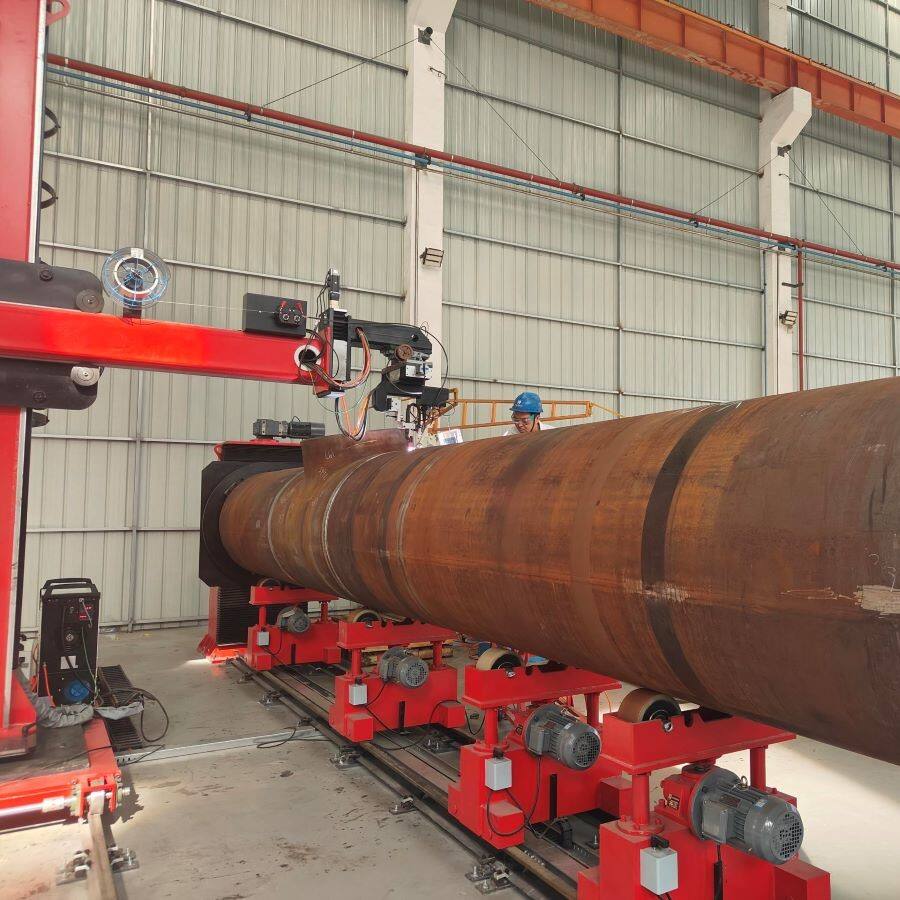
Industrial surface protection has evolved significantly with the advent of advanced welding technologies, particularly in applications requiring exceptional durability and precision. TIG overlay cladding machines represent a revolutionary approach to enhancing material surfaces by applying protective layers that resist corrosion, wear, and extreme environmental conditions. These sophisticated systems utilize tungsten inert gas welding principles to deposit high-quality metallurgical bonds between base materials and protective alloys. The process enables manufacturers to extend component lifecycles while maintaining structural integrity across demanding industrial applications. Modern TIG overlay cladding machines have become indispensable tools in sectors ranging from oil and gas to marine engineering, where surface durability directly impacts operational safety and cost-effectiveness.
Understanding TIG Overlay Cladding Technology
Fundamental Principles of TIG Cladding
The foundation of TIG overlay cladding lies in the precise control of arc welding parameters to achieve optimal metallurgical bonding. TIG overlay cladding machines employ non-consumable tungsten electrodes surrounded by inert gas shields to create stable, controllable welding environments. This configuration enables operators to maintain consistent heat input while depositing filler materials with minimal dilution. The process generates exceptional surface quality through controlled cooling rates and reduced oxidation, resulting in uniform cladding layers with predictable mechanical properties. Advanced TIG overlay cladding machines incorporate sophisticated monitoring systems that track temperature profiles, travel speeds, and deposition rates to ensure consistent results across large surface areas.
Temperature regulation represents a critical aspect of successful TIG cladding operations, as excessive heat input can compromise the integrity of both base materials and cladding layers. Modern TIG overlay cladding machines feature programmable thermal management systems that adjust welding parameters based on real-time feedback from embedded sensors. These systems prevent overheating while ensuring adequate penetration for strong metallurgical bonds. The controlled heat-affected zones minimize distortion and residual stresses, maintaining dimensional accuracy throughout the cladding process. Proper thermal control also prevents the formation of undesirable microstructures that could compromise long-term durability.
Material Compatibility and Selection
Material selection plays a pivotal role in maximizing the effectiveness of TIG overlay cladding applications, with compatibility between base metals and cladding alloys determining overall performance characteristics. TIG overlay cladding machines accommodate a wide range of material combinations, from stainless steel cladding on carbon steel substrates to exotic alloy applications for specialized environments. The process enables precise control over dilution rates, ensuring that cladding properties remain dominant while maintaining adequate adhesion to base materials. Metallurgical compatibility considerations include thermal expansion coefficients, chemical composition, and solidification characteristics that influence crack susceptibility and bond strength.
Alloy selection depends heavily on intended service conditions, with factors such as corrosive environments, operating temperatures, and mechanical loading determining optimal cladding compositions. TIG overlay cladding machines provide the flexibility to adjust welding parameters for different material combinations, optimizing deposition characteristics for each specific application. This adaptability extends to wire feeding systems that accommodate various filler material forms, from solid wires to flux-cored variants designed for enhanced productivity. The precise control offered by modern TIG overlay cladding machines ensures consistent chemical composition throughout the cladding layer, maintaining protective properties across the entire treated surface.
Enhanced Corrosion Resistance Through Advanced Metallurgy
Microstructural Control and Optimization
The superior corrosion resistance achieved through TIG cladding stems from precise microstructural control that eliminates common defects associated with alternative coating methods. TIG overlay cladding machines enable operators to manipulate cooling rates and solidification patterns, promoting the formation of protective oxide layers and corrosion-resistant phases. The controlled welding environment prevents contamination that could compromise long-term performance, while the low dilution characteristics preserve the chemical composition of protective alloys. This microstructural precision results in uniform corrosion resistance across the entire clad surface, eliminating weak points that could initiate localized attack.
Grain boundary engineering represents another advantage of TIG cladding technology, as controlled thermal cycles promote optimal grain structures that resist intergranular corrosion. TIG overlay cladding machines facilitate precise heat input control that prevents sensitization in stainless steel cladding while maintaining mechanical properties. The resulting microstructures exhibit enhanced passivation behavior and improved resistance to stress corrosion cracking. Advanced parameter control systems ensure repeatability across production runs, maintaining consistent microstructural characteristics that translate to predictable corrosion performance throughout component lifecycles.
Chemical Barrier Formation
TIG cladding creates effective chemical barriers through the formation of dense, adherent protective layers that isolate base materials from aggressive environments. The process produces metallurgically bonded interfaces that eliminate delamination risks associated with thermal spray or electroplated coatings. TIG overlay cladding machines achieve exceptional surface coverage through overlapping weld beads that create continuous protective barriers without gaps or discontinuities. This seamless protection prevents crevice corrosion and eliminates pathways for aggressive species to reach vulnerable base materials.
The chemical composition of TIG-deposited cladding layers can be precisely controlled to optimize resistance against specific corrosive environments. Modern TIG overlay cladding machines incorporate multi-wire feeding systems that enable real-time alloy composition adjustments, tailoring chemical barriers to match service conditions. This flexibility extends to applications requiring gradient compositions that transition from base material compatibility to maximum surface protection. The resulting chemical barriers maintain their protective characteristics throughout extended service periods, providing long-term cost benefits through reduced maintenance requirements and extended component lifecycles.
Mechanical Property Enhancement and Wear Resistance
Surface Hardness and Tribological Performance
TIG overlay cladding machines excel at depositing hard-facing alloys that dramatically improve wear resistance while maintaining acceptable toughness levels. The controlled thermal input characteristic of TIG processes enables the deposition of complex carbide-forming alloys without excessive dilution that could compromise hardness. These systems achieve optimal hardness distributions through precise control of cooling rates and post-weld heat treatment cycles. The resulting surfaces exhibit exceptional resistance to abrasive wear, erosion, and galling, extending component lifecycles in demanding tribological applications.
Tribological optimization through TIG cladding involves careful selection of hard-phase distributions and matrix compositions that balance wear resistance with fracture toughness. TIG overlay cladding machines provide the thermal control necessary to achieve optimal carbide morphologies and distributions within the cladding matrix. This microstructural control translates to predictable wear behavior and extended service intervals in applications involving sliding contact, particle impingement, or cavitation exposure. The smooth surface finishes achievable with TIG cladding reduce friction coefficients while maintaining load-bearing capacity.
Fatigue Resistance and Crack Propagation Control
The metallurgical bonds created by TIG overlay cladding machines contribute significantly to improved fatigue resistance through stress distribution optimization and crack deflection mechanisms. The gradual transition zones between base materials and cladding layers help distribute applied stresses over larger areas, reducing stress concentrations that initiate fatigue failures. TIG processes produce low-stress cladding deposits through controlled thermal cycles that minimize residual tensile stresses. This stress state optimization extends fatigue lifecycles while maintaining surface protection characteristics.
Crack propagation control represents another significant advantage of TIG cladding technology, as the fine-grained microstructures typical of TIG deposits deflect crack paths and absorb fracture energy. TIG overlay cladding machines enable the deposition of tough, damage-tolerant cladding layers that arrest surface cracks before they propagate into base materials. The resulting surface modifications exhibit graceful degradation characteristics that provide warning before catastrophic failure. This damage tolerance extends to thermal cycling applications where differential expansion stresses could compromise alternative coating systems.
Process Automation and Quality Assurance
Advanced Control Systems and Monitoring
Modern TIG overlay cladding machines incorporate sophisticated automation systems that ensure consistent quality while reducing operator dependence and human error potential. These systems feature programmable parameter control that maintains optimal welding conditions throughout extended production runs. Real-time monitoring capabilities track critical variables such as arc voltage, current, travel speed, and gas flow rates, automatically adjusting parameters to compensate for variations. Advanced TIG overlay cladding machines include feedback control loops that respond to process disturbances, maintaining stable arc conditions and consistent deposition characteristics.
Quality assurance systems integrated into TIG overlay cladding machines provide comprehensive documentation and traceability for critical applications. These systems record welding parameters, environmental conditions, and material certifications, creating complete audit trails for regulatory compliance. Automated inspection capabilities include real-time defect detection through sensor feedback and post-process evaluation systems. The resulting quality documentation supports certification requirements while providing data for continuous process improvement and optimization efforts.
Productivity Enhancement Through Mechanization
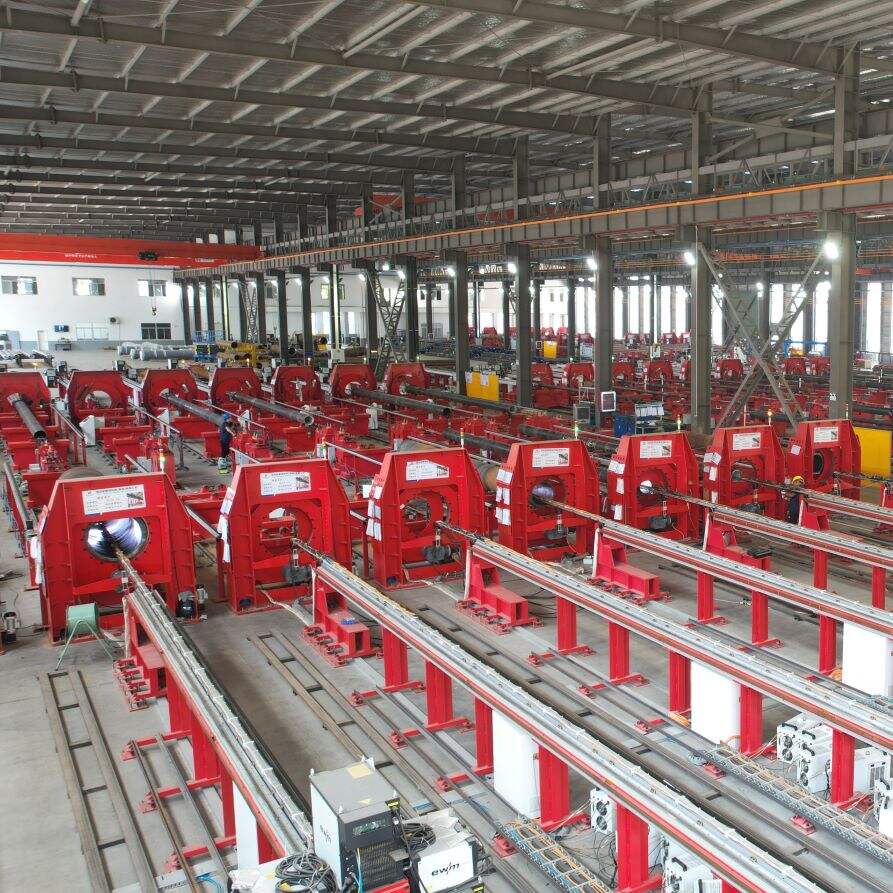
Mechanized TIG overlay cladding machines significantly improve productivity through consistent travel speeds, optimal torch positioning, and reduced setup times between operations. These systems eliminate variations associated with manual welding while maintaining the precision and quality characteristics of the TIG process. Automated wire feeding and gas delivery systems ensure consistent consumable supply, preventing interruptions that could compromise cladding integrity. Multi-torch configurations available on advanced TIG overlay cladding machines enable simultaneous processing of multiple surfaces or increased deposition rates for large-area applications.
Programming flexibility in modern TIG overlay cladding machines accommodates complex geometries and varying cladding requirements without extensive reconfiguration. These systems store multiple parameter sets for different material combinations and thickness requirements, enabling rapid changeovers between production runs. Adaptive control algorithms optimize welding parameters based on real-time feedback, maximizing deposition efficiency while maintaining quality standards. The resulting productivity improvements translate to reduced manufacturing costs and shorter lead times for critical components requiring surface protection.
Industrial Applications and Case Studies
Oil and Gas Industry Implementation
The oil and gas industry represents one of the largest markets for TIG overlay cladding machines due to severe corrosive environments and safety-critical applications. Subsea equipment, pressure vessels, and pipeline components benefit significantly from corrosion-resistant cladding that extends service intervals and reduces maintenance costs. TIG overlay cladding machines enable the application of super-duplex stainless steels and nickel-based alloys that provide superior resistance to H2S, CO2, and chloride environments. These applications demonstrate measurable improvements in component lifecycles and reduced total cost of ownership.
Field experience with TIG-clad components in offshore applications shows exceptional performance in environments that rapidly degrade unprotected steel surfaces. Case studies document service intervals exceeding 20 years for critical components that previously required replacement every 5-7 years. The precision control offered by TIG overlay cladding machines ensures consistent cladding thickness and composition, meeting stringent NACE and API requirements for sour service applications. These performance improvements directly translate to reduced operational risks and improved asset reliability in critical energy infrastructure.
Marine and Offshore Applications
Marine environments present unique challenges for surface protection due to the combination of saltwater corrosion, biofouling, and mechanical loading from wave action and debris impact. TIG overlay cladding machines address these challenges through the deposition of marine-grade alloys that resist both general and localized corrosion while maintaining mechanical properties. Ship hull components, propeller shafts, and offshore platform structures benefit from TIG cladding that provides long-term protection in aggressive seawater environments. The process enables the application of copper-nickel alloys and super-austenitic stainless steels that exhibit excellent seawater corrosion resistance.
Performance data from marine applications demonstrates significant cost savings through extended dry-dock intervals and reduced maintenance requirements. TIG overlay cladding machines enable precise application of antifouling alloys that reduce fuel consumption through improved hydrodynamic efficiency. The resulting surface modifications maintain their protective characteristics throughout extended ocean service, providing return on investment through reduced operating costs and improved vessel availability. These benefits are particularly significant for specialized vessels operating in remote locations where maintenance opportunities are limited.
Cost-Benefit Analysis and Economic Considerations
Initial Investment versus Long-term Savings
The economic justification for TIG overlay cladding machines requires careful analysis of initial capital investment against long-term operational savings and component lifecycle extensions. While the upfront costs for advanced TIG overlay cladding machines may be substantial, the technology typically provides positive return on investment through reduced material costs, extended component lifecycles, and decreased maintenance requirements. Life cycle cost analysis demonstrates that TIG cladding often costs less than 50% of solid alloy construction while providing equivalent performance characteristics. These cost advantages become more pronounced as component sizes increase and alloy costs escalate.
Productivity benefits associated with TIG overlay cladding machines contribute significantly to economic justification through reduced manufacturing time and improved quality consistency. Automated systems eliminate rework costs while providing predictable production schedules that improve overall manufacturing efficiency. The precision control capabilities of modern TIG overlay cladding machines minimize material waste through optimal deposition efficiency and reduced dilution. These efficiency improvements translate to lower per-unit costs and improved competitive positioning in price-sensitive markets.
Maintenance Cost Reduction and Availability Improvement
Operational cost savings represent the most significant economic benefit of TIG overlay cladding machines through dramatically extended maintenance intervals and reduced component replacement frequency. Field data demonstrates that properly clad components often achieve service intervals 3-5 times longer than unprotected equivalents, with corresponding reductions in maintenance costs and downtime. The improved reliability characteristics of TIG-clad components reduce unplanned outages and associated production losses. These availability improvements are particularly valuable in continuous process industries where downtime costs can exceed thousands of dollars per hour.
Predictive maintenance capabilities enabled by TIG cladding technology allow operators to schedule maintenance based on actual condition rather than conservative time intervals. The gradual degradation characteristics of TIG-clad surfaces provide advance warning of approaching end-of-life conditions, enabling planned replacement during scheduled maintenance windows. This predictability reduces emergency repair costs while improving overall system reliability. The resulting operational advantages often justify TIG overlay cladding machines investments within 2-3 years of implementation in high-utilization applications.
FAQ
What materials can be processed with TIG overlay cladding machines
TIG overlay cladding machines can process a wide range of material combinations, including stainless steel cladding on carbon steel, nickel-based alloys on various substrates, and specialized alloys for extreme environments. The process accommodates base materials ranging from carbon steels to high-strength alloys, with cladding materials selected based on specific performance requirements. Compatibility considerations include thermal expansion matching and metallurgical compatibility to ensure strong bonds and long-term performance.
How does TIG cladding compare to thermal spray coatings
TIG overlay cladding machines provide metallurgically bonded layers that offer superior adhesion and durability compared to mechanically bonded thermal spray coatings. TIG cladding creates continuous, dense protective layers without porosity or delamination risks, while thermal spray coatings may exhibit limited bond strength and environmental degradation. The precision control available with TIG processes enables better microstructural optimization and more predictable long-term performance characteristics.
What thickness limitations apply to TIG overlay cladding
TIG overlay cladding machines typically deposit layers ranging from 1-10mm thickness, with optimal performance achieved in the 2-5mm range for most applications. Thicker deposits are possible through multiple-pass techniques, though thermal management becomes increasingly important to prevent distortion and residual stress accumulation. Minimum thickness requirements depend on the specific protective requirements and expected service conditions, with corrosion applications typically requiring 3-5mm minimum thickness.
How do TIG overlay cladding machines ensure quality consistency
Modern TIG overlay cladding machines incorporate advanced control systems with real-time parameter monitoring, automated arc length control, and programmable welding sequences that ensure consistent quality across production runs. These systems feature closed-loop feedback control, integrated inspection capabilities, and comprehensive data logging for quality assurance documentation. Standardized procedures and operator training programs further enhance consistency and reduce the potential for human error in critical applications.