
 EN
EN
 AR
AR BG
BG HR
HR CS
CS DA
DA NL
NL FI
FI FR
FR DE
DE EL
EL HI
HI IT
IT JA
JA KO
KO NO
NO PL
PL PT
PT RO
RO RU
RU ES
ES SV
SV TL
TL IW
IW ID
ID LT
LT UK
UK SQ
SQ HU
HU TH
TH TR
TR FA
FA AF
AF CY
CY MK
MK LA
LA MN
MN KK
KK UZ
UZ KY
KY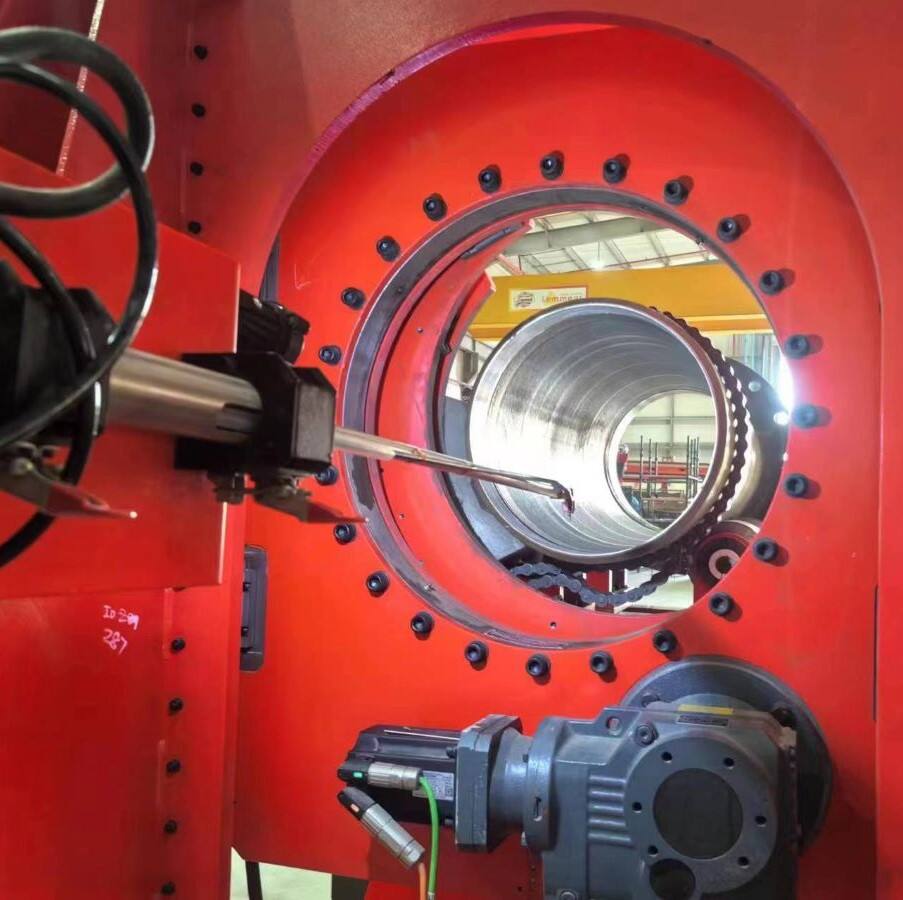
Modern industrial applications demand precision and reliability when it comes to protective coating and overlay processes. Pipe cladding machines have emerged as essential equipment for industries requiring high-performance corrosion-resistant surfaces on pipelines and pressure vessels. These sophisticated systems enable manufacturers to apply uniform, high-quality overlay materials that extend equipment lifespan while maintaining structural integrity. The technology behind pipe cladding machines continues to evolve, incorporating advanced automation and precise control mechanisms that ensure consistent results across various industrial applications.
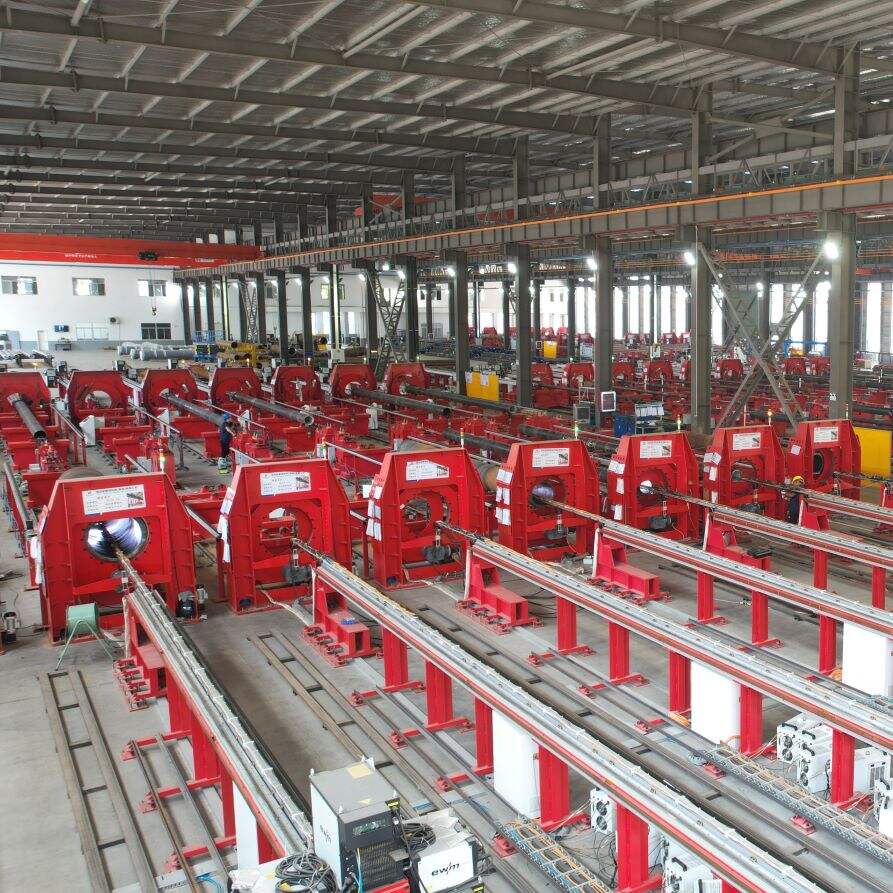
Understanding the Technology Behind Pipe Cladding Machines
Core Components and Operational Mechanisms
The fundamental architecture of pipe cladding machines incorporates several critical components that work in harmony to achieve precise overlay applications. These systems typically feature advanced welding power sources, automated wire feeding mechanisms, and sophisticated positioning systems that enable consistent material deposition. The integration of computer-controlled parameters ensures that pipe cladding machines maintain optimal arc characteristics throughout the welding process, resulting in superior bond quality between the base material and overlay.
Temperature control systems within pipe cladding machines play a crucial role in managing heat input and preventing distortion during the cladding process. Advanced thermal management capabilities allow operators to maintain precise interpass temperatures, which is essential for achieving metallurgical compatibility between different materials. The sophisticated cooling systems integrated into these machines help maintain dimensional stability while ensuring proper grain structure formation in the cladded layer.
Automated Control Systems and Precision Features
Modern pipe cladding machines incorporate state-of-the-art automation technologies that enhance precision and repeatability in overlay applications. These systems utilize programmable logic controllers and human-machine interfaces that enable operators to establish and monitor critical welding parameters throughout the process. The automation capabilities of pipe cladding machines significantly reduce human error while maintaining consistent quality standards across multiple production runs.
Real-time monitoring systems integrated into pipe cladding machines provide continuous feedback on welding parameters, enabling immediate adjustments to maintain optimal conditions. These advanced monitoring capabilities include arc voltage regulation, wire feed speed control, and travel speed optimization, ensuring that each overlay application meets stringent quality requirements. The data logging features allow manufacturers to maintain comprehensive records for quality assurance and process optimization purposes.
Applications Across Industrial Sectors
Oil and Gas Industry Requirements
The oil and gas sector represents one of the most demanding applications for pipe cladding machines, where equipment must withstand extreme operating conditions including high pressures, corrosive environments, and elevated temperatures. These industries require pipe cladding machines capable of applying specialized alloy overlays such as Inconel, Hastelloy, and various stainless steel compositions that provide superior corrosion resistance and mechanical properties.
Offshore applications present unique challenges that require pipe cladding machines to deliver exceptional performance in harsh marine environments. The ability to apply consistent, defect-free overlays is critical for pipeline integrity and operational safety. Advanced pipe cladding machines designed for these applications incorporate specialized features such as enhanced arc stability, improved penetration control, and superior weld quality monitoring systems.
Chemical Processing and Petrochemical Applications
Chemical processing facilities rely on pipe cladding machines to protect critical infrastructure from aggressive chemical environments that would rapidly degrade standard carbon steel piping systems. These applications require precise control over overlay composition and thickness to ensure optimal chemical compatibility while maintaining structural integrity. The versatility of modern pipe cladding machines allows for the application of various specialty alloys tailored to specific chemical resistance requirements.
Petrochemical applications demand pipe cladding machines capable of handling complex geometries and varying pipe diameters while maintaining consistent overlay quality. The automated features of these systems enable efficient processing of large-scale projects while ensuring compliance with industry standards and regulatory requirements. Advanced positioning systems within pipe cladding machines facilitate precise overlay application on complex pipeline configurations including bends, transitions, and branch connections.
Technical Specifications and Performance Parameters
Welding Process Variables and Control
The performance of pipe cladding machines depends significantly on precise control of welding process variables including current, voltage, travel speed, and wire feed rate. These parameters must be carefully optimized for each specific application to achieve desired overlay properties such as hardness, corrosion resistance, and mechanical strength. Advanced pipe cladding machines feature sophisticated control systems that automatically adjust these parameters based on real-time feedback from the welding process.
Heat input management represents a critical aspect of pipe cladding machine operation, as excessive heat can lead to dilution of the overlay material and compromise performance characteristics. Modern systems incorporate precise heat input control mechanisms that monitor and regulate energy delivery to maintain optimal metallurgical conditions. The ability of pipe cladding machines to maintain consistent heat input across varying pipe diameters and geometries is essential for achieving uniform overlay properties.
Quality Assurance and Testing Protocols
Quality assurance protocols for pipe cladding machines encompass comprehensive testing procedures designed to verify overlay integrity and performance characteristics. These protocols typically include non-destructive testing methods such as ultrasonic examination, magnetic particle inspection, and radiographic testing to detect potential defects. The documentation capabilities of modern pipe cladding machines facilitate traceability and compliance with industry quality standards.
Metallurgical testing procedures validate the chemical composition and mechanical properties of cladded surfaces produced by pipe cladding machines. These tests ensure that overlay materials meet specified requirements for hardness, corrosion resistance, and bond strength. Advanced pipe cladding machines incorporate features that support consistent process conditions necessary for achieving repeatable metallurgical properties across multiple production runs.
Operational Advantages and Efficiency Benefits
Cost-Effectiveness and Material Utilization
The economic advantages of pipe cladding machines extend beyond initial equipment investment to encompass significant operational cost savings through improved material utilization and reduced waste generation. These systems enable precise control over overlay thickness, minimizing excess material usage while ensuring adequate protection for the underlying substrate. The efficiency of pipe cladding machines in material deposition rates contributes to reduced project timelines and lower labor costs.
Long-term cost benefits associated with pipe cladding machines include extended service life of cladded components and reduced maintenance requirements compared to alternative protection methods. The superior bond strength achieved through proper cladding processes ensures that protective overlays remain intact throughout the operational life of the equipment. This reliability translates to reduced downtime and maintenance costs for industrial facilities utilizing cladded piping systems.
Production Flexibility and Scalability
Modern pipe cladding machines offer exceptional flexibility in accommodating various pipe sizes, geometries, and material combinations, making them suitable for diverse industrial applications. The programmable nature of these systems allows operators to quickly switch between different cladding specifications and production requirements. This versatility enables manufacturers to respond efficiently to changing market demands and customer specifications without significant equipment modifications.
Scalability features of pipe cladding machines support both small-scale custom projects and large-scale production runs, providing manufacturers with the flexibility to optimize their operations based on project requirements. The modular design of many pipe cladding machines allows for capacity expansion and equipment upgrades as business needs evolve. This adaptability ensures that investments in pipe cladding technology remain viable throughout changing market conditions and technological advancement.
Maintenance and Operational Considerations
Preventive Maintenance Protocols
Effective maintenance strategies for pipe cladding machines are essential for ensuring consistent performance and extending equipment lifespan. Regular maintenance protocols include inspection and replacement of consumable components such as contact tips, nozzles, and wire feed rollers. The sophisticated monitoring systems integrated into modern pipe cladding machines provide early warning indicators for potential maintenance issues, enabling proactive intervention before equipment failures occur.
Calibration procedures for pipe cladding machines ensure that all control systems maintain accuracy and precision throughout extended operation periods. These procedures include verification of welding parameter settings, positioning system accuracy, and monitoring system calibration. Regular calibration activities help maintain the high-precision capabilities that distinguish pipe cladding machines from conventional welding equipment.
Operator Training and Safety Requirements
Comprehensive operator training programs are crucial for maximizing the capabilities of pipe cladding machines while ensuring safe operation practices. Training curricula typically cover equipment operation principles, process parameter optimization, quality control procedures, and troubleshooting techniques. The complexity of modern pipe cladding machines requires operators to understand both mechanical and electronic control systems to achieve optimal performance.
Safety protocols for pipe cladding machines encompass multiple aspects including electrical safety, radiation protection, ventilation requirements, and proper handling of consumable materials. The automated features of these systems help reduce operator exposure to hazardous conditions while maintaining high productivity levels. Proper implementation of safety procedures ensures that pipe cladding operations meet occupational health and safety standards while protecting personnel and equipment.
FAQ
What types of overlay materials can pipe cladding machines handle effectively?
Pipe cladding machines can accommodate a wide range of overlay materials including stainless steel alloys, nickel-based superalloys, cobalt-based alloys, and various specialty compositions designed for specific corrosion resistance or wear protection applications. The versatility of these systems allows for processing materials in wire, strip, or powder form, depending on the specific cladding technique employed. Material selection depends on the intended service environment and performance requirements of the final application.
How do pipe cladding machines ensure consistent overlay thickness across complex geometries?
Advanced pipe cladding machines utilize sophisticated positioning systems and automated torch manipulation to maintain consistent standoff distances and travel speeds across varying pipe geometries. These systems incorporate real-time feedback mechanisms that automatically adjust welding parameters to compensate for changes in pipe diameter, surface irregularities, and geometric variations. The precision control capabilities enable uniform overlay thickness distribution even on complex pipeline configurations including bends and branch connections.
What quality control measures are integrated into modern pipe cladding machines?
Modern pipe cladding machines incorporate comprehensive quality control features including real-time process monitoring, automated parameter adjustment, and integrated inspection capabilities. These systems continuously monitor welding parameters such as current, voltage, wire feed speed, and travel rate to ensure consistent process conditions. Advanced models may include integrated non-destructive testing capabilities such as ultrasonic thickness measurement and automated defect detection systems.
How do pipe cladding machines compare to manual welding processes in terms of productivity and quality?
Pipe cladding machines offer significant advantages over manual welding processes including higher deposition rates, improved consistency, reduced operator fatigue, and superior quality control. Automated systems can achieve deposition rates several times higher than manual processes while maintaining more consistent overlay properties throughout the entire application. The precision control capabilities of pipe cladding machines result in reduced rework requirements and improved overall project efficiency compared to traditional manual welding techniques.
Table of Contents
- Understanding the Technology Behind Pipe Cladding Machines
- Applications Across Industrial Sectors
- Technical Specifications and Performance Parameters
- Operational Advantages and Efficiency Benefits
- Maintenance and Operational Considerations
-
FAQ
- What types of overlay materials can pipe cladding machines handle effectively?
- How do pipe cladding machines ensure consistent overlay thickness across complex geometries?
- What quality control measures are integrated into modern pipe cladding machines?
- How do pipe cladding machines compare to manual welding processes in terms of productivity and quality?