Professional AC DC Welder - Dual Current Welding Machine for All Materials

Contact me immediately if you encounter problems!

All Categories

Get a Free Quote

Our representative will contact you soon.
Email
Mobile/WhatsApp
Name
Company Name
Message
0/1000

Get a Free Quote

Our representative will contact you soon.
Email
Mobile/WhatsApp
Name
Company Name
Message
0/1000

ac and dc welder

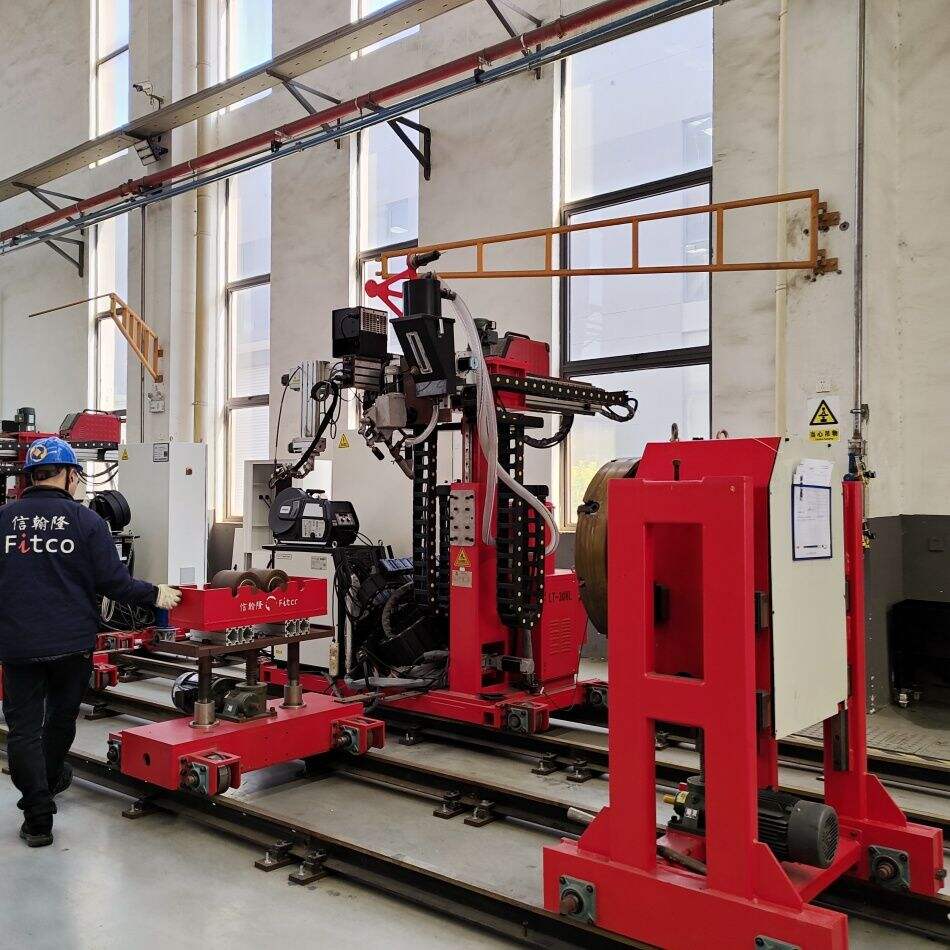
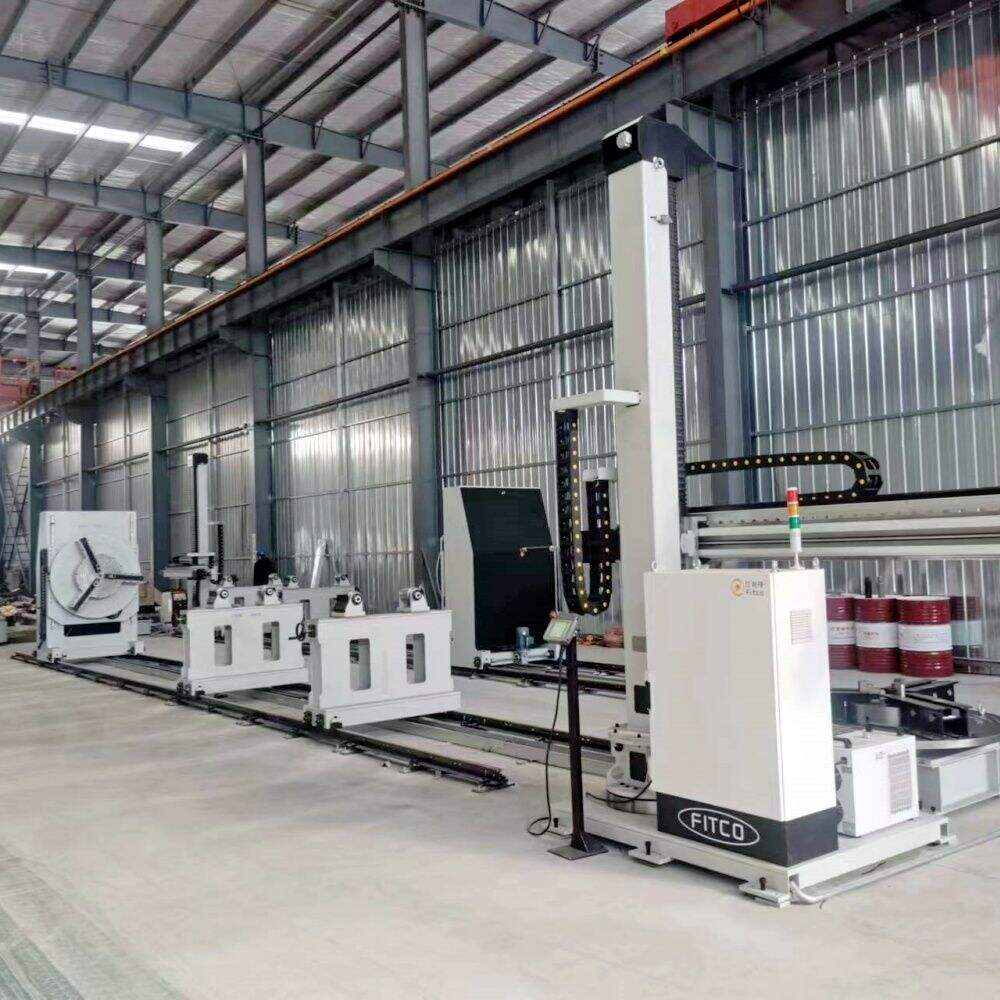
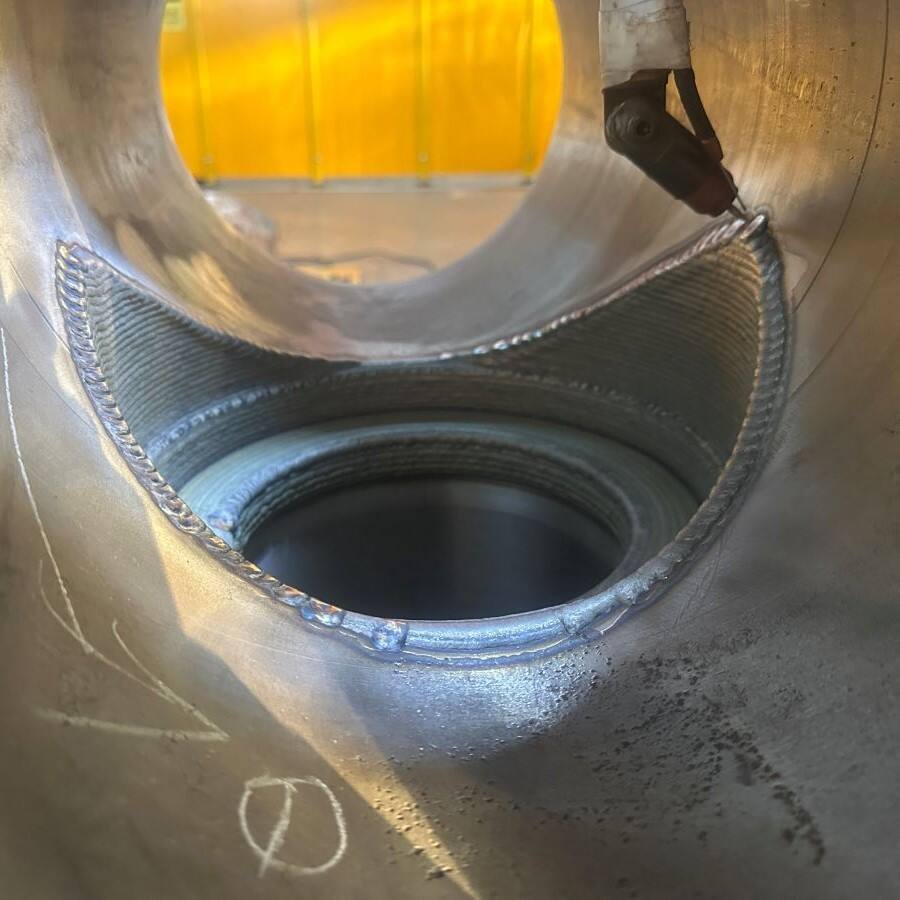
An AC and DC welder represents a versatile welding solution that combines alternating current and direct current capabilities in a single machine. This dual-functionality equipment serves as an essential tool for professional welders, fabricators, and metalworking enthusiasts who require flexibility across different welding applications. The AC and DC welder delivers exceptional performance by allowing operators to switch between current types based on specific material requirements and project demands. Modern AC and DC welder units incorporate advanced inverter technology that ensures stable arc performance, reduced power consumption, and enhanced portability compared to traditional transformer-based systems. The primary function of an AC and DC welder involves creating strong, permanent joints between metal pieces through controlled electrical arc generation. When operating in AC mode, the welder produces alternating current that rapidly changes polarity, making it ideal for welding aluminum and other non-ferrous metals. The DC mode provides direct current flow in one direction, offering superior penetration and smoother arc characteristics for steel and stainless steel applications. Technological features of contemporary AC and DC welder models include digital displays for precise parameter control, thermal overload protection systems, and adaptive arc force control that maintains consistent welding performance. Many units feature pulse welding capabilities that reduce heat input while maintaining strong weld integrity. The hot start function ensures reliable arc initiation, while anti-stick technology prevents electrode adherence during welding processes. Advanced AC and DC welder systems often incorporate memory settings for storing preferred welding parameters, enabling quick setup for repetitive tasks. Applications for AC and DC welder equipment span across multiple industries including construction, automotive repair, shipbuilding, and general fabrication work. These machines excel in maintenance operations, structural welding projects, and artistic metalwork where material variety demands current flexibility.

Popular Products

The AC and DC welder offers numerous practical benefits that make it an invaluable investment for both professional workshops and hobbyist applications. Versatility stands as the primary advantage, allowing users to tackle diverse welding projects without purchasing separate machines for different current types. This dual-capability eliminates the need for multiple welders, reducing equipment costs and workshop space requirements significantly. The AC and DC welder provides excellent value by delivering two machines worth of functionality in a single compact unit. Energy efficiency represents another substantial benefit of modern AC and DC welder technology. Inverter-based systems consume considerably less electricity than traditional welders while delivering superior performance characteristics. This reduced power consumption translates to lower operating costs and enables the AC and DC welder to operate effectively on standard household electrical supplies in many cases. Users appreciate the immediate cost savings on electricity bills and the environmental benefits of reduced energy usage. Portability advantages make the AC and DC welder particularly attractive for mobile welding operations and field work. Contemporary designs prioritize lightweight construction without compromising power output or durability. Many AC and DC welder models weigh significantly less than conventional single-current machines while offering comparable or superior welding capabilities. This enhanced portability enables contractors to transport equipment easily between job sites and allows hobbyists to move their welder as needed. User-friendly operation constitutes a major advantage that attracts both experienced professionals and newcomers to welding. Modern AC and DC welder units feature intuitive controls with clear parameter displays that eliminate guesswork during setup procedures. Digital interfaces provide precise current adjustment capabilities, while automatic settings assist users in selecting optimal parameters for specific materials and thicknesses. Safety features built into AC and DC welder designs protect both operators and equipment from potential hazards. Thermal protection systems prevent overheating damage, while voltage fluctuation compensation ensures consistent performance regardless of power supply variations. These protective features extend equipment lifespan and reduce maintenance requirements, providing long-term value for AC and DC welder investments.

Practical Tips

Inside an igbt inverter welder: How the High-Frequency Switching Works

16

Mar

Inside an igbt inverter welder: How the High-Frequency Switching Works

The high-frequency switching mechanism within an igbt inverter welder represents one of the most significant technological advances in modern welding equipment. This sophisticated power conversion process transforms standard AC mains power into preci...
View More
How Can a TIG Welder Deliver Cleaner Industrial Welds?

22

Dec

How Can a TIG Welder Deliver Cleaner Industrial Welds?

Industrial welding operations demand precision, reliability, and exceptional quality standards that can make or break critical infrastructure projects. Among the various welding technologies available today, tungsten inert gas welding stands out as a...
View More
How Can Longitudinal TIG Equipment Improve Weld Uniformity?

13

Jan

How Can Longitudinal TIG Equipment Improve Weld Uniformity?

Achieving consistent weld quality across extended seams remains one of the most challenging aspects of modern fabrication. Manufacturing industries demand precision welding solutions that deliver uniform penetration, minimal distortion, and reliable ...
View More
Which Materials Weld Best with Longitudinal TIG Equipment?

13

Jan

Which Materials Weld Best with Longitudinal TIG Equipment?

Manufacturing industries increasingly rely on advanced welding technologies to achieve superior joint quality and production efficiency. Among the various welding methods available, longitudinal TIG equipment has emerged as a critical solution for ap...
View More

Get a Free Quote

Our representative will contact you soon.
Email
Mobile/WhatsApp
Name
Company Name
Message
0/1000

ac and dc welder

Advanced Dual Current Technology for Maximum Welding Flexibility

Advanced Dual Current Technology for Maximum Welding Flexibility

The sophisticated dual current technology integrated into modern AC and DC welder systems represents a revolutionary advancement in welding equipment design. This innovative feature allows operators to seamlessly transition between alternating current and direct current modes with simple control adjustments, providing unmatched versatility for handling diverse metalworking projects. The AC and DC welder technology eliminates the traditional limitations associated with single-current machines, enabling users to work effectively with virtually any weldable material. When utilizing AC mode, the welder generates alternating current that continuously changes polarity at regular intervals, typically 60 times per second. This polarity switching creates a cleaning action that removes oxide layers from aluminum surfaces, making AC current ideal for welding aluminum, magnesium, and other non-ferrous metals. The cleaning action prevents contamination and ensures strong, reliable weld joints that meet professional quality standards. The AC and DC welder delivers consistent arc stability in AC mode, reducing spatter and improving overall weld appearance. Direct current mode provides entirely different characteristics that prove essential for steel and stainless steel applications. DC current flows steadily in one direction, creating deeper penetration capabilities and smoother arc characteristics compared to AC welding. The AC and DC welder in DC mode offers superior control over heat input and weld pool behavior, resulting in precise, high-quality joints suitable for critical structural applications. Professional welders particularly value the ability to select electrode polarity in DC mode, choosing between DCEP (electrode positive) for maximum penetration or DCEN (electrode negative) for specific material requirements. This dual current flexibility means the AC and DC welder can handle everything from thin sheet metal repairs to heavy structural fabrication projects. The technology also enables specialized welding techniques such as pulse welding, where the current alternates between high and low levels to control heat input while maintaining strong fusion. Investment in an AC and DC welder with advanced dual current technology provides exceptional long-term value by eliminating the need for multiple specialized machines while ensuring capability for future project requirements.
Professional-Grade Arc Control and Stability Features

Professional-Grade Arc Control and Stability Features

Professional-grade arc control systems integrated into contemporary AC and DC welder designs deliver exceptional welding performance that meets the demanding requirements of commercial and industrial applications. These advanced control features work continuously to maintain optimal arc characteristics regardless of operator skill level or changing welding conditions. The AC and DC welder incorporates sophisticated feedback systems that monitor arc voltage, current flow, and other critical parameters in real-time, making automatic adjustments to ensure consistent weld quality throughout each project. Arc force control represents a cornerstone feature that prevents common welding problems such as electrode sticking and arc extinction. This intelligent system detects when the electrode approaches the workpiece too closely and automatically increases current output to maintain proper arc length. The AC and DC welder with arc force control enables operators to maintain steady welding progress without interruptions, significantly improving productivity and reducing operator fatigue. This feature proves particularly valuable when welding in challenging positions or when working with materials that tend to create unstable arc conditions. Hot start functionality provides another critical advantage by delivering increased current during arc initiation. This feature ensures reliable arc establishment every time, eliminating the frustration of repeated striking attempts that can damage electrodes and workpieces. The AC and DC welder automatically returns to normal welding current once the arc stabilizes, providing smooth transition into steady welding operation. Anti-stick technology prevents electrodes from adhering to the workpiece when contact occurs, automatically reducing current output to enable easy electrode separation. Adaptive arc control systems continuously monitor welding conditions and make micro-adjustments to maintain optimal performance. The AC and DC welder responds instantly to changes in arc length, material thickness variations, and operator technique differences. This intelligent adaptation ensures consistent penetration and fusion characteristics throughout long welding sessions, reducing the likelihood of defects and rework requirements. Digital parameter displays provide precise feedback about current settings, voltage levels, and other critical welding variables, enabling operators to make informed adjustments for optimal results. These professional control features transform the AC and DC welder into a precision instrument capable of delivering consistently superior weld quality that meets or exceeds industry standards for strength, appearance, and reliability.
Innovative Inverter Technology for Enhanced Performance and Efficiency

Innovative Inverter Technology for Enhanced Performance and Efficiency

Revolutionary inverter technology forms the foundation of modern AC and DC welder performance, delivering unprecedented efficiency, reliability, and user convenience compared to traditional transformer-based welding systems. This cutting-edge technology converts incoming AC power to DC, then uses high-frequency switching to create precisely controlled output current that can be easily modified for both AC and DC welding applications. The AC and DC welder utilizing inverter technology operates at significantly higher frequencies than conventional systems, enabling much more precise control over welding parameters while dramatically reducing overall machine size and weight. Power efficiency represents a major breakthrough achieved through inverter technology implementation in AC and DC welder designs. These systems typically operate at 85-95 percent efficiency compared to 50-60 percent efficiency in traditional welders, resulting in substantial energy cost savings over time. The improved efficiency means the AC and DC welder generates less heat during operation, reducing cooling requirements and extending component lifespan significantly. This enhanced efficiency also enables operation on smaller electrical supply circuits, making the welder suitable for use in locations with limited power availability. Inverter-based AC and DC welder units provide exceptional arc stability through rapid response capabilities that traditional systems cannot match. The high-frequency switching allows instantaneous current adjustments that maintain optimal arc characteristics even when welding conditions change rapidly. This responsiveness results in smoother arc behavior, reduced spatter generation, and improved overall weld quality across all materials and thicknesses. The precise control enabled by inverter technology allows the AC and DC welder to deliver consistent performance that meets professional welding standards consistently. Portability advantages achieved through inverter technology make the AC and DC welder practical for mobile applications and space-constrained workshops. Inverter systems eliminate heavy transformers and large capacitors required in conventional designs, reducing machine weight by 50-70 percent while maintaining or improving power output capabilities. This weight reduction makes the AC and DC welder easy to transport between job sites and simple to position for optimal working angles. Reliability improvements inherent in inverter technology reduce maintenance requirements and extend service life expectations for AC and DC welder equipment. Solid-state components used in inverter systems have no moving parts and generate less heat than traditional components, resulting in fewer failure points and longer operational life. Advanced protection circuits built into inverter-based AC and DC welder systems provide comprehensive safeguards against voltage fluctuations, thermal overload, and other potentially damaging conditions.

Get a Free Quote

Our representative will contact you soon.
Email
Mobile/WhatsApp
Name
Company Name
Message
0/1000